

The complete guide
How to Choose a 1080p Webcam With a Built-In Light
The real problem is not your camera, it is your room
Most people blame the webcam when they look bad on a call. Usually the camera is only half the story. Point any small sensor at a face lit by a ceiling light and a bright window behind it, and the picture goes gray, grainy and soft. The camera is doing exactly what it was built to do. It just does not have enough light to work with.
That is why a webcam with a ring light solves more complaints than a sharper lens alone would. You are not just adding pixels. You are giving the sensor something to see. Once the face is lit properly, the autofocus locks faster, the noise in the shadows drops away, and the colors stop looking washed out. The difference between a bad call and a good one is often one small lamp's worth of light in the right place.
How this webcam goes about it
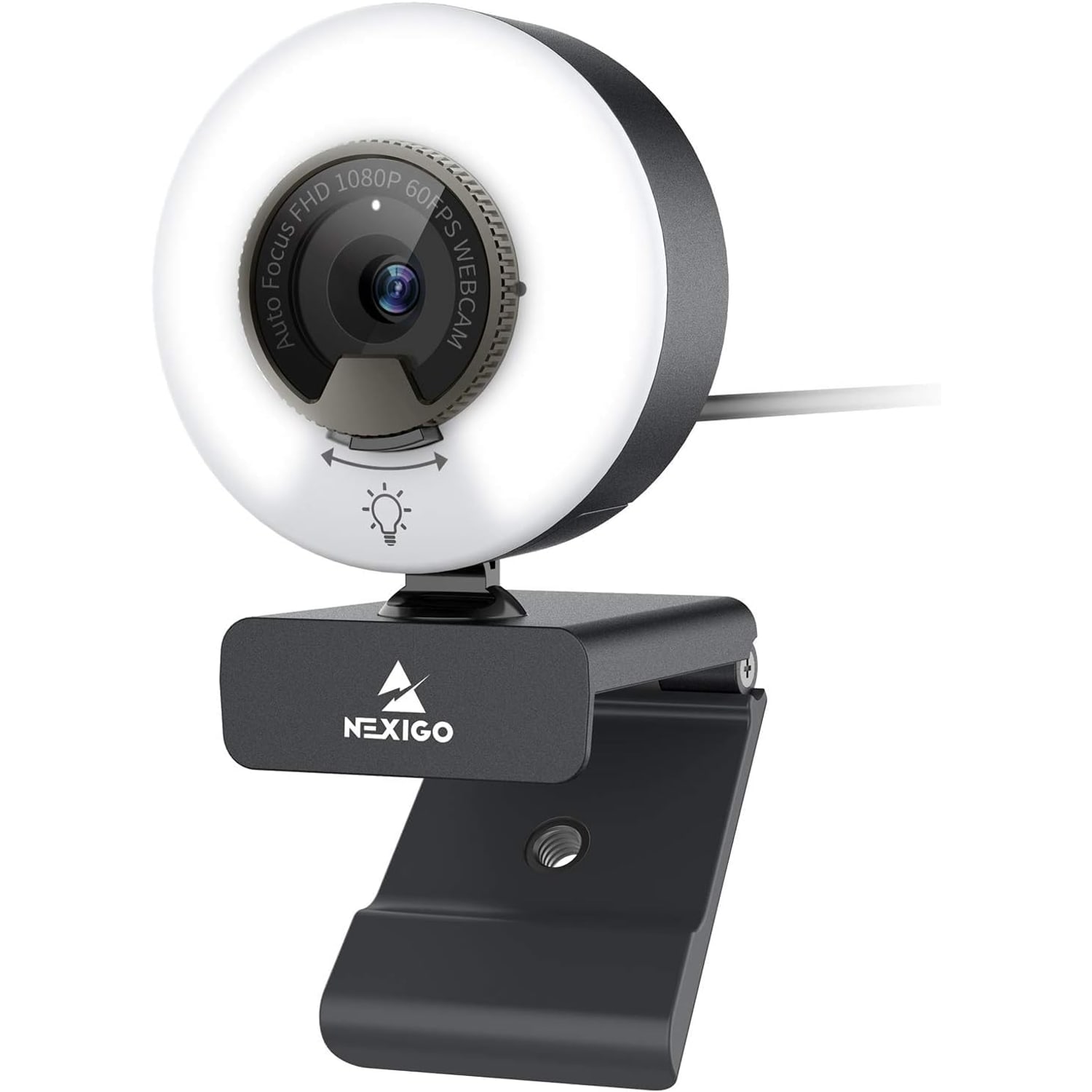
The design puts a ring of light around the lens. That position matters. Light coming from the same direction as the camera fills in the shadows under your eyes and chin instead of carving new ones. A desk lamp off to one side can look dramatic, which is fine for a photo and less fine for a Monday meeting.
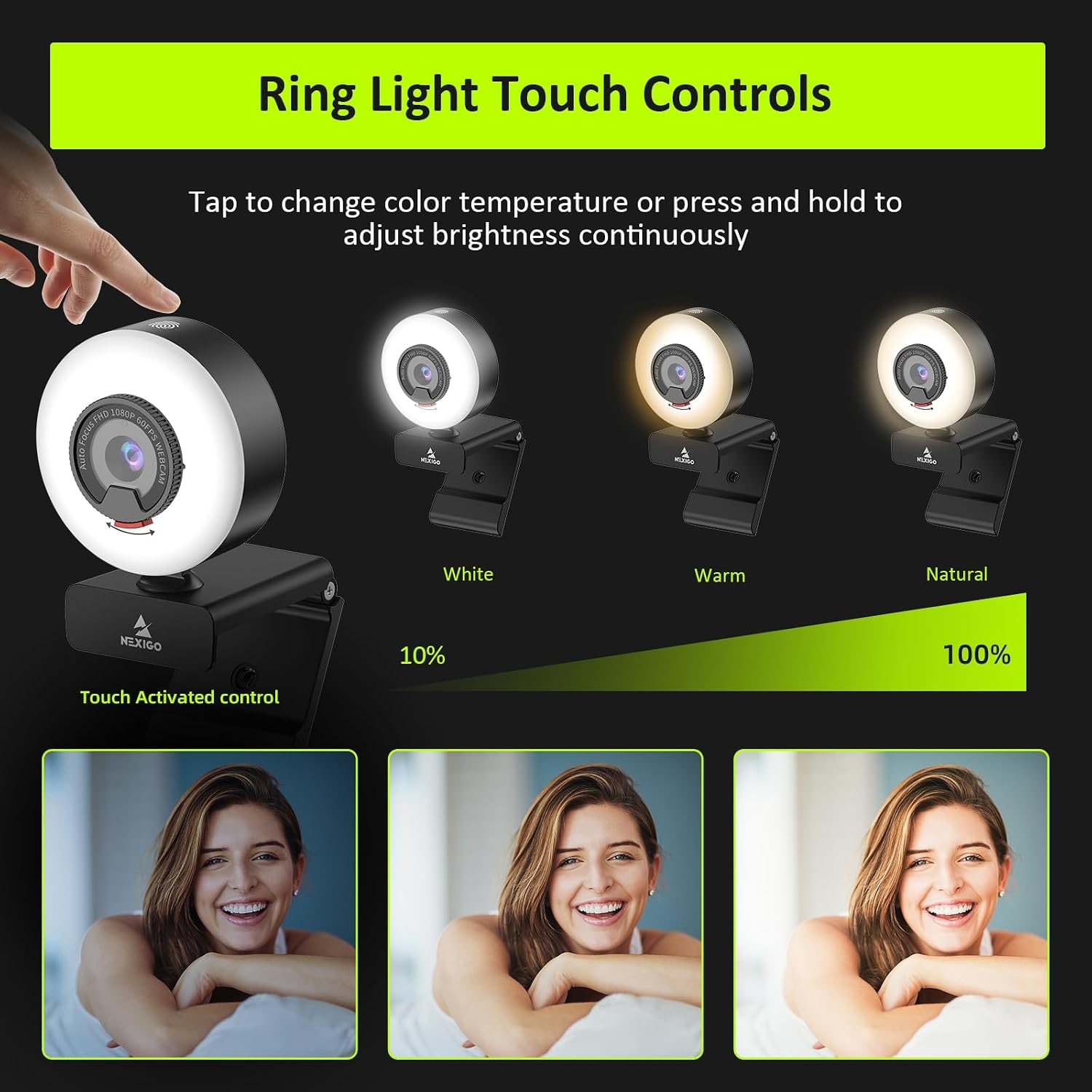
Control is by touch. One touch cycles through three light modes. Touch and hold, and the brightness slides smoothly through its range rather than jumping between fixed steps. In practice you set it once for your usual desk and leave it, nudging it brighter on dark afternoons.
Behind the light sits a 1/2.9 inch CMOS sensor with a prime lens covering 65 degrees. It records 1920 x 1080 at up to 60 frames per second. The autofocus is the second thing you notice after the light. Lean in to read something off the screen and the picture stays sharp, which is a small thing until you have used a camera that cannot do it.
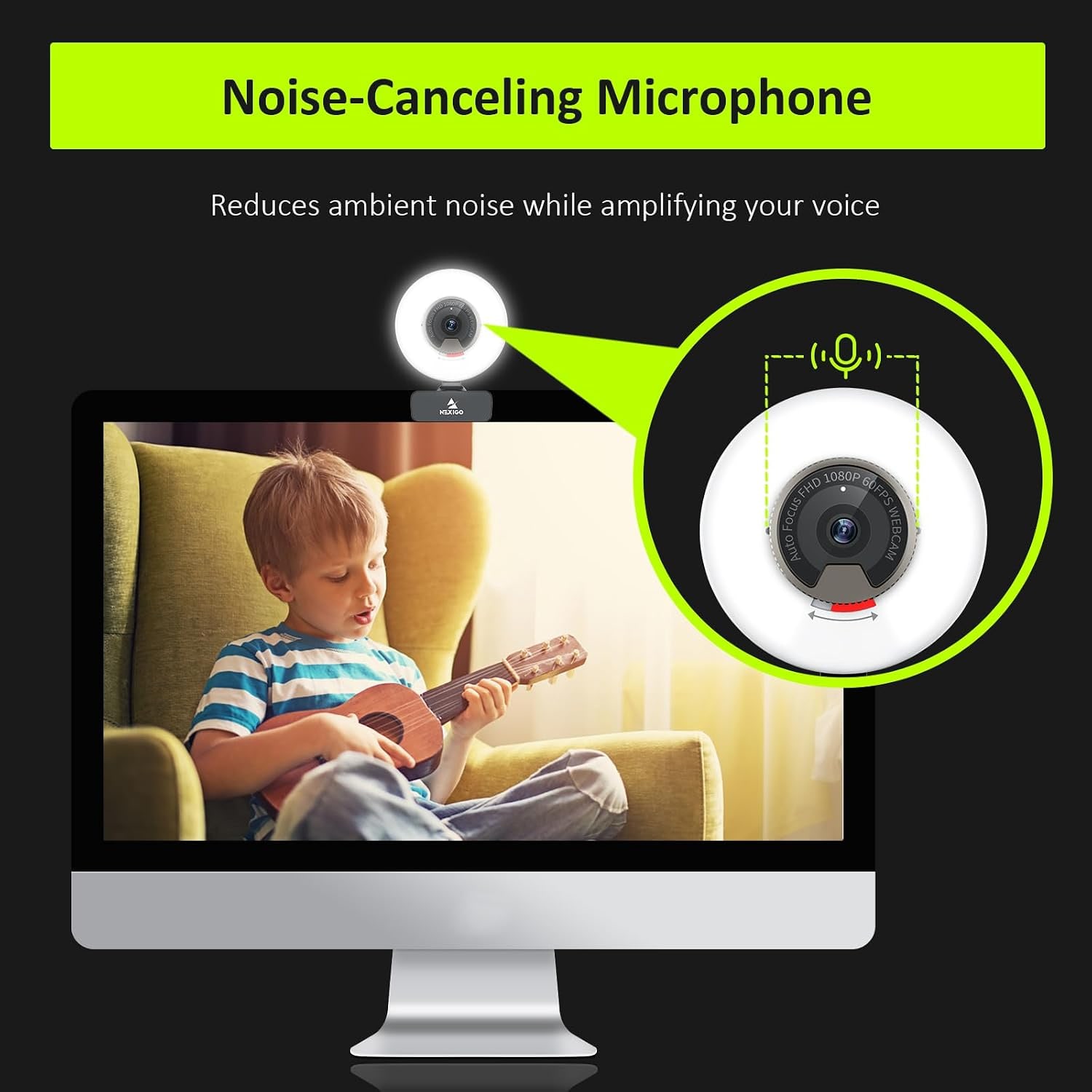
Audio comes from a built-in microphone with noise-canceling technology, which pulls down the steady hum of a fan or an air conditioner so your voice sits in front of it. Connection is USB with no driver install, and the supported list runs across Windows, Mac, Linux, Chrome OS and Ubuntu.
Who it suits
If you spend a chunk of your week on video calls from a room that is not professionally lit, this is squarely aimed at you. Home offices in older buildings, spare rooms with one window, basements, apartments where the desk ends up against an interior wall, these are all places where the built-in light earns its keep daily.
It also makes sense for people who teach or present online. The autofocus handles the constant shift between looking at the camera and glancing at notes. The 65 degree frame is tight enough that your room does not become part of the lesson.
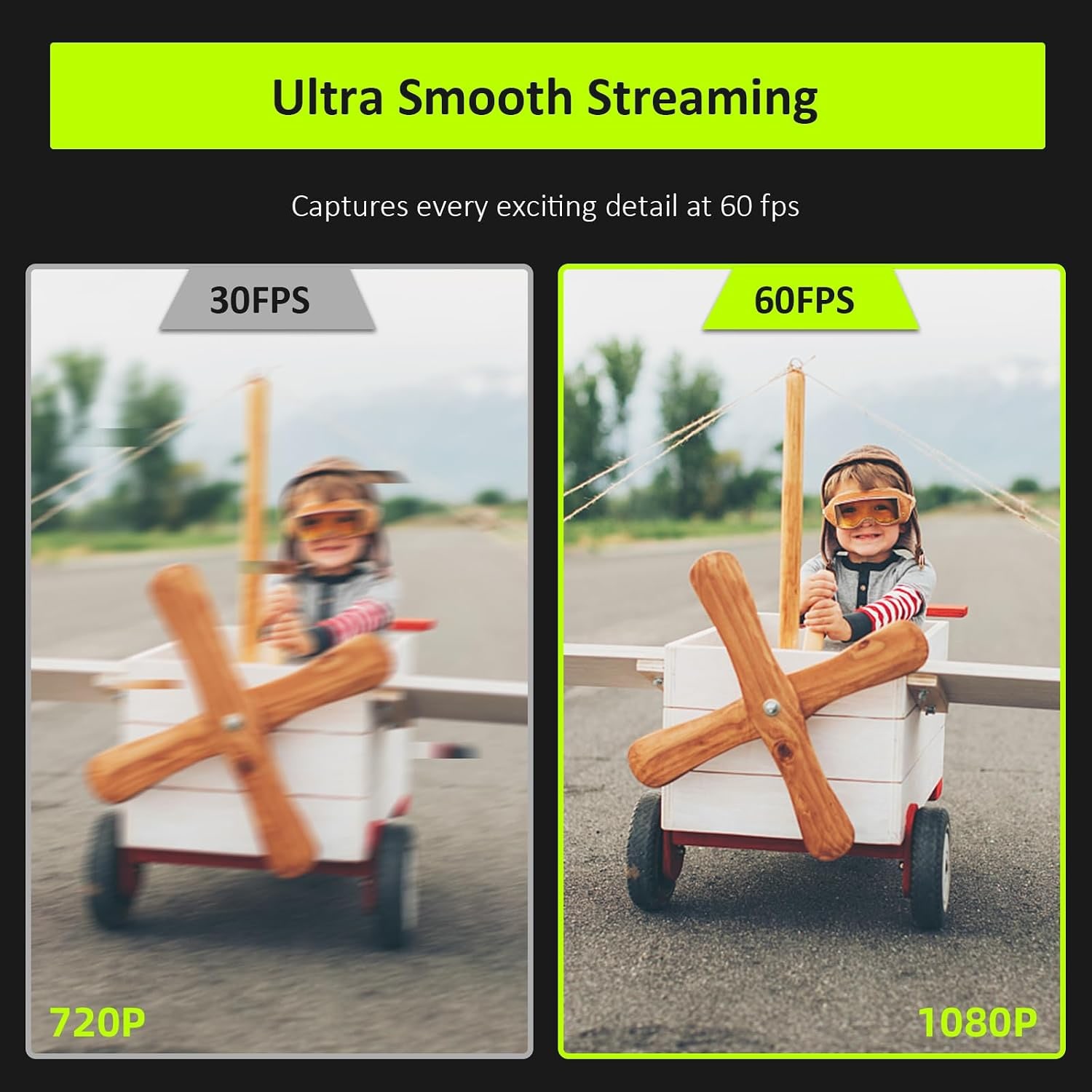
Streamers and anyone recording short video will care most about the 60 frames per second. Hand movement, gestures, demonstrating a tool or a technique, all of that reads smoother at 60fps than at 30. If you have been comparing options for the best 60fps webcam for gaming, frame rate plus controllable light is the pairing that actually changes what viewers see.
Who it suits less well is the group call around a conference table. At 65 degrees the frame is built for one person. A room camera needs a much wider lens.
How to choose between webcams
Start with light, not resolution. Almost every modern webcam claims 1080p, and most of them deliver something acceptable in a bright room. The difference shows up at four in the afternoon in winter. A camera with its own light, or a desk you are willing to light separately, will beat a higher-spec camera sitting in the dark every single time.
Then look at frame rate. Thirty frames per second is fine for talking heads. Sixty is noticeably better if there is motion, and it costs you nothing in daily use. Just know that many meeting platforms cap what they transmit, so the full 60fps usually shows up in recordings and streams rather than in a video call.
Check the focus type next. Fixed-focus cameras are cheaper and perfectly usable if you always sit at the same distance. Autofocus pays off the moment you hold something up to the lens or move around. This one is autofocus, which is the more forgiving choice.
Field of view deserves a thought. Wider is not automatically better. A 90 or 110 degree lens pulls in your whole room, which means your whole room needs to be tidy. At 65 degrees you get a clean head-and-shoulders frame with less behind you.
Finally, think about mounting and privacy. A clip is fine for a monitor. A 1/4 inch tripod thread, which this camera has, opens up a desk arm, a small tripod, or an overhead rig for showing your hands at work. And a physical sliding cover over the lens is simply more reassuring than trusting a software indicator light.
Setting it up well
Put the camera at or slightly above eye level. Below eye level is the single most common mistake, and it is unflattering on everyone. If your monitor sits low, raise it or put the webcam on a small tripod.
Deal with the window before you touch the light. A bright window behind you will fight any fill light. Turn your desk so the window is in front of you or off to the side, and the camera has a much easier job.
Then set the fill light to the lowest level that makes your face look even. People tend to crank it too high on day one. Start low and come up a little. The goal is to remove shadows, not to look like you are standing under a floodlight.
Position the microphone by positioning yourself. A built-in mic is at its best when you sit a normal arm's length from the screen. Shouting from across the room, or sitting so close you are breathing on it, both make the noise-canceling work harder than it needs to.
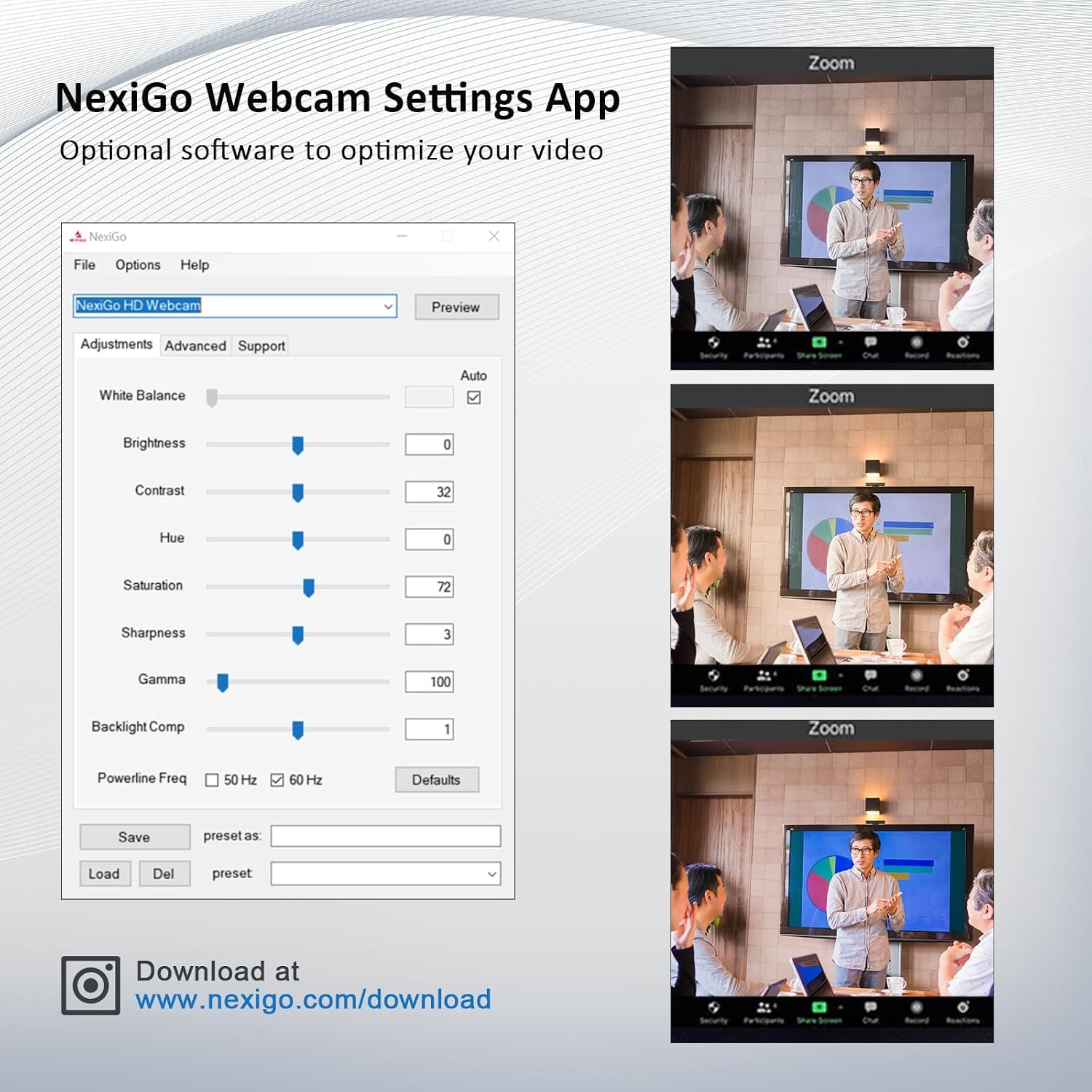
If you record rather than just meet, open your software's camera settings and confirm it is set to 1920 x 1080 at 60fps. Some apps default to a lower setting to save bandwidth and never tell you.
Looking after it
There is not much to it. Wipe the lens with a dry microfiber cloth when it gets dusty, using light pressure. Skip the sprays, the solvents and the compressed air, since all three can do more harm than the dust ever would.
Close the privacy cover at the end of the day. It keeps dust off the glass as well as doing its main job.
Unplug by gripping the connector rather than yanking the cable, which is how most USB devices eventually die. The unit is not water resistant, so keep it clear of drinks and damp spaces. At 0.23 kg it travels fine in a bag, though giving it a padded pocket rather than loose space with your keys is worth the small effort.
The short version
This is a Full HD webcam that solves lighting as well as sharpness. You get 1920 x 1080 at up to 60 frames per second, autofocus, a 65 degree frame, a built-in microphone with noise reduction, a sliding privacy cover and a 1/4 inch tripod thread, all over plug-and-play USB across Windows, Mac, Linux, Chrome OS and Ubuntu.
The ring light with three modes and stepless brightness is the reason to pick it over a plain camera. If your desk sits in a dim corner, or your calls run past sunset, that built-in light will do more for how you look on screen than another jump in resolution ever could. For one person at a desk, it is a sensible, uncomplicated upgrade.