
The complete guide
How To Choose A Rope Camera Strap That Actually Suits The Way You Shoot
The strap in the box is usually the weak link
Camera makers spend years on sensors, autofocus and lens coatings, then put a flat nylon band with their own logo in the box and call it done. That band works. It also slides off a smooth jacket, twists itself flat and flips over, bunches under a collar, and takes up more room in a bag than it should. Worst of all, it advertises exactly what you are carrying to anyone who glances at you on the street.
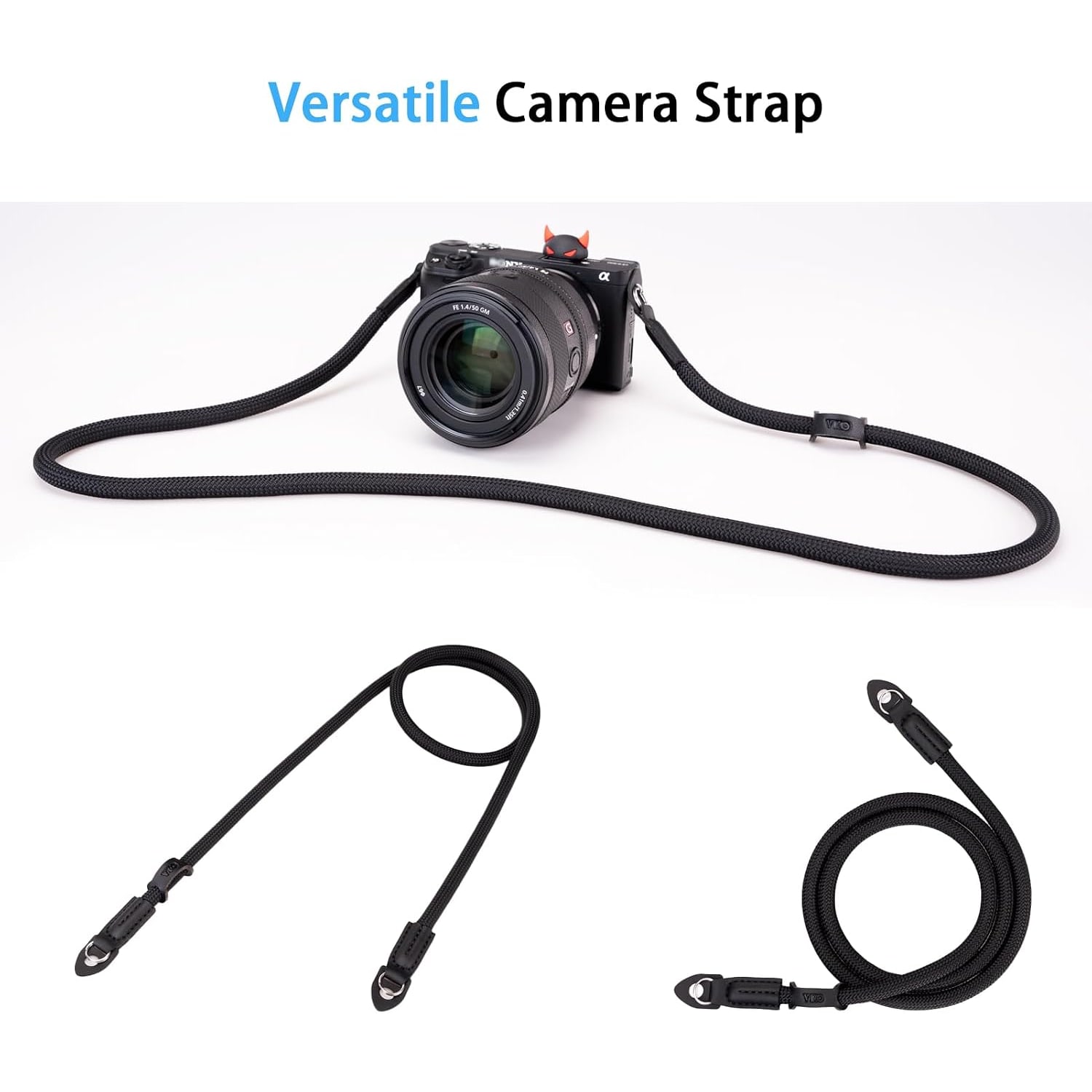
A braided rope strap fixes most of that. The cord is round, so it does not flip. It has more surface grip than slick webbing. It coils into a loop about the size of a fist. And it looks like a piece of cord, not a billboard.
That is the pitch, and it is a modest one. This is a small accessory that quietly makes carrying a camera more pleasant. It does not change your photographs. It does change whether you take the camera with you in the first place, which, over a year, probably matters more.
How a rope strap works
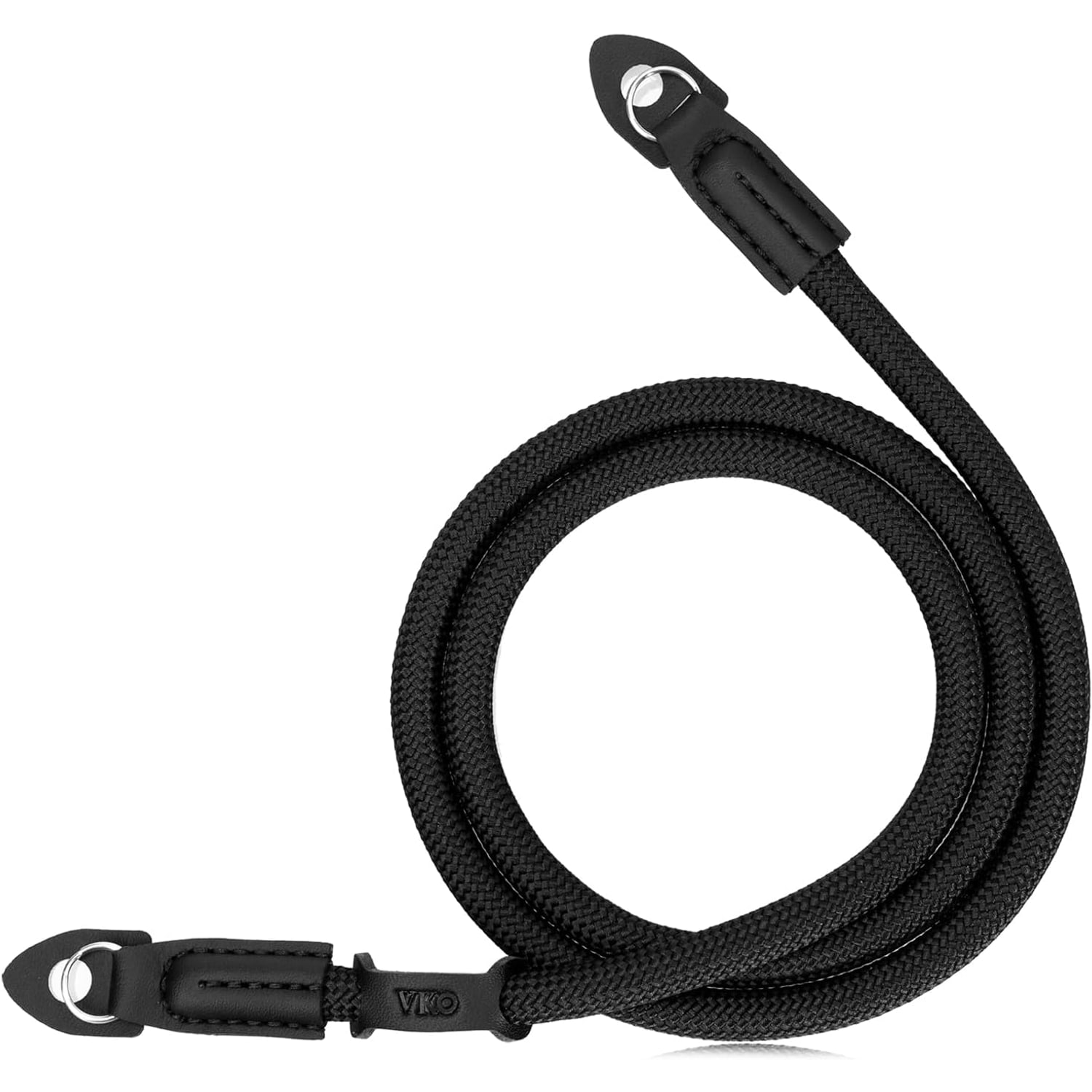
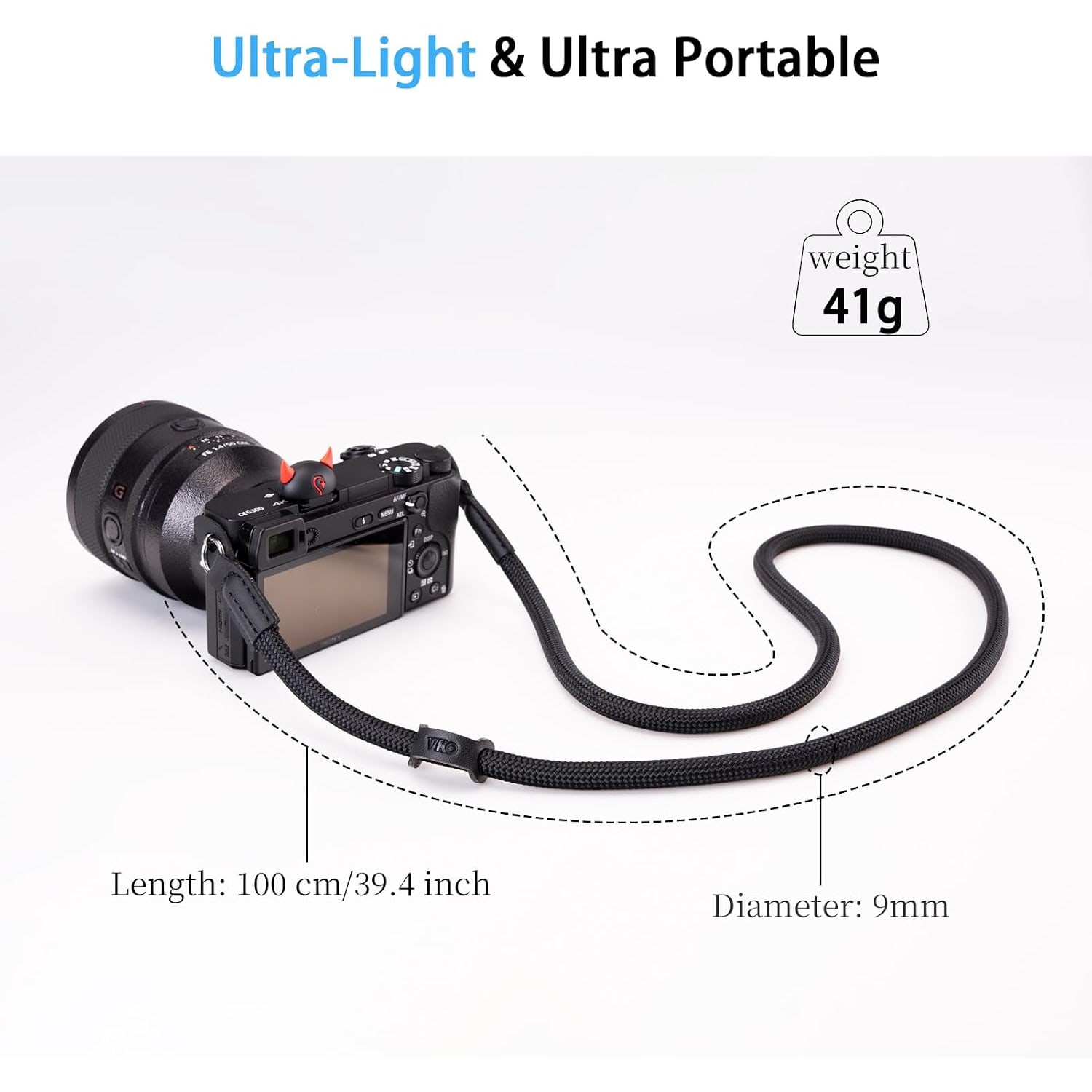
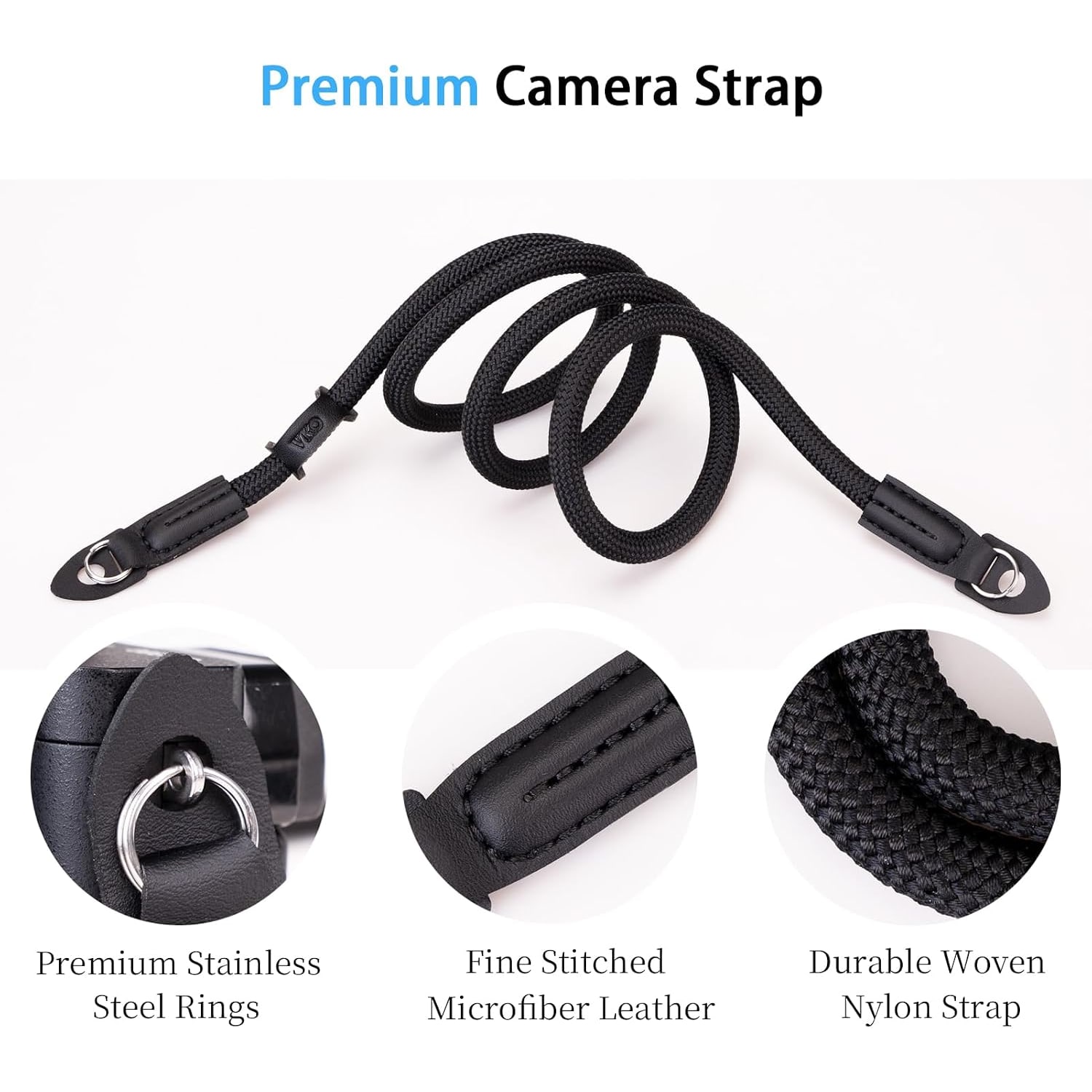
The idea is simple. A length of braided rope, 9mm thick and 100cm long in this case, is finished at each end with a leather pad and a metal ring. The rings thread into the round connection holes on your camera body, the way a key ring does. That is the whole mechanism.
Because there is no sliding adjuster, no plastic buckle and no quick-release hardware, there is very little to go wrong and very little to add weight. The strap comes in at a stated 45 g. You will feel the camera on your shoulder, not the strap.
The round profile is the part people notice first. A flat band concentrates load along two narrow edges, which is where that hot-spot feeling on the side of your neck comes from after a couple of hours. A 9mm cord presents a curved surface instead, and the pressure spreads around it. It is not padding, and it is not pretending to be, but it is noticeably kinder than bare webbing.
Who it suits
This is a strap for people who carry one camera and walk around with it. Street shooters, travelers, people documenting a weekend away, anyone photographing a market or a wedding reception from the crowd rather than from a tripod.
It also suits film shooters particularly well. Older SLR bodies use the same round lugs as modern cameras, and a plain braided cord looks right on a body from the seventies in a way that a logoed nylon band does not. The maker names the ae1 among the compatible cameras.
Binocular users get something out of it too. The same rings thread into the round holes on binocular housings, and the light weight is welcome on a long walk.
Where it is less useful is studio and tripod work, where the strap mostly hangs in the way, and very heavy professional setups with long telephoto lenses. For that kind of load, a wide padded strap or a two-point strap distributes weight better. The maker does not state a load limit, so if you are carrying something unusually heavy, use judgment.
Getting the length right
Length is the one decision you actually have to make, and it is the one people get wrong.
At 100cm, worn around the neck, the camera tends to sit around the middle of your chest for most adults. That is fine. It is quick to lift to your eye and it keeps the camera in front of you where you can see it.
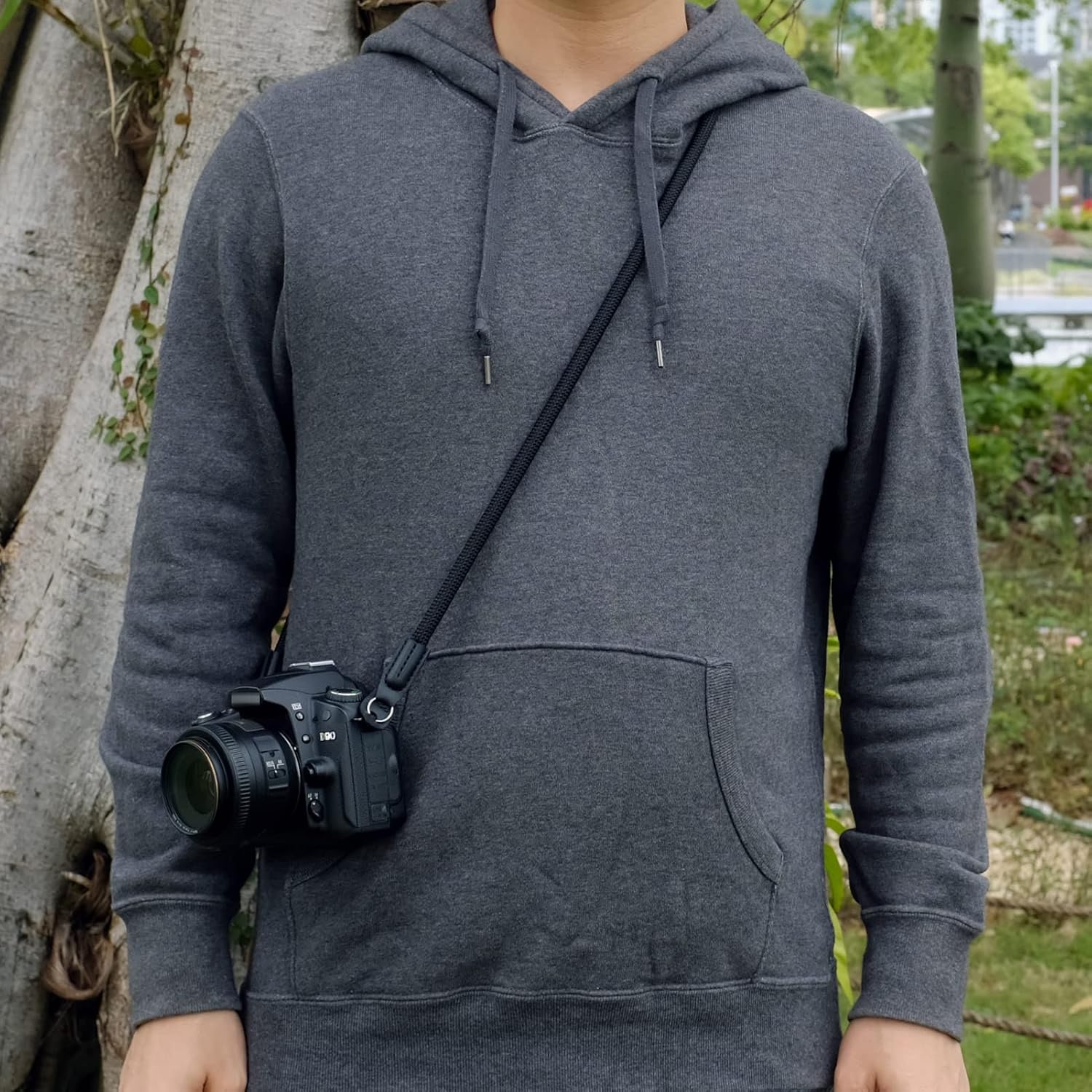
Worn crossbody, the same 100cm puts the camera closer to your hip on most people of average height or shorter. Crossbody is the better choice for long days. The weight goes onto one shoulder and across your back instead of pulling straight down on your neck, and the camera swings less because it is tucked against your side rather than bouncing off your chest.
If you are taller and you want that hip-level crossbody drop, 100cm will feel short and the camera will ride high under your arm. The 120cm version exists for exactly that reason. It is worth measuring before you order: hold a piece of string from one shoulder down to where you want the camera to sit, across your body, and back up. That number is your strap length.
A quick note on how you wear it day to day. Many people switch between the two, neck carry while shooting in one spot, crossbody while walking between spots. At 100cm you can do both, with the understanding that crossbody will sit higher than it would on a longer strap.
Attaching it without worry
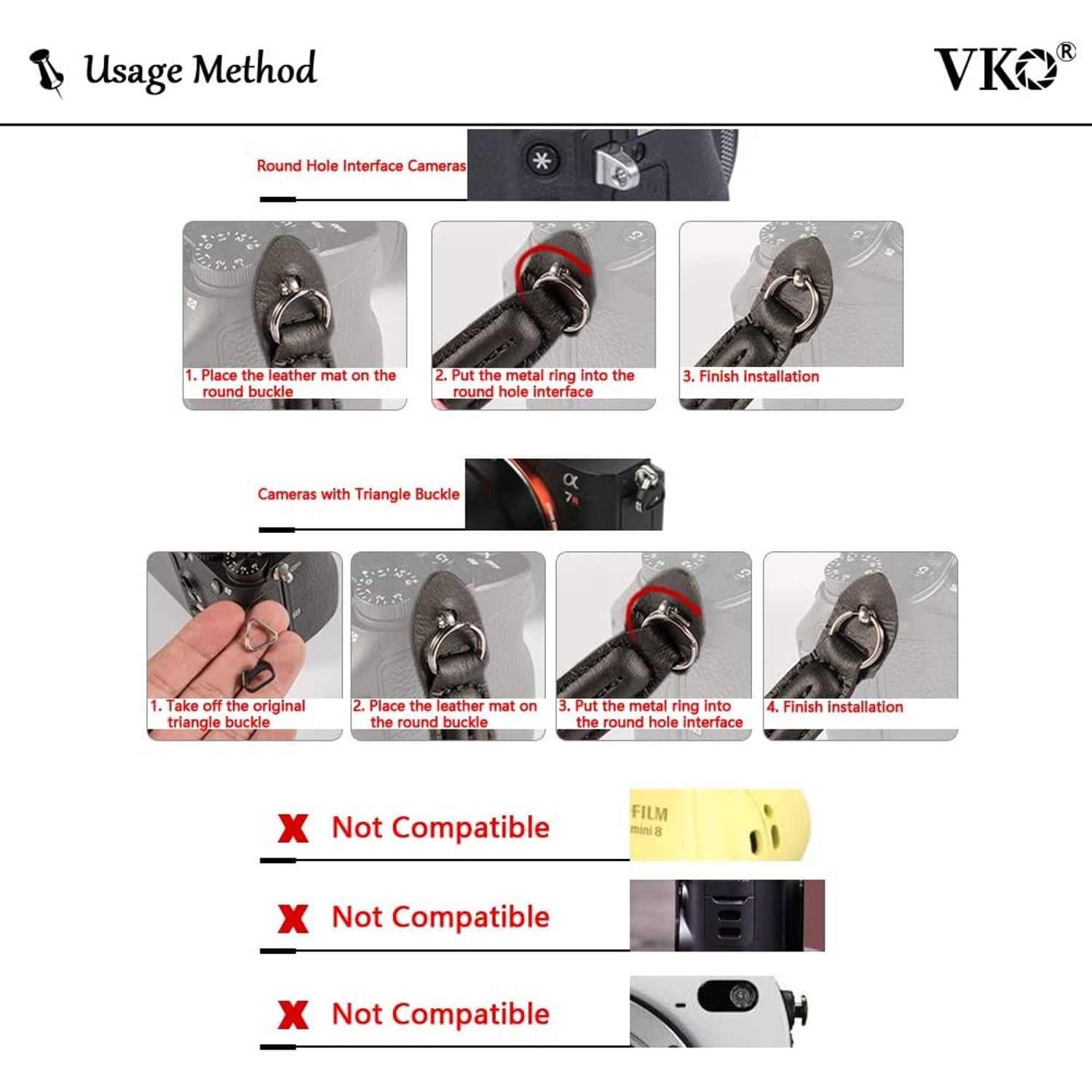
The maker's photos show the method. Place the leather pad on the camera lug, then thread the metal ring into the round hole until it is all the way on. If your camera has triangle rings, take the original triangle ring off first. Give the strap a short tug before you let go of the camera.
Do that every time you reattach the strap or move it between bodies. It takes a second. The failure mode for any strap is a connection that looked secure but was not, and a second of checking removes it.
If you shoot with two cameras, one strap can serve both. Unthreading and refitting the rings takes a little patience, so do it at home rather than mid-shoot.
Looking after it
Care is undemanding. Wipe the rope and the leather ends with a slightly damp cloth when they pick up dust or sweat, then let them dry at room temperature. Keep the strap away from radiators, heaters and strong direct sun while it dries, since fast heat is harder on leather than on nylon.
Two things to avoid, per the supplied care note. Extreme heat, which covers leaving it on a dashboard in summer as much as drying it on a heater. And sharp objects, which in practice means being a little careful about how you pack it. Tripod screw threads, pocket knives and open zipper teeth are the usual culprits for nicking a braid.
Do not machine wash it, do not bleach it and do not tumble dry it. For storage, a loose coil in a bag pocket or a drawer is all it needs. Avoid leaving it pinched flat under something heavy for months.
Check the rings and the leather ends every so often. Any sign of the stitching loosening or a ring opening up is worth catching early.
A few things this strap is not
It is not a quick-release system. The rings are the attachment, and while you can unthread them, it is not a one-second operation. If you move between a tripod and handheld constantly, a strap with purpose-built clips will annoy you less.
It is not adjustable. You buy the length you need. That is a fair trade for having no hardware to slip or rattle, but it does mean measuring first.
It is not padded. The round cord is more comfortable than flat webbing, but under a very heavy rig over a long day, padding wins. Know which situation you are in.
The short version
If you carry a mirrorless body, a DSLR or a film SLR around and the strap that came in the box irritates you, a braided rope strap is a cheap and sensible upgrade. It is light at a stated 45 g, it coils down small, it grips better than webbing, and the plain black finish works with old cameras and new ones.
Get the length right and the rest takes care of itself. Under about 5 feet 9 inches and you want crossbody, 100cm is your size. Taller than that, or you want a deeper hip-level drop, go 120cm. Attach it carefully, wipe it down now and then, and it will quietly do its job for a long time.