
The complete guide
How to Choose a Wide Camera Strap That Actually Takes the Weight
The problem nobody warns you about
You buy a camera. You are excited. You hang the little strap it came with around your neck and head out. Three hours later you have great photos and a sore spot just above your collarbone where a half-inch of woven nylon has been sawing away all afternoon.
This happens to almost everyone. The strap in the box is not designed for comfort. It is designed to be cheap, flat and small enough to fit in the carton. It does keep your camera off the sidewalk, which is the main thing, but it concentrates every ounce of body and lens into one thin line.
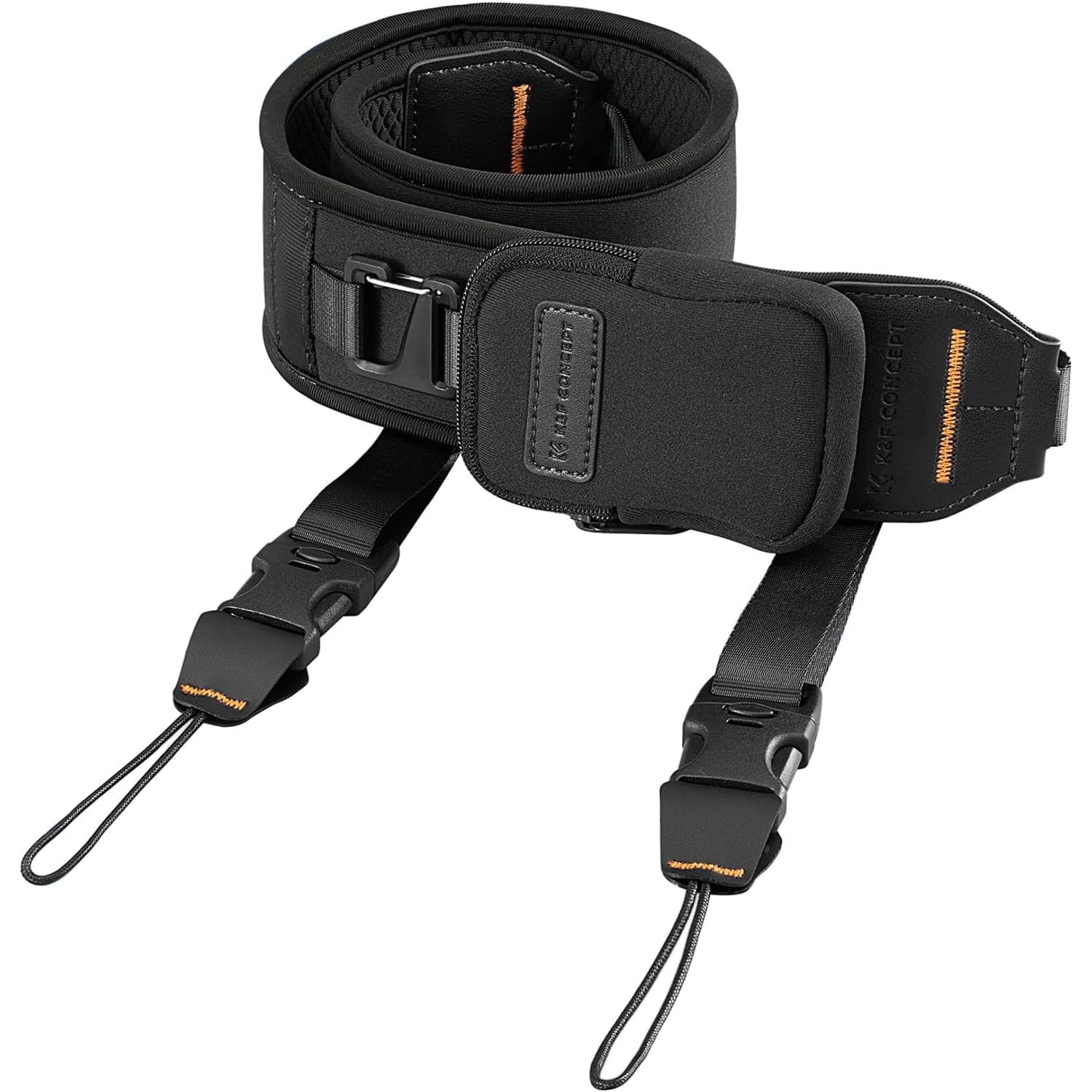
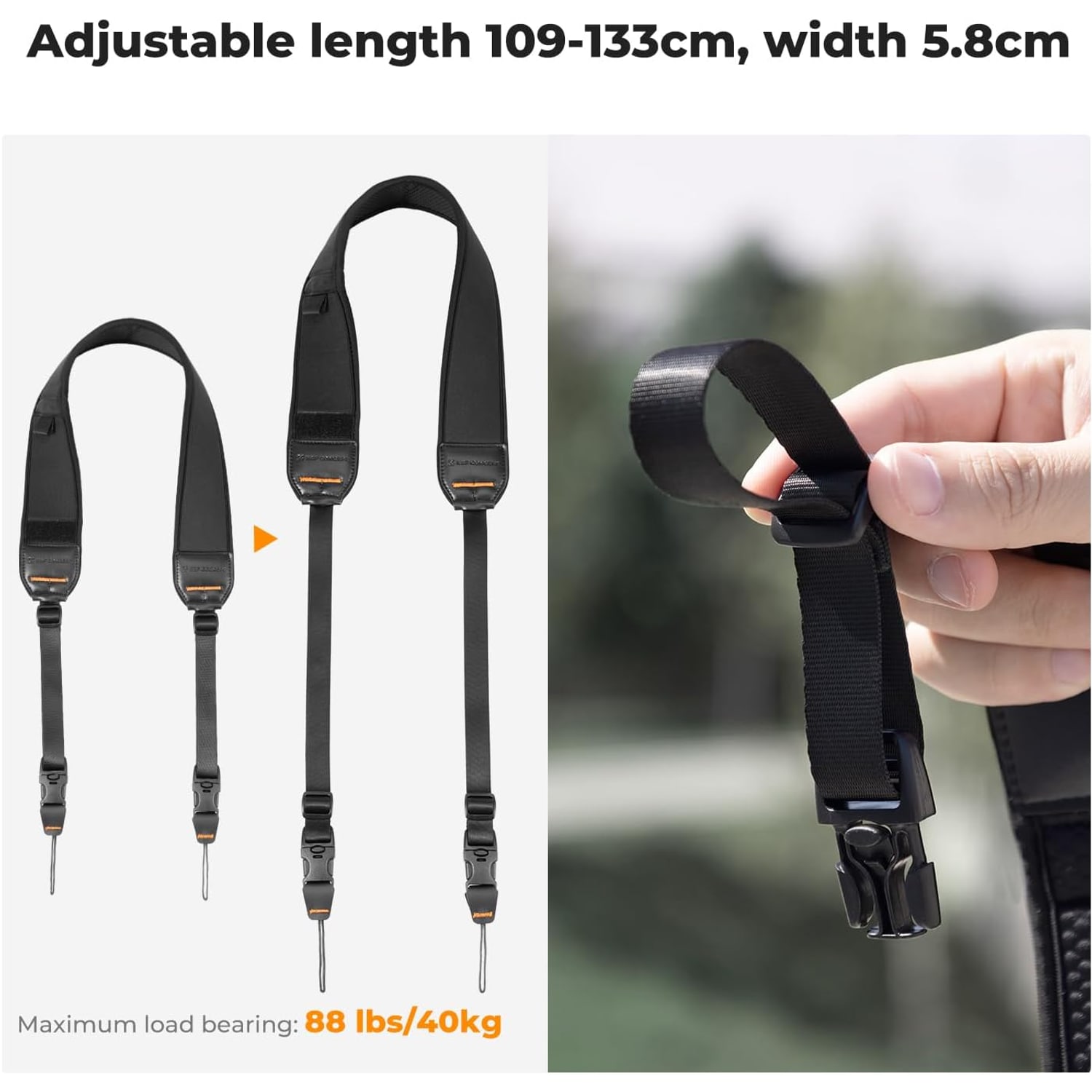
Change the width and the experience changes with it. A 58 mm neoprene pad carries exactly the same weight, but it does so across a much larger patch of skin. The pressure at any one point drops. That is simple physics, and it is why a wide camera strap is usually the first accessory people recommend once someone starts shooting for more than an hour at a time.
How a padded strap actually works
There are three things going on with a good wide strap, and they matter in different ways depending on how you shoot.
The first is load spreading. Neoprene is a closed-cell foam, the same material used in wetsuits. It is soft but it does not crush flat. Press on it and it pushes back a little. That springiness means the pad keeps its shape under a camera body instead of compressing into a hard ridge, so it keeps doing its job through a long day.
The second is grip. The side of this strap that faces your body has small uneven lines and stripes molded into it. They catch lightly on fabric. When you crouch, lean over a railing or turn quickly, the strap is less inclined to walk off your shoulder. Anyone who has caught a sliding camera with an elbow knows how much that matters.
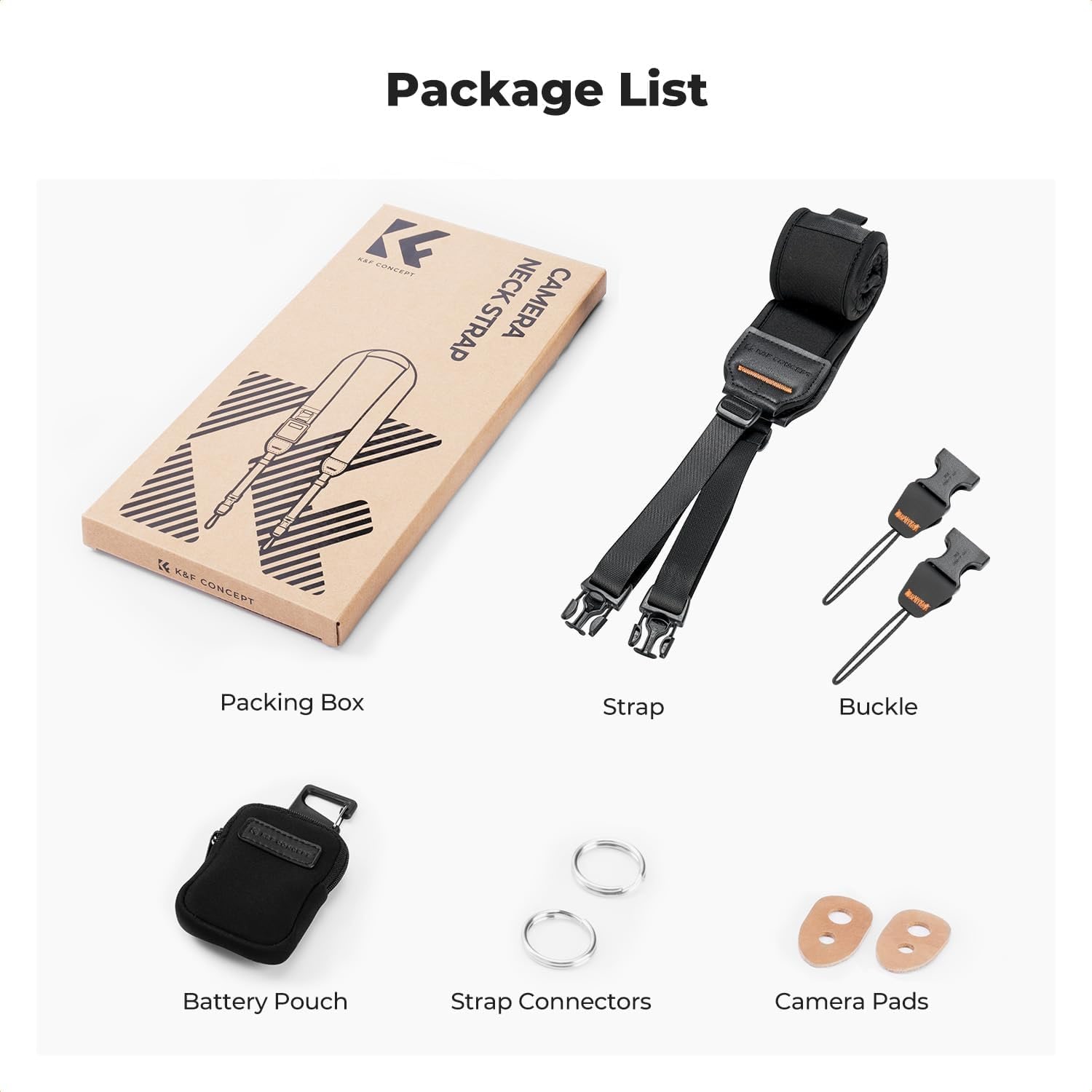
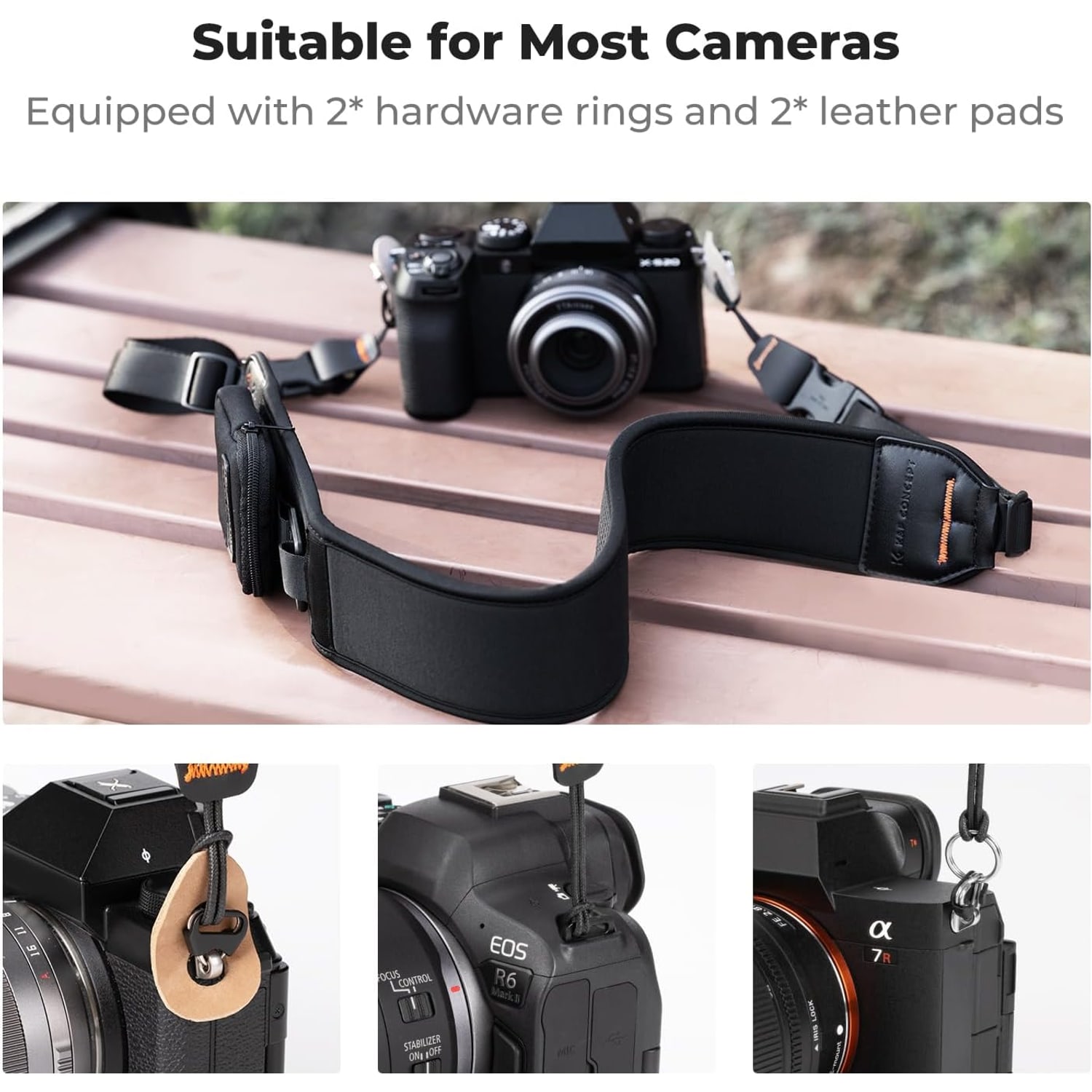
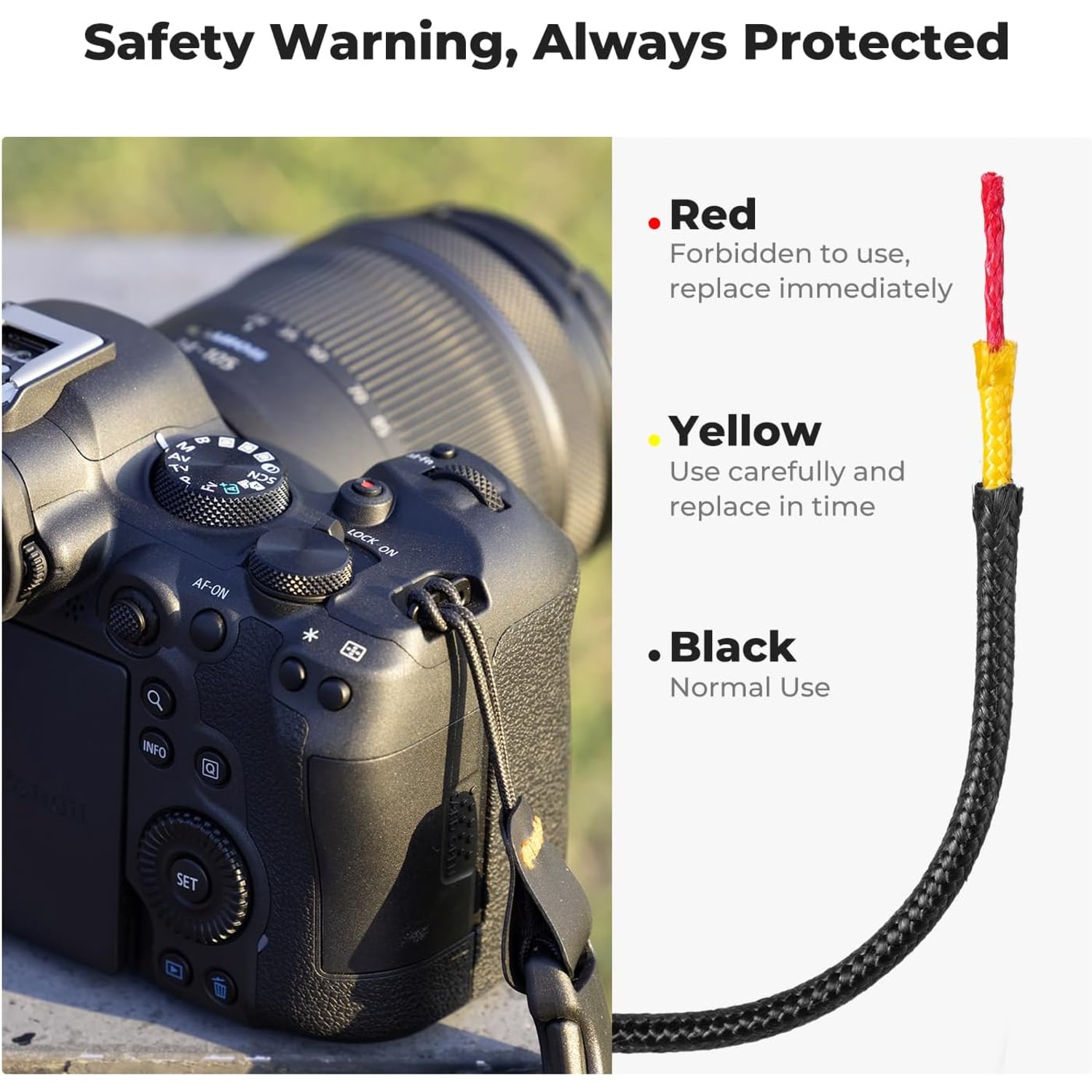
The third is attachment. This strap uses braided cord described as three layers, along with hardware rings, plus a UTX buckle. The cord loops through the camera lugs. A pair of anti-scratch leather stickers is included, and those sit between the metal and the camera so the rings do not wear the paint around the lugs.
Who this suits
If you shoot weddings, events, sports or anything else where the camera is around your neck for hours, a wide pad is less a luxury and more a basic repair to the setup. The same goes for anyone carrying a heavy zoom. A 70 to 200 mm lens on a full-frame body is a serious weight, and a thin strap makes you feel every gram of it.
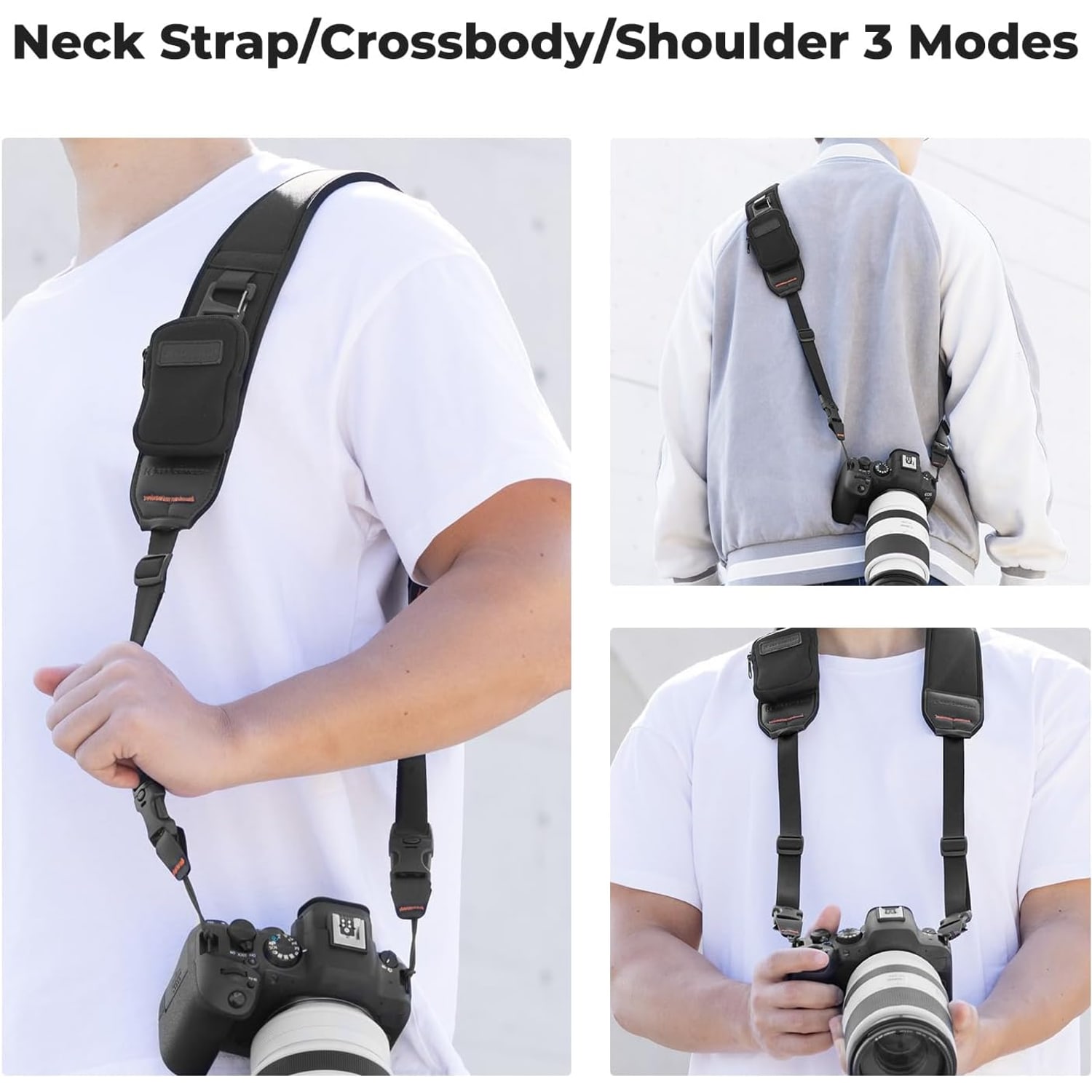
Travelers benefit too, though for a slightly different reason. On a trip the camera is on you all day, over different clothing, in different weather. An adjustable belt lets you pull it short and tight across the chest in a busy market, then let it out to a looser walking length on a quiet road. That flexibility matters more over two weeks than it does on a single afternoon.
Beginners with a kit lens sometimes think they do not need it. They usually change their mind after the first full day out. Even a modest setup gets heavy once you have been walking since breakfast.
The one group that might not need it is people who shoot almost entirely from a tripod, or who work from a bag and only lift the camera for a shot. If the camera rarely hangs on you, the thin strap is fine.
What to look for when you compare
Width is the headline number, but it is not the only one. Here is what actually separates a good strap from a frustrating one.
Material. Neoprene is the common choice because it is soft, has useful stretch, and wipes clean. It is not breathable, so on a hot day you will feel it. Leather looks smart but is stiffer at first and needs more care. Woven nylon is light but brings you back to the pressure problem.
Attachment method. Cord attachment, which this strap uses, fits almost any camera with lugs, and the buckles near each end let you take the strap off without unthreading the cord. Whichever you choose, loop or click it properly and give it a firm tug before you trust it.
Adjustment range. A strap that only adjusts a few inches will suit one carry position and fight you in every other one. Look for a decent span so you can switch between chest and hip height.
Extras that earn their place. The removable zip pocket on this strap is a good example. It takes a spare battery or a memory card, which means you stop opening your bag every time you need one. Because it detaches, you can also clip it to a backpack strap and leave the camera strap bare when you want less bulk.
Hardware quality. The buckle and rings carry everything. The maker names the buckle hardware as UTX, and the photos show side-release buckles near each end. Check that any buckle on any strap clicks all the way shut each time you fasten it.
Getting the length right
This is where most people leave comfort on the table. They fit the strap, find it roughly works, and never touch it again.
Try three positions in your first week. Short, with the camera sitting high on your chest, is fastest for raising to your eye and best in a crowd because the camera stays in front of you. Medium, with the body resting near the bottom of your ribs, is the usual all-day compromise. Long, with the camera at hip level and the strap worn cross-body, is the most comfortable for walking but the slowest to bring up to your eye.
Your best setting depends on your height, the size of your lens and what you are shooting. Change it when the situation changes. That is the whole point of an adjustable neck strap for camera use.
Looking after it
Neoprene is easy. Wipe it with a damp cloth and a little mild soap, then let it air dry somewhere away from direct heat. Do not machine wash it, do not tumble dry it, and keep bleach and irons well away.
The part worth more attention is the hardware. Every few outings, look at the cord where it passes through the camera lugs, check the loops are still tight, and make sure the rings have not worked loose. These are the parts that fail, and they usually give warning signs before they do.
When you store the camera for a long time, loosen the strap so the pad is not folded hard against the body. Neoprene recovers well, but it is better not to put a permanent crease in it.
A note on fit
This strap is listed as compatible with Sony, Canon, Nikon, Fuji and other DSLR cameras, and the item highlight extends that to SLR and mirrorless bodies. In practice, if your camera has standard strap lugs or triangular rings, the cord attachment will work. The included hardware rings are there to widen that compatibility further.
A camera with a battery grip is no problem, as long as the lugs are still there. A very small compact may not need a pad this wide, but it will still attach if the camera has mounting points.
The short version
A thin factory strap puts all the weight of your camera into one narrow line. A 58 mm neoprene pad spreads it out, and that one change is what makes a long day with a camera more comfortable.
This strap adds a textured anti-slip underside so it stays on your shoulder, an adjustable belt so you can set the carry height you want, a removable zip pocket for a spare card or battery, and a UTX buckle with braided cord attachment. Leather anti-scratch stickers protect the camera where the hardware sits. It weighs 0.11 kg and comes in black.
If you carry a camera for more than an hour at a stretch, this is one of the cheapest upgrades that changes how the whole day feels.