
The complete guide
How to Choose a Memory Card Case That Actually Protects Your Shots
The problem with loose memory cards
Memory cards are the smallest and most valuable thing in a camera bag. A single card can hold a wedding ceremony, a week of travel, or a client job you cannot reshoot. Yet most of us treat them like loose change. They end up in jacket pockets, in the little plastic sleeve they shipped in, taped to the inside of a laptop bag, or rolling around the bottom of a backpack with keys and lens caps.
That is where the trouble starts. A card in a pocket goes through the wash. A card in a bag picks up grit in the contacts. A Micro SD card sitting on a desk gets knocked behind a cabinet. And the worst version of all: you arrive at a shoot, reach for the card you know you packed, and it is not there.
A dedicated case fixes a problem you may not have realized you had. It is not about the plastic. It is about always knowing where every card in your kit is.
What this case does
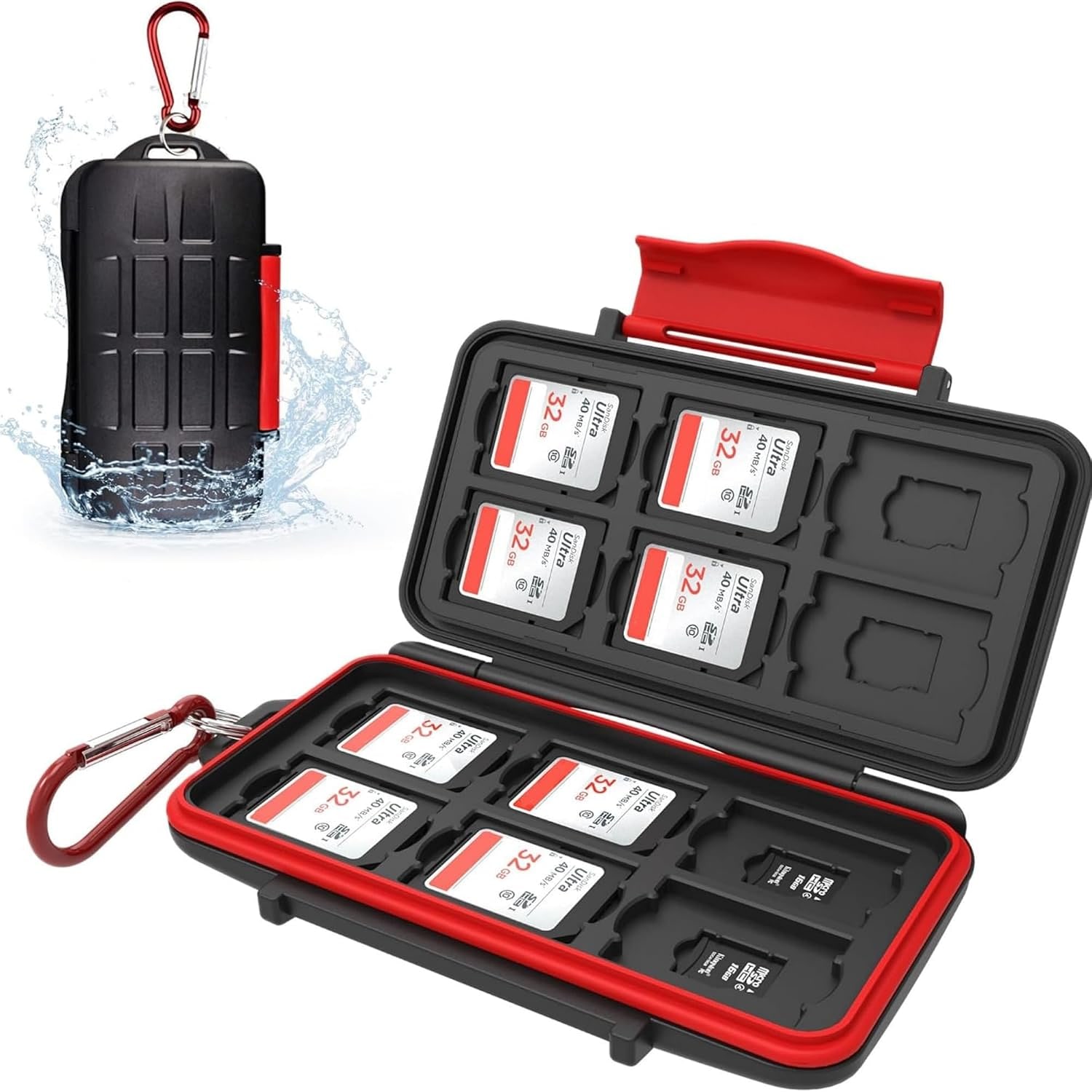
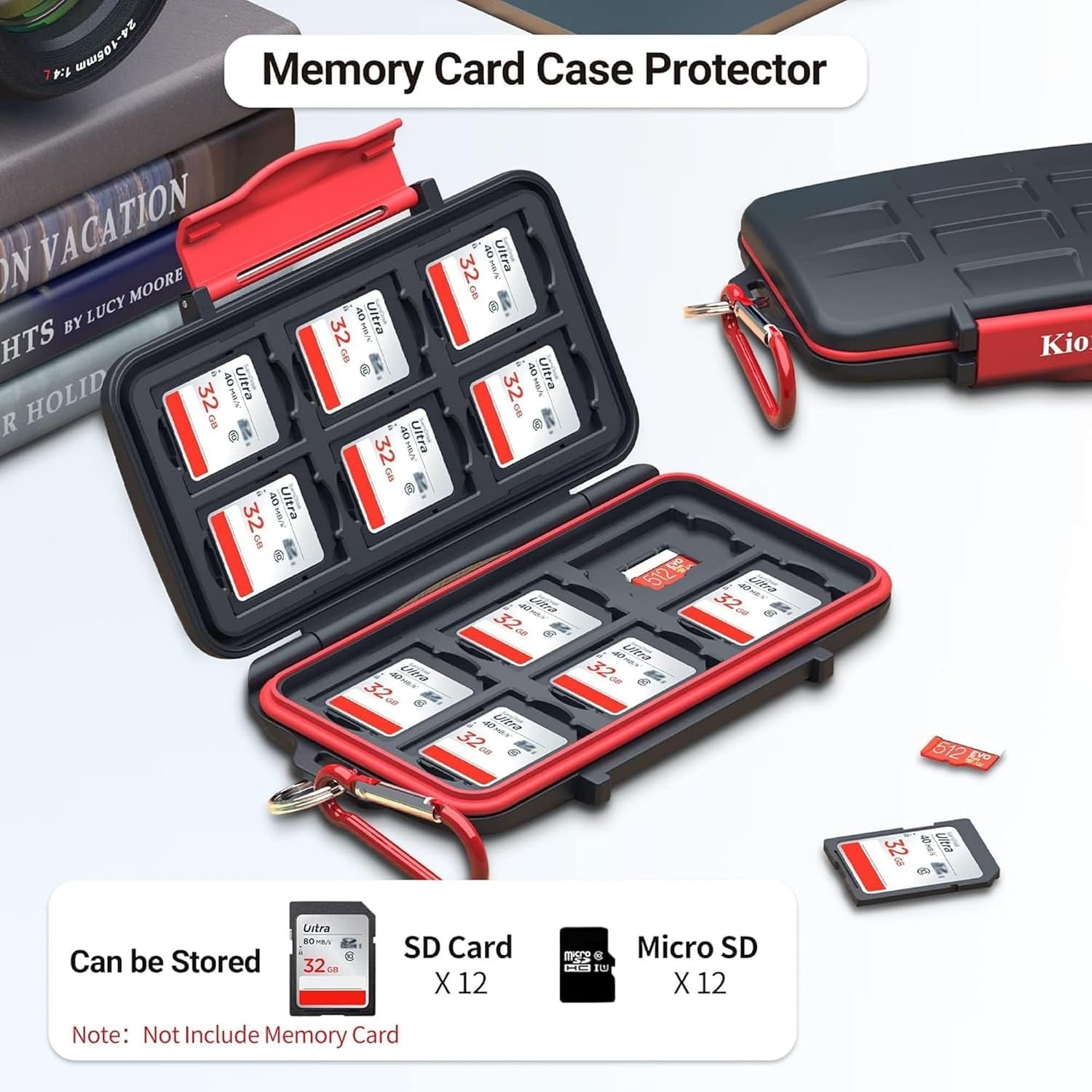
This is a 24-slot case, for twelve full-size SD cards and twelve Micro SD or TF cards. The product photos show both card types stored on both halves of the case, with a Micro SD recess molded into each SD position. That mix matters more than it sounds. Most working photographers now carry two card formats, because the main camera takes SD while the drone, the action camera and sometimes the audio recorder all take Micro SD. Carrying one case for each format is annoying. Carrying one case that handles both is the whole point.
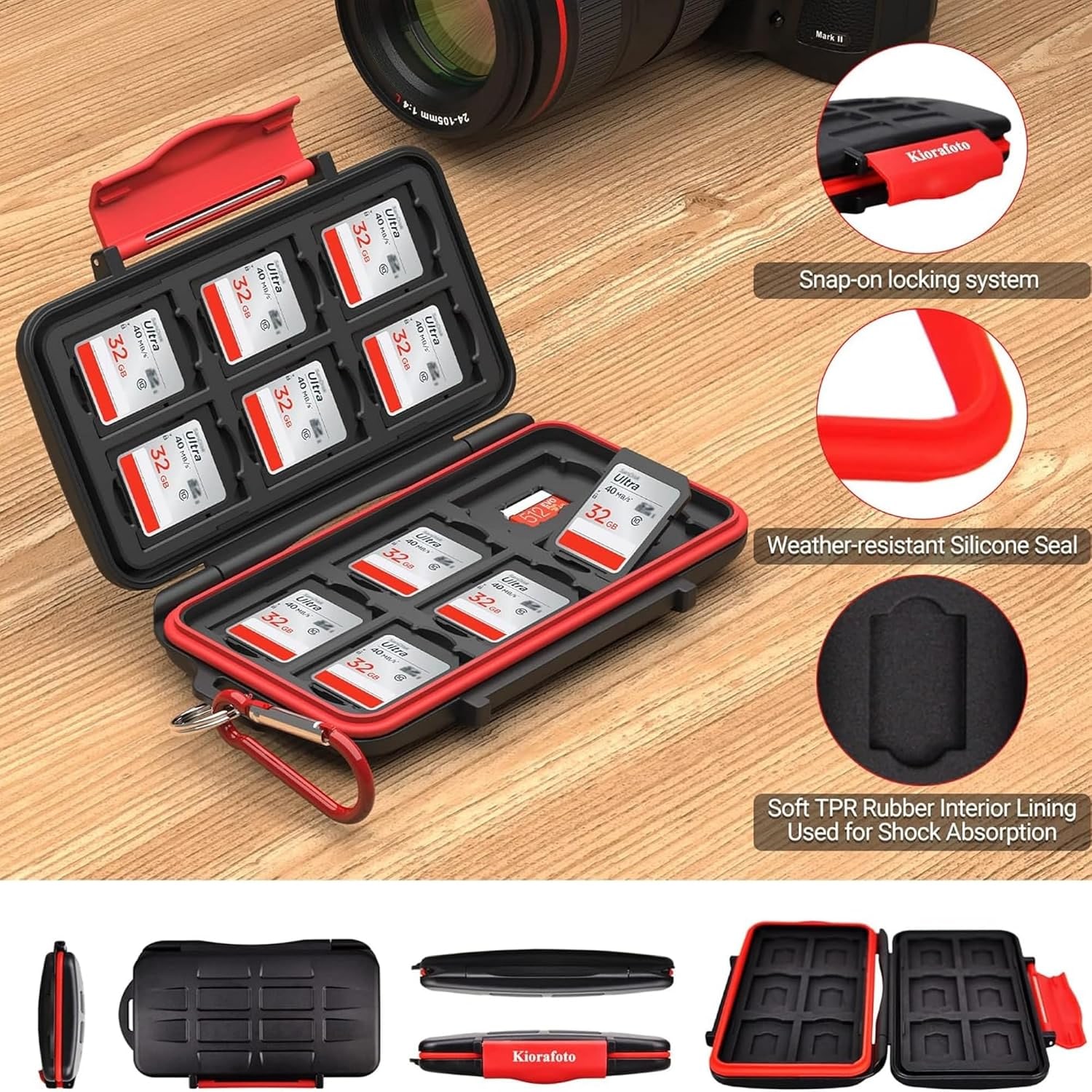
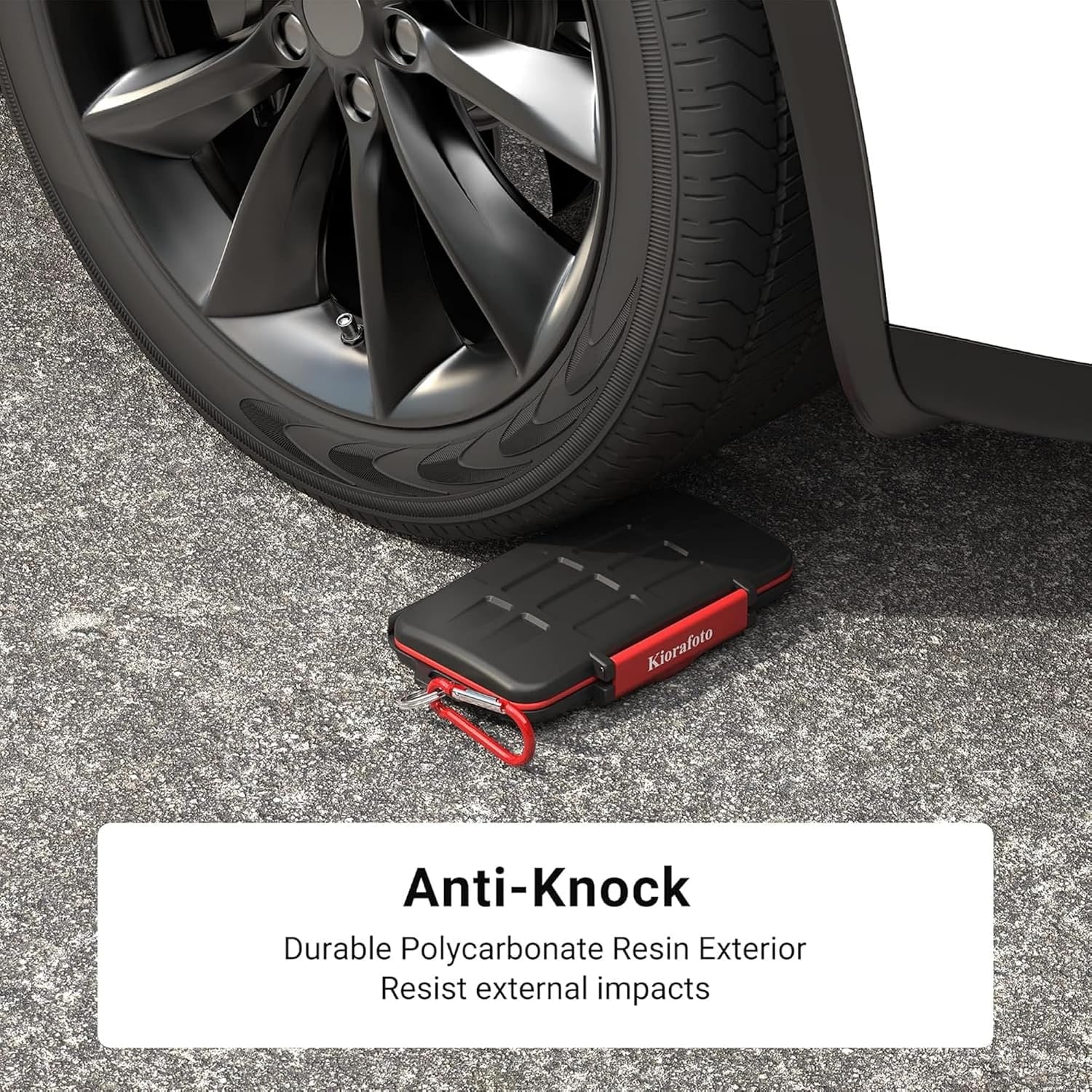
The construction is two materials doing two jobs. The outside is polycarbonate resin, which the maker calls durable and says resists external impacts. The inside is a molded rubber lining that grips each card, so cards do not slide, rattle or work themselves free when the case is bouncing around in a bag on a gravel road.
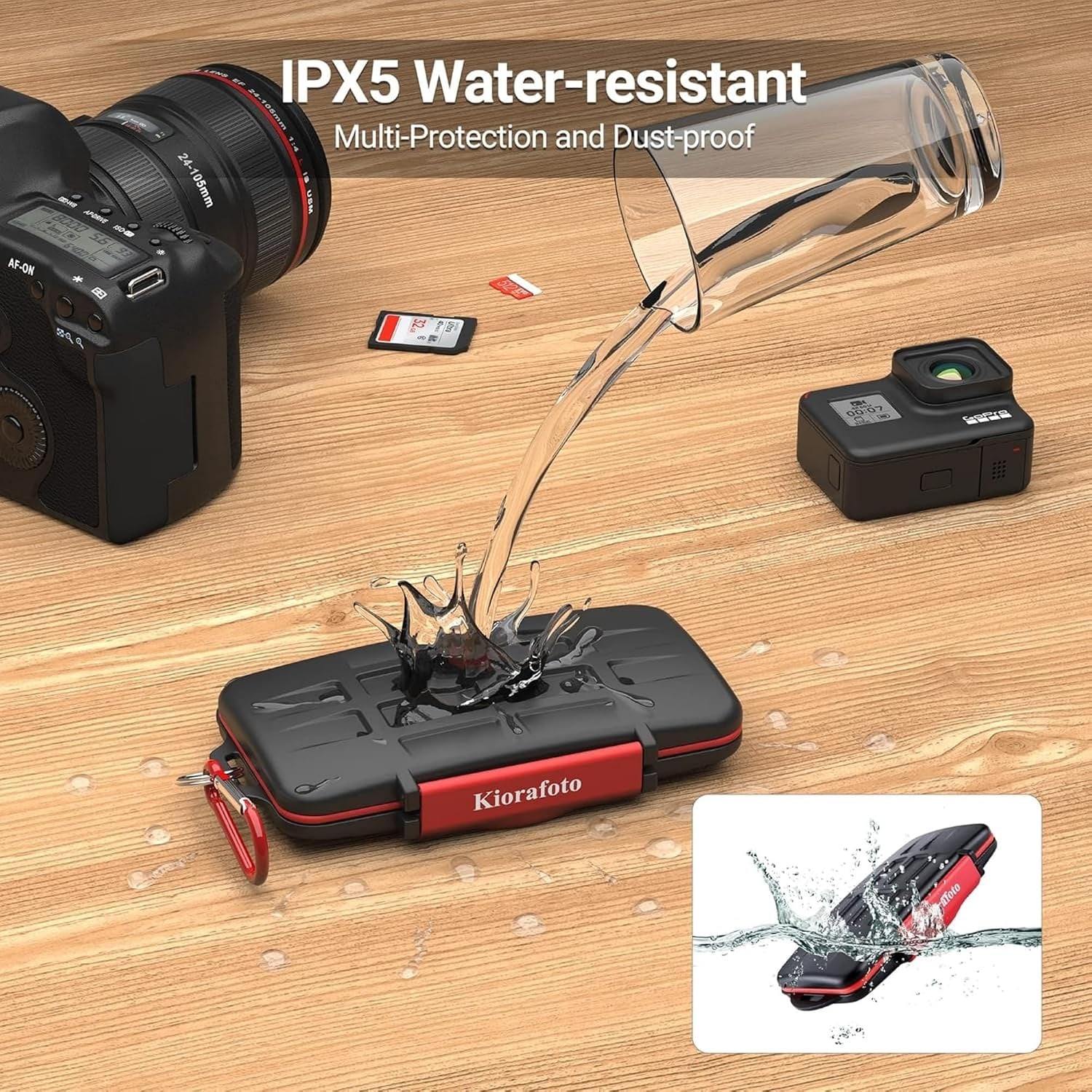
Around the lid there is a weather-resistant seal. The maker's product name calls the case IPX5 water-resistant, and the seal is there to keep water, dust and debris out. Think of it as protection against rain, spray, a spilled drink in a bag and the fine dust you pick up on a beach or a trail. It is not a dive case, so do not go swimming with it, but for the conditions most photographers actually work in, it does the job.
The case measures 5.63 x 3.23 x 1.1 inches and weighs 138.91 g. It is a little thicker than a flat fabric card wallet, which is the price you pay for a hard shell.
The eyelet is more useful than it looks
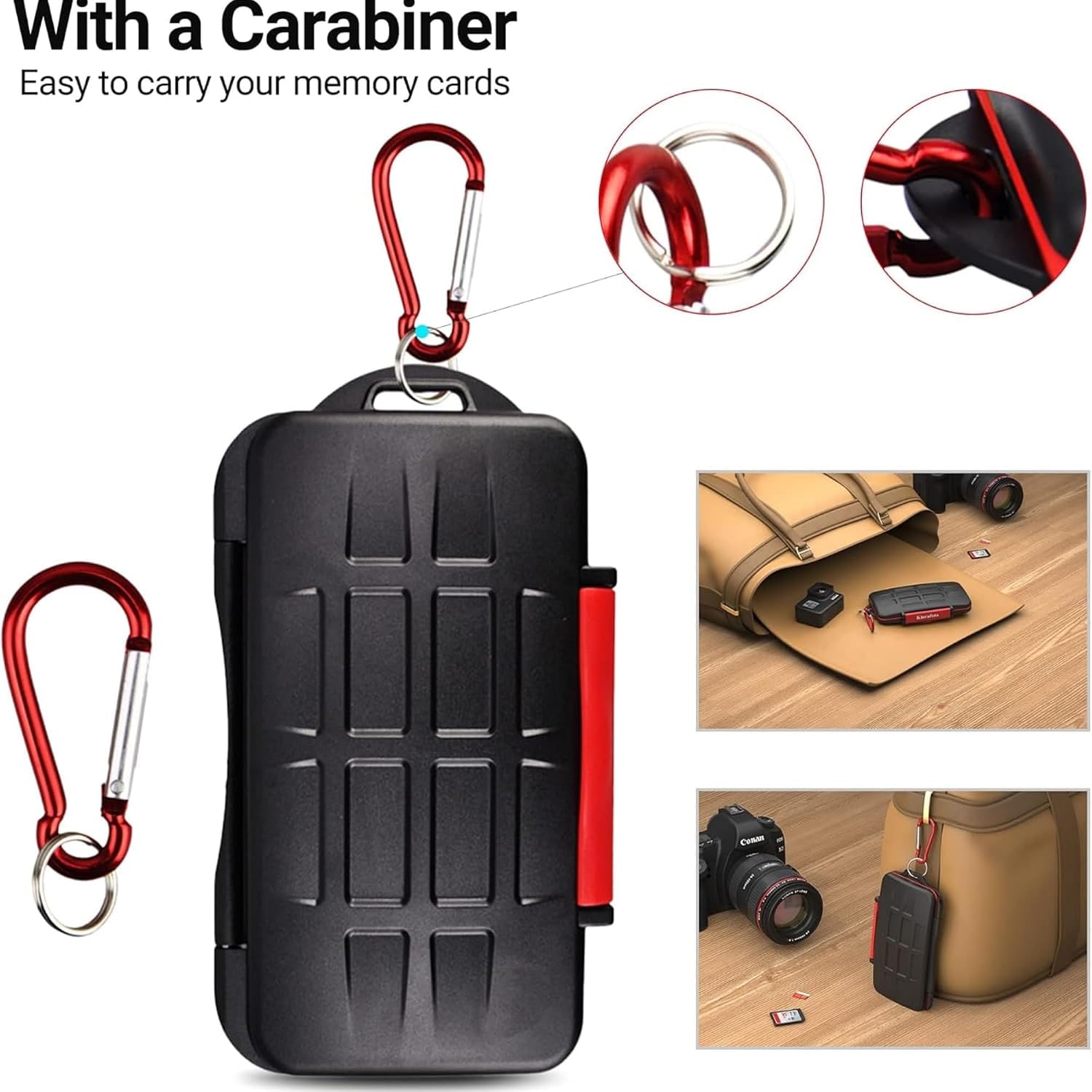
There is a molded eyelet on the body for attaching the case to a strap or hook, and a carabiner is included. On paper that reads like a throwaway feature. In practice it is the part people use most.
Clip the case to a camera strap and it hangs where your hand already goes. Clip it to the outside of a bag and you never have to unpack the bag to find it. Thread a short lanyard through it and loop that around a belt loop while you are swapping cards on a windy clifftop, and the case cannot blow away or drop into the grass. Anyone who has lost ten minutes of a shoot searching for a dropped case will understand the value of a fixed attachment point.
Who it suits
Wedding and event shooters are the obvious group. Running two bodies across a twelve-hour day means handling a lot of cards, often in low light, often in a hurry. A case with fixed positions and a rubber grip means you can find an empty card by feel.
Travel photographers benefit for a different reason. On a three-week trip, cards accumulate, and the risk is not damage so much as confusion. Which one has the first week? Which one is still blank? A 24-slot case gives you a grid you can manage like a filing system. Many people choose a travel sd card case on exactly that basis, not on the plastic, but on how easy it is to stay organized when you are tired and jet-lagged.
Drone pilots and action camera users tend to live on Micro SD, and twelve slots is plenty for a long project. Videographers running multiple cameras can keep an entire production's cards in one place. And then there is the everyday case: the person with a DSLR, a dash cam and an old phone card, who just wants them all somewhere sensible.
How to choose a card case
A few things actually separate a good case from a poor one.
Slot count and format mix. Count the cards you own, add a couple of spares, then check the split between full-size and Micro. Buying a case that only handles one format means you will still have a second pouch floating around.
Shell material. Hard shells protect against crushing. Soft fabric wallets fold flat but offer very little when a bag gets dropped or loaded with a laptop on top. A polycarbonate shell with a rubber interior gives you both, with the hard part taking the hit and the soft part cushioning the card.
Sealing. A seal that keeps dust out is arguably more useful day to day than one that keeps water out. Dust and sand in a card slot can cause read errors in your camera. A lidded, sealed case keeps contacts clean.
Attachment point. If there is nowhere to clip it, the case will end up at the bottom of a bag. An eyelet changes how you use it.
Grip. Loose cards in a hard plastic tray rattle and can pop free when the case opens. A molded rubber lining holds them steady.
A system that works
Here is a simple method plenty of shooters use. Load empty cards in the top row and work left to right. Every time a card comes out of the camera full, put it back in the bottom row, face down. One glance tells you how much space you have left for the day. If you shoot with two people, give each person a half of the case.
For longer trips, add a step. Once footage is backed up to a drive or laptop, move that card to a specific corner slot and leave it there until you are home and the backup is verified twice. That corner becomes your do-not-touch zone. It is a low-tech habit, but it has saved a lot of footage.
Keeping it in good shape
Care is straightforward. Wipe the shell with a soft, slightly damp cloth and dry it before closing. Brush sand and dust out of the rubber slots after any beach, desert or trail work, because grit in the lining will eventually transfer to card contacts. Do not soak the case or put it anywhere hot for long stretches, like a dashboard in summer sun. If moisture ever gets inside, leave it open to air out before you reload cards.
The cards themselves need little more than a dry home and a sensible reformatting routine in-camera rather than on a computer.
The short version
Memory cards are small, expensive and carry work you cannot replace. This case holds 24 of them, twelve full-size SD and twelve Micro SD or TF, in a polycarbonate shell with a molded rubber interior and a weather-resistant seal against water, dust and debris. It measures 5.63 x 3.23 x 1.1 inches, weighs 138.91 g, and has a molded eyelet and a carabiner so you can clip it to a strap instead of losing it in a bag.
Cards are not included, so fill it with what you already own. If you shoot on more than one camera, or you have ever spent a shoot morning hunting for a card, this is a small purchase that quietly removes a recurring headache.