
The complete guide
How to Choose a Tall Camera Tripod That You Will Actually Use
The problem with holding a camera in your hands
Your hands are never quite still. Even when you think they are, they are making tiny movements, and at slower shutter speeds those movements show up as soft, smeared photos. Indoors in the evening, at a restaurant table, at a school concert, in a museum: these are the moments where handheld shots fall apart, and they are also the moments people most want to keep.
Then there is the second problem, which is being in the photo at all. Anyone who takes the pictures in a family knows this one. Scroll back through a year of photos and the person behind the camera is simply absent. A tripod and a remote fix that in about ten seconds.
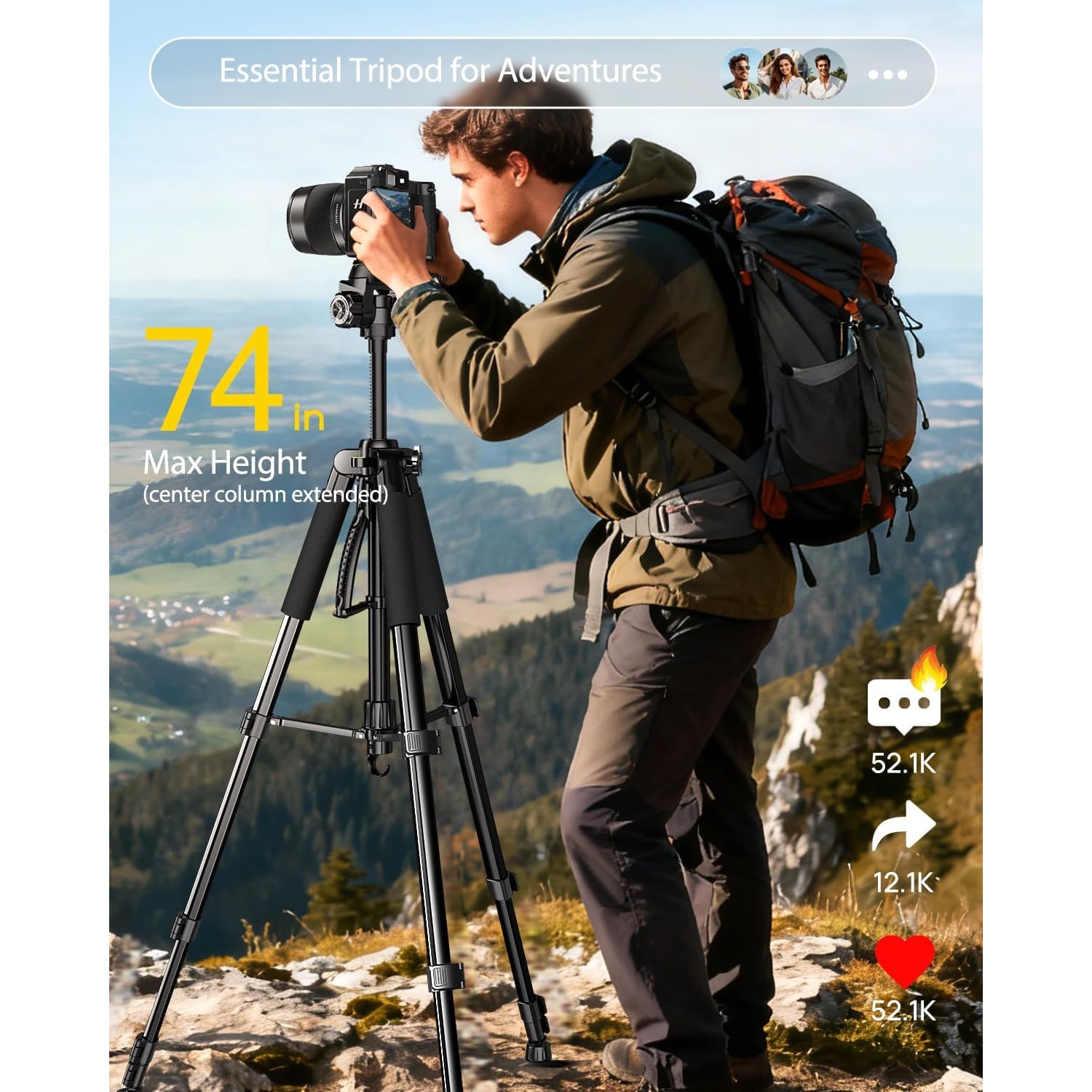
A 74 inch camera tripod solves both of those at once. It holds the camera perfectly still for as long as you need, and it stands at a height where it can look at people properly rather than up their noses from a tabletop.
What 74 inches actually buys you
Height matters more than most first-time buyers expect. Plenty of cheap tripods top out around 50 inches, which is chest height. That is fine for a camera pointing at a flower, but it is wrong for photographing people. A camera below eye level looks up at a face, and looking up at a face is not flattering.
At 74 inches you are above eye level for nearly everyone. You can shoot level with a standing adult, tilt down a touch for a softer portrait angle, or raise it over a crowd at a ceremony or a parade. For group shots, the extra height lets you fit a back row in without everyone having to crouch.
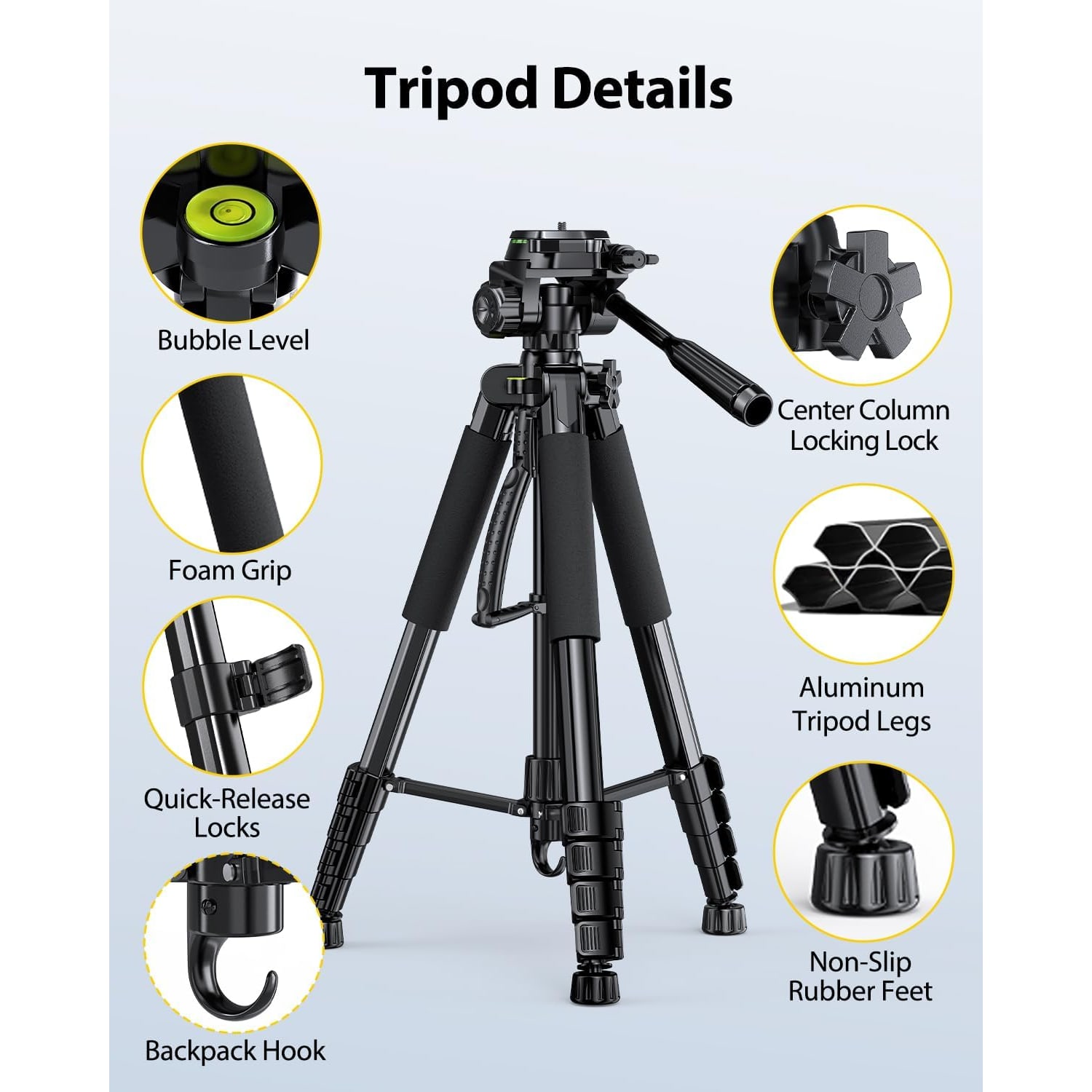
The trade-off with any tall tripod is stability, because the higher you go the more a small wobble at the feet becomes a big wobble at the top. That is where the central hook at the bottom of the center column comes in. Hanging a bag low on a tall tripod is the oldest trick in the book and it costs nothing.
The dual-handle head, and why it is not just marketing
Most budget tripods give you one handle that does everything. You loosen it, the head goes floppy in every direction at once, you wrestle it back into position and tighten it again. It works, but it is clumsy, and it makes precise framing a chore.
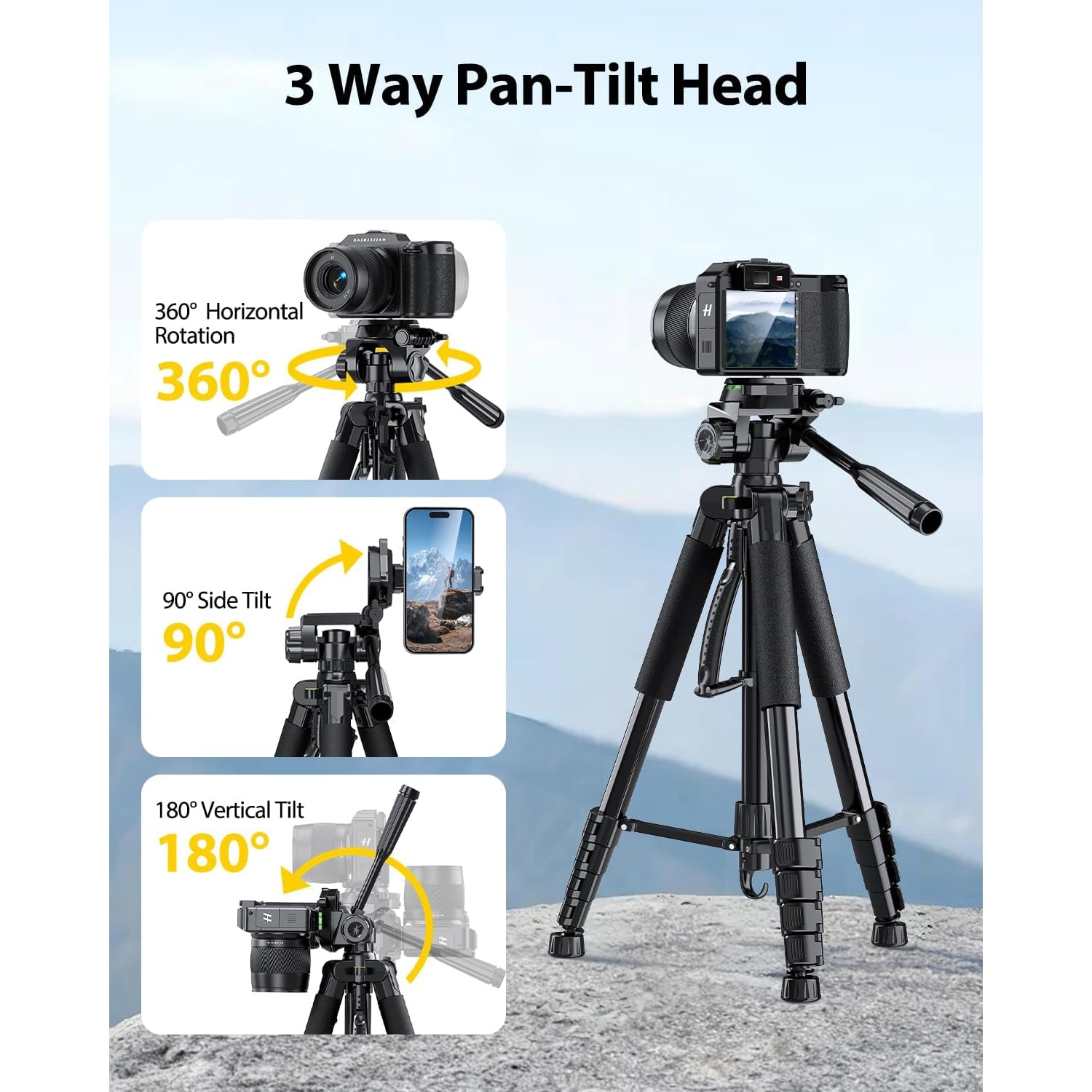
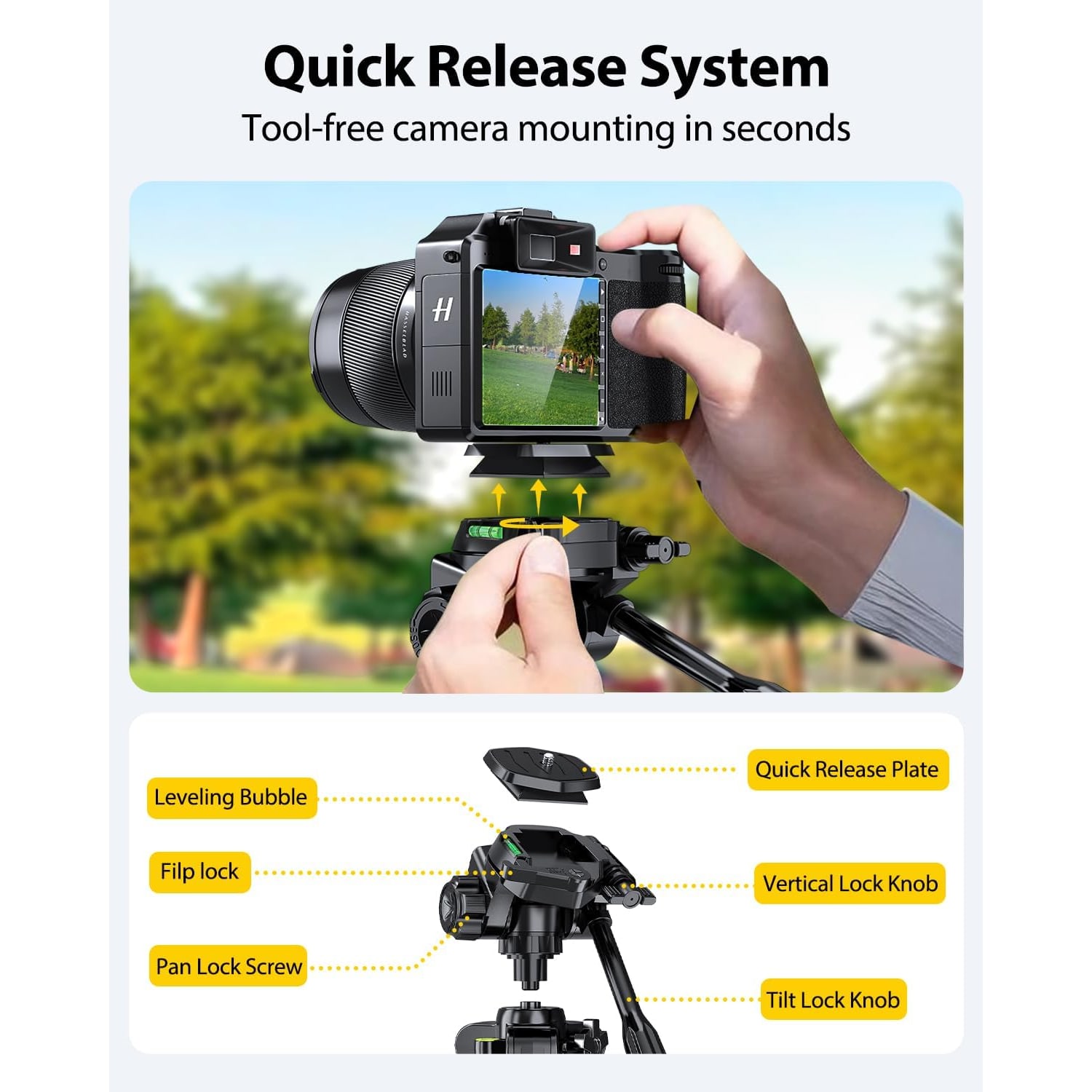
The maker describes this head as a dual-handle design. Its photos show a 3 way pan-tilt head with separate locks for pan, tilt and the side flip. Practically, that means you can frame your horizon, lock it, and then still pan left and right without disturbing it. For video, that separation helps with a steady sweep.
It also helps with the awkward angles. Steep upward shots of buildings and trees, steep downward shots over a table, and anything in between tend to creep on a basic head once you let go. Separate locks help here.
Phone, camera, or both
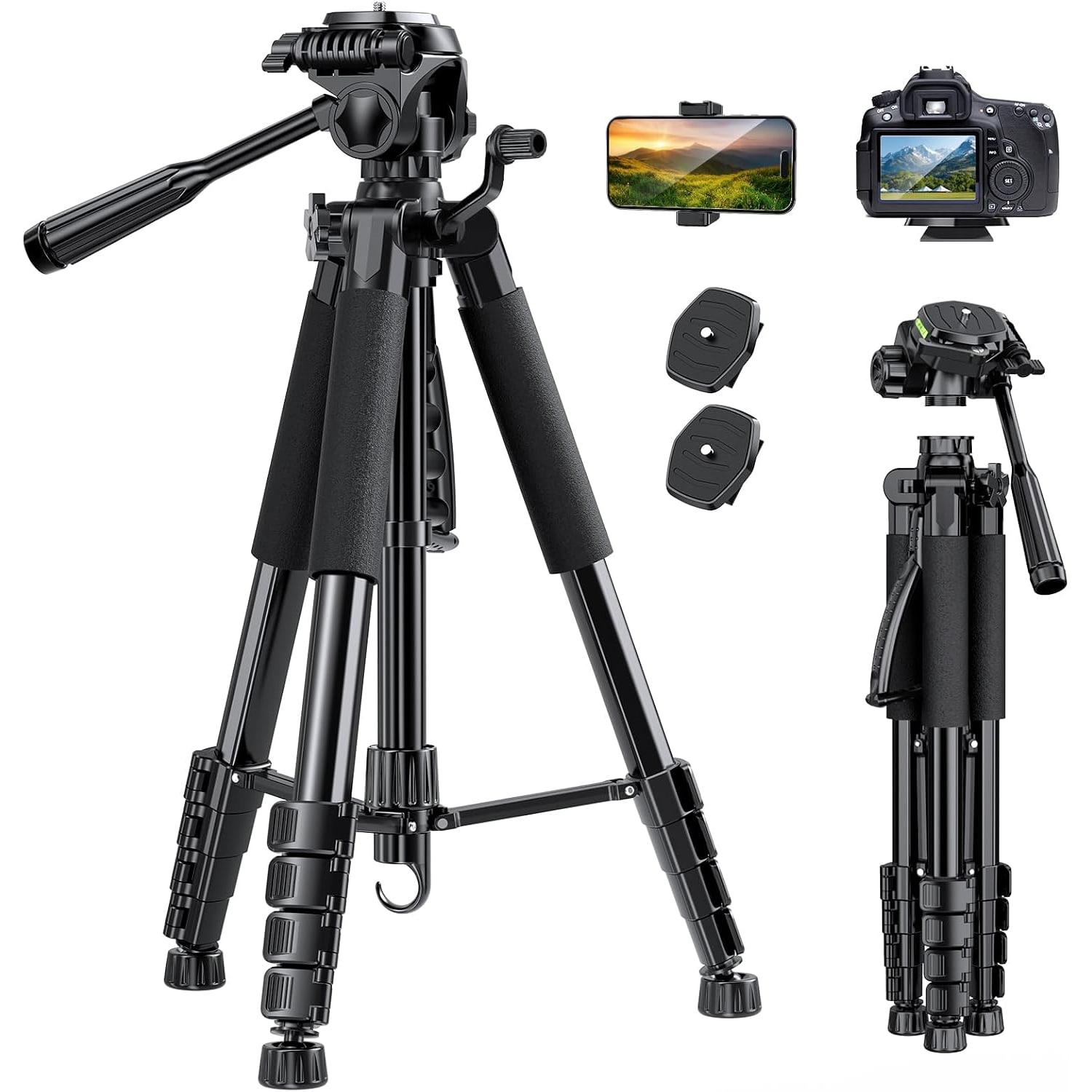
A lot of people buy a tripod for a camera, then end up using it more with their phone. That is normal and this one is set up for it. The supplied phone holder expands to take devices from 2.8 to 5.7 inches, which covers the overwhelming majority of current phones, including the larger ones.
Swapping between the two takes seconds. Take the phone holder off, mount your camera on the quick release plate, and you are back to a conventional camera stand. If you shoot for social media, keep the phone holder on and flip to portrait orientation using the head.
The wireless remote is the piece people underrate. It syncs with your phone and works from up to 30 feet. That is enough distance for a full-body shot, a family group, or a product video where you want to stay out of frame while recording. No sprinting back to beat a ten-second timer.
Who this tripod suits
It suits beginners, which is not a criticism. There is nothing to configure and no accessory ecosystem to buy into. You take it out of the bag, extend it, mount something, and shoot.
It suits people who want one stand for several jobs. The maker names projectors, webcams, binoculars and spotting scopes as compatible, so the tripod that sits in the closet most of the week can be the thing holding a projector for a backyard movie night on Saturday.
It suits content creators working mostly with a phone or a mid-size camera. If you are looking for a travel tripod with carry bag at a modest price, the folded size of 17.44 inches is the number to pay attention to.
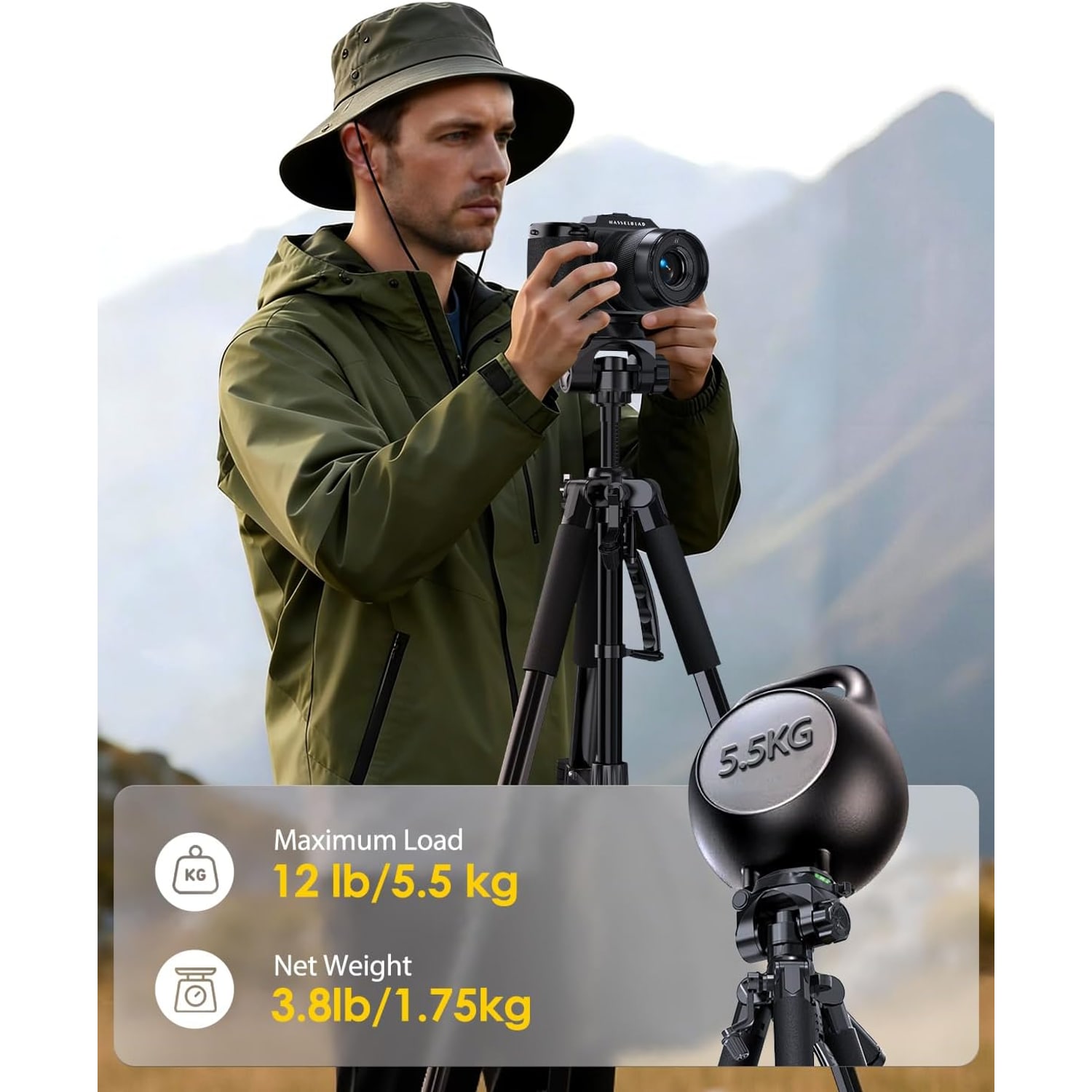
Who it suits less well: anyone mounting a heavy professional body with a long telephoto lens. The maker's photos give a maximum load of 12 lb/5.5 kg, so weigh a big lens and body before you rely on it.
Choosing between heights and features
If you mostly photograph objects, food, or plants, a shorter tripod is genuinely easier to live with and cheaper. The tall ones earn their keep when people are in the frame.
If you shoot video, prioritize the head over everything else. Legs are legs. Heads are where the money goes and where the frustration comes from. A two-handle design, like the one here, gives you more usable control than a single-handle head at the same price.
If you travel often, folded length matters more than weight on paper. A tripod that is three inches too long to fit in your bag will stay home, no matter how light it is.
And if you expect to shoot alone, make sure a remote is in the box rather than an extra purchase. Buying the remote later is one of those small jobs that never gets done.
Looking after it
Keep grit out of the leg locks. Sand is the main thing that kills budget tripods, because it gets into the clamps and grinds the surfaces every time you slide a leg. After a beach or trail day, brush the legs clean before you collapse them.
Remember that this tripod is not water resistant. It should not sit out in the rain or get sprayed with a hose. If it gets wet, wipe it down, let it dry fully, then fold it into the bag.
Do not over-tighten the handles or the mounting screw. Snug is enough. Cranking hard on a plastic or alloy thread is how threads get stripped, and a stripped mount is the end of the tripod.
When you store it, avoid leaving the legs clamped tight under tension for months on end. Loose in the bag, in a dry closet, is ideal.
A quick word about filming people
If you are recording video with sound, remember that recording audio and recording other people is covered by federal and state law. The rules differ from state to state. Worth a quick read before you set up in a public place.
The short version
This is a tall, uncomplicated tripod that reaches 74 inches, folds to 17.44 inches, and comes with the two accessories most people buy separately anyway: a phone holder for devices from 2.8 to 5.7 inches, and a wireless remote good for 30 feet. The dual-handle head gives you separate control of each movement, the central hook holds your bag, and the carry bag makes it easy to take along.
The maker's photos give aluminum legs, a net weight of 3.8lb/1.75kg and a maximum load of 12 lb/5.5 kg, so if you shoot with heavy professional gear, check its weight first. For phones, compact cameras, everyday DSLRs, video, projectors and optics, it is a sensible, flexible stand that will see a lot more use than you expect.