Camera Company
Company
Shop By Category
T&Cs
Shop Online
  • The maker's specifications on every page
  • Free tracked USA-wide delivery over $150
  • 14-day returns

Front and Rear Dash Cam with WiFi | Dual dash cam with 64GB card | WiFi car camera

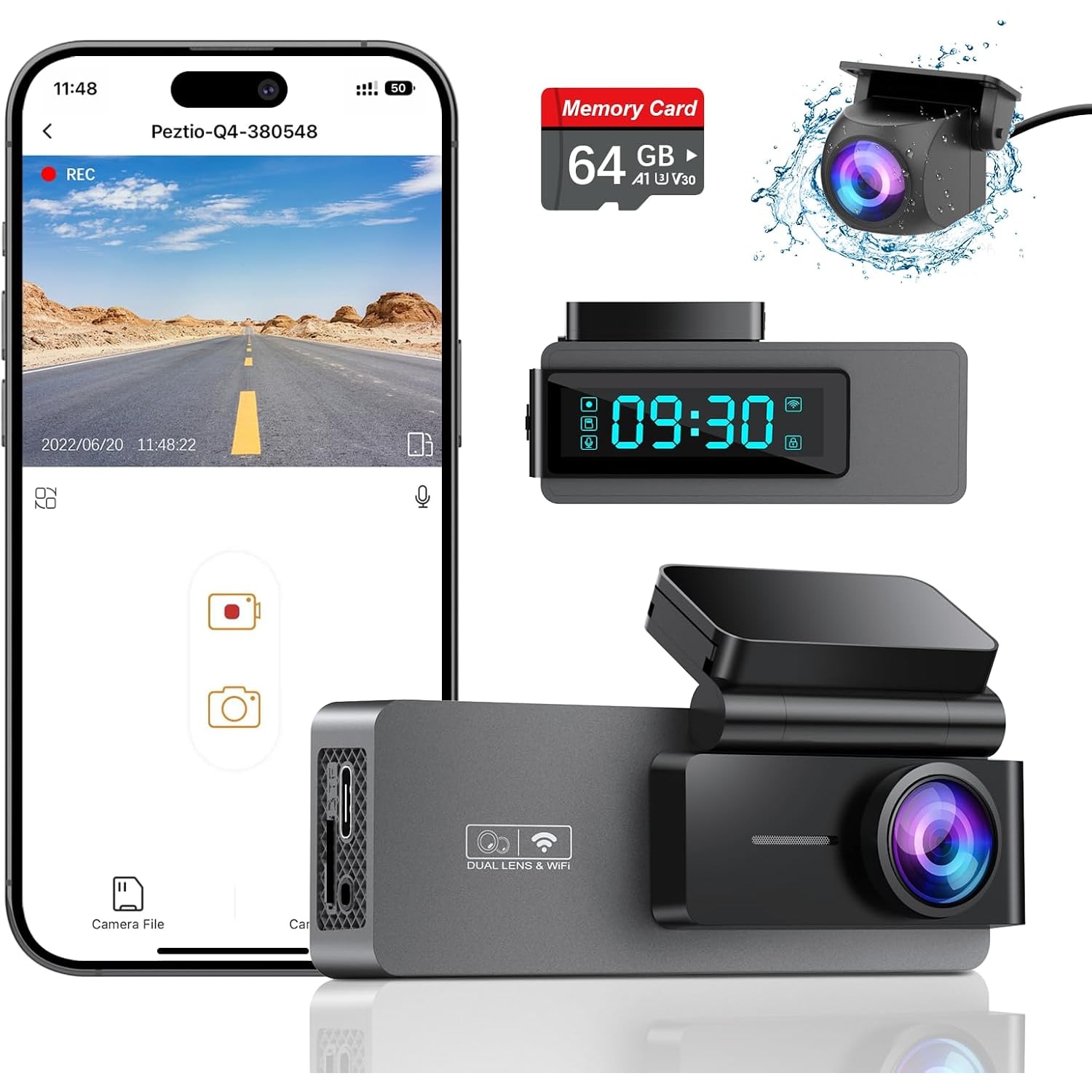
4K Front and Rear Dash Cam with WiFi and 64GB Card

$139.99 $167.99 Save $28
  • Dual Channel Recording
  • Built-In WiFi
  • 64GB Card Included
  • Low Light Capture

Price: $139.99 $167.99

  • Free tracked USA-wide delivery on orders $150+, otherwise a flat $20
  • Pay by card or PayPal, handled by the payment provider
  • 14 days to change your mind, plus your statutory rights
Product specifications
Model NameQ4 4K Dash Cam Front and Rear
Model NumberQ4
Manufacturer Part NumberQ4
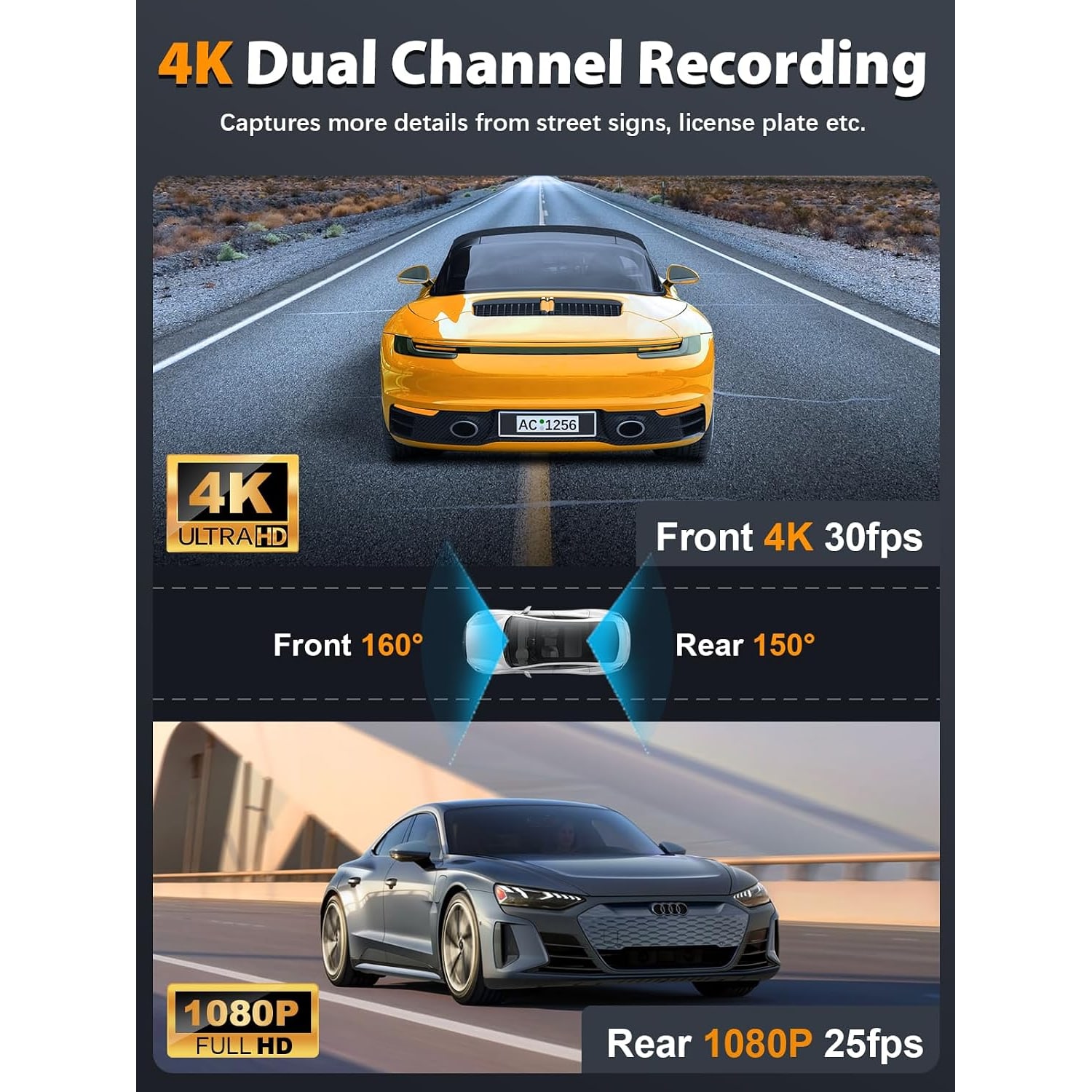
Video Capture ResolutionDual channel 4K 30fps front plus 1080P 25fps rear
Frame Rate (As Stated)Front only, 30fps at 4K. Dual front and rear, 30fps front 1080P and 25fps rear 1080P
Field Of View160 degrees
Real Angle Of View150 degrees
Maximum Aperturef/1.5
Optical Sensor TechnologyCMOS
Screen Size2.1 inches
ConnectivityWi-Fi
Control MethodApp
Compatible DevicesSmartphone
Flash Memory TypemicroSD
Memory Card Included64 GB
Maximum Supported Card Size256 GB
Memory Slots1
Supported File FormatsAVI, MP4
Battery Cell TypeLithium Polymer
Mounting TypeRear view mirror mount, windshield mount
Camera PositionFront and rear
Vehicle TypeCar
ColorBlack
Size3.7 x 1.8 x 1.4 in
In The BoxDash cam, rear camera and extending cable, 64GB card, 11.5ft Type C car charger, trim tool and cable clips, adhesive pad and electrostatic films, user manual and registration card
Shipping & returns

Tracked delivery anywhere in the USA. It is free on orders of $150 or more, and a flat $20 below that.

If it is not right for you, send it back within 14 days of delivery in resaleable condition and we refund the price you paid, including standard delivery. That is a voluntary policy we offer on top of your legal rights. You cover the cost of returning it unless the item is faulty.

If it arrives faulty, damaged or not as described, we put it right at no cost to you under the consumer protection law of your state and the Federal Trade Commission Act, return postage included.

Shipping details · Refunds and returns

Dual Channel Recording4K at the front and 1080P at the rear, so both directions are covered.
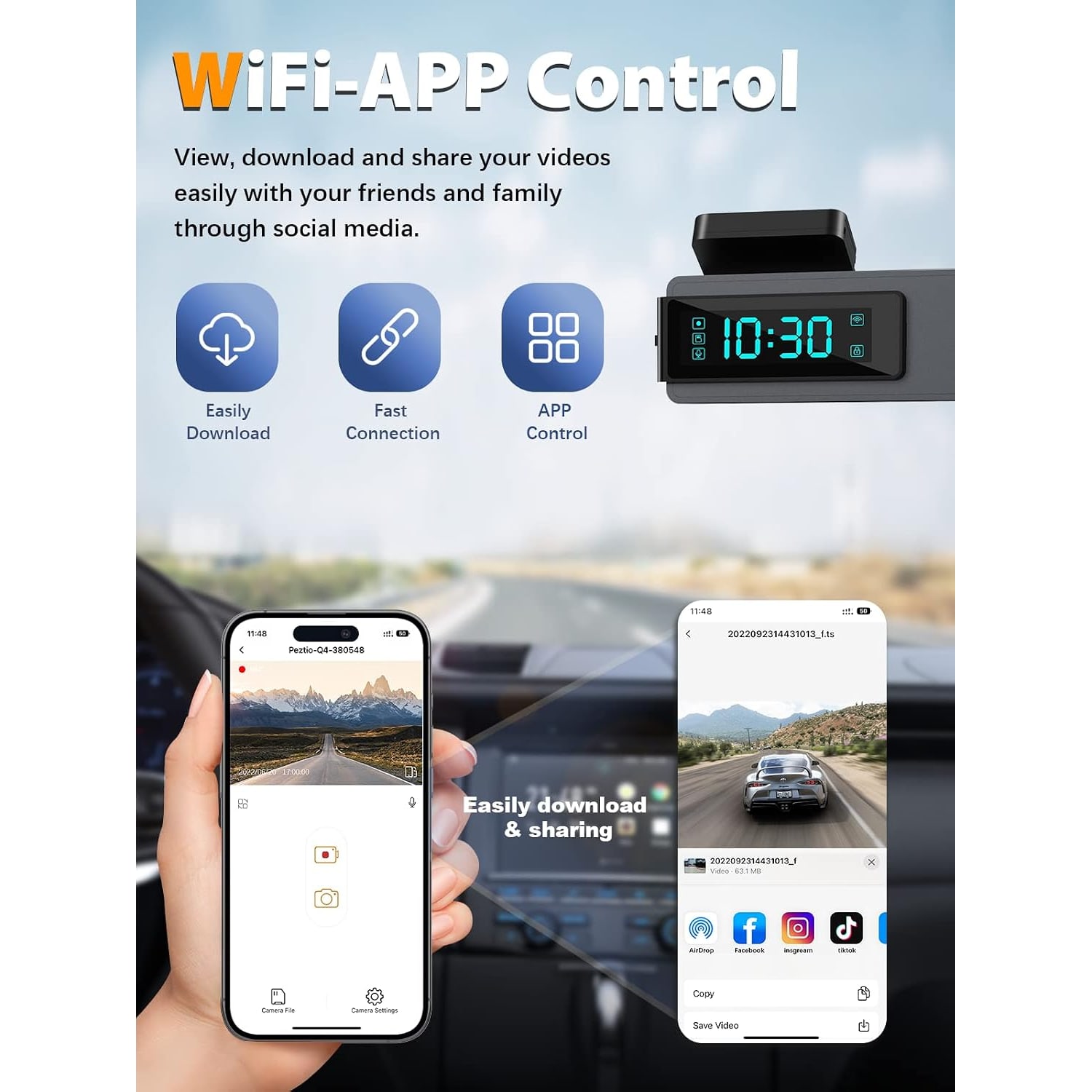
Built-In WiFiView, download and share clips from your phone using the app.
64GB Card IncludedComes ready to record, with support for cards up to 256GB.
Low Light CaptureA CMOS sensor with an f/1.5 aperture and wide dynamic range for night driving.

Drive with a clear record of every trip, thanks to a front and rear dash cam with WiFi that watches the road ahead and behind.

Records 4K at the front and 1080P at the rear through a 160 degree lens, streams to your phone over built-in WiFi, and ships with a 64GB microSD card so you can start recording the day it arrives.

A dual channel setup records the road ahead in 4K at 30fps and the view behind in 1080P, giving you footage from both ends of the car on every trip.

The front lens covers 160 degrees and the rear covers 150 degrees, which is wide enough to take in adjacent lanes rather than just the strip of road in front of you.

Built-in WiFi connects the camera to the app on an Android or iOS phone so you can watch a live view, change settings and pull clips off the card without a laptop.

A 64GB microSD card comes in the box and the camera accepts cards up to 256GB if you want longer loop coverage.

The compact body tucks up behind the rear view mirror with an adhesive pad, and the kit includes a Type C car charger, trim tool and cable clips for a tidy install.

4K Front and Rear Dash Cam with WiFi and 64GB Card

Most drivers only think about a dash cam the week after something happens. A door gets dinged in a parking lot, someone brake checks you on the freeway, or an insurer asks for your version of events and all you have is memory. A front and rear dash cam with WiFi fixes that by keeping a rolling record of both directions while you drive, so the footage is already there when you need it.

4K Front and Rear Dash Cam with WiFi and 64GB Card

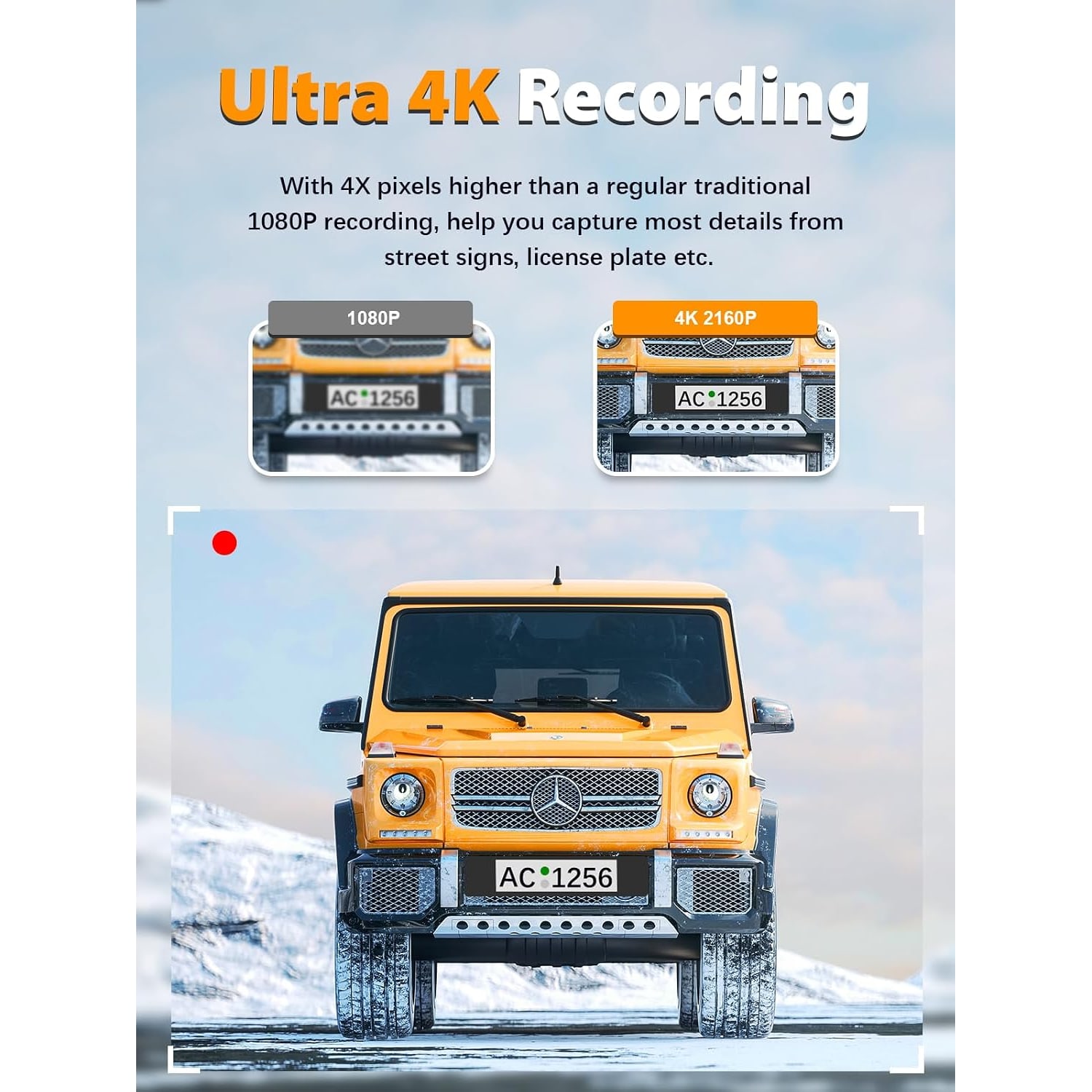
The maker describes this unit as recording the road ahead at 4K 2160P and 30 frames per second, and the view behind at 1080P. The front lens takes in 160 degrees and the rear takes in 150 degrees, so you are capturing the lanes either side of you rather than a narrow strip of asphalt. The sensor is a CMOS unit paired with an f/1.5 aperture and wide dynamic range processing, which is the combination that matters once the sun goes down and headlights start blowing out the exposure.

4K Front and Rear Dash Cam with WiFi and 64GB Card

Built-in WiFi is the part that saves you time. The camera creates its own connection and pairs with the app on an Android or iOS phone, so you can open a live view, adjust settings and download a clip to your camera roll while you are still sitting in the car. From there it is a normal file on your phone, ready to send to an insurer, a body shop or a family member. No card readers, no laptops, no sitting in a parking lot with a dead memory card.

4K Front and Rear Dash Cam with WiFi and 64GB Card

A 64GB microSD card is in the box, so the camera works from the first drive, and the slot accepts cards up to 256GB if you want a longer window of footage before it loops. Loop recording overwrites the oldest clips once the card fills, and the G-sensor locks a file when it detects a sudden jolt so that clip is held back from the overwrite cycle. Files save as AVI or MP4, which play on more or less anything.

4K Front and Rear Dash Cam with WiFi and 64GB Card

Physically it is small and designed to live behind the rear view mirror, where it stays out of your sightline. The maker gives a 2.1 inch screen size and a body of 3.7 x 1.8 x 1.4 in, and the kit adds an 11.5ft Type C car charger, a plastic trim tool and cable hiding clips so the wiring can be tucked along the headliner and down the pillar instead of dangling across the dash. Parking mode is supported but needs a separate Type C hardwire kit, which is not included here.

Not sure yet? That is fine.

A camera has to suit the job you bought it for, and you cannot always judge that from a photograph. If it is not right for you, send it back within 14 days of delivery in resaleable condition and we refund the price you paid, including standard delivery. That is a voluntary policy we offer on top of your legal rights.

If it turns up faulty, damaged or not as described, that is on us. The consumer protection law of your state covers you, and we pay the return postage. Read the full detail on our refunds and returns page, or ask us anything before you order.

Frequently Asked Questions

What is included in the box?

You get the dual dash cam, the rear camera with its extending cable, a 64GB microSD card, an 11.5ft Type C car charger, an adhesive pad with electrostatic films, a car wiring trim tool with cable hiding clips, and the user manual and registration card. That covers everything needed for a basic install. The only extra you might want later is a hardwire kit for parking mode.

What resolution does it record at?

The maker describes it as a dual channel camera recording 4K 3840 x 2160 at 30 frames per second at the front and 1080P at 25fps at the rear. The maker's frame rate line reads differently: front only, 30fps at 4K, and with front and rear together, 30fps front at 1080P and 25fps rear at 1080P. Both statements come from the maker, so if 4K with the rear camera running matters to you, ask us before you order.

How wide is the camera angle?

The front lens covers 160 degrees and the rear covers 150 degrees. That is wide enough to take in the lanes beside you and most of the shoulder, not just the road directly ahead. A wide angle is one of the main things people look for in a front and rear dash cam, because side-swipes and merging incidents happen outside a narrow frame.

Does it come with a memory card?

Yes, a 64GB microSD card is included, so the camera is ready to record as soon as it is mounted and powered. If you want a longer loop before older files are overwritten, the slot supports cards up to 256GB. There is one card slot.

How big a memory card can I use?

Up to 256GB. A larger card simply means more hours of footage sit on the card before loop recording starts overwriting the oldest clips. The included 64GB card is enough to start recording right away.

What is loop recording?

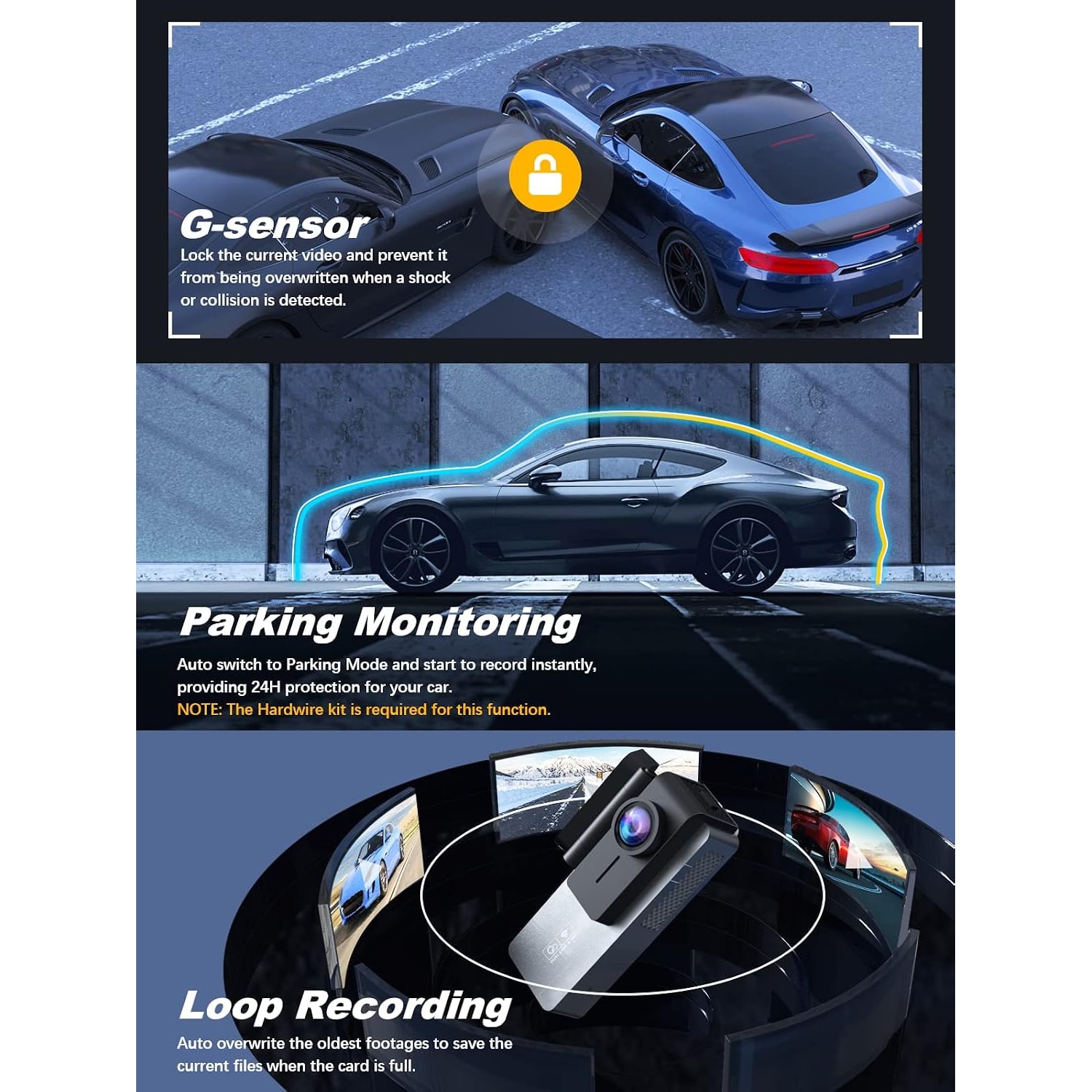
The camera writes video in short segments. When the card is full, it automatically overwrites the oldest segment so recording never stops for lack of space. That means you never have to manually clear the card, which is what makes a good loop recording dash cam practical for daily use.

What does the G-sensor do?

It detects a sudden shake or impact and locks the current clip so loop recording cannot overwrite it. If something happens, the relevant file is protected on the card instead of being overwritten. Loop recording carries on around it.

How does the WiFi work?

The camera has built-in 2.4G WiFi and creates its own connection that your phone joins. Once paired with the app, you can see a live view, change recording settings, and download clips directly to your phone. This is what people mean by a WiFi car camera, the camera is the hotspot, not your phone plan.

Does the WiFi use my cellular data?

No. The link between your phone and the camera is a direct local connection, so pulling footage off the card does not touch your data plan. You would only use data if you then upload or send a clip somewhere using your normal phone connection.

Which phones does the app support?

The app runs on Android and iOS smartphones. You install it, join the camera's WiFi, and the app handles live view, settings and downloads from there. Compatibility with other device types is not specified by the maker.

Can I share the footage straight from my phone?

Once a clip is downloaded through the app it becomes a normal video file on your phone, so you can send it by message, email or upload it to a social platform the same way you would any other video. Many drivers pick a dash cam with app control for exactly this reason. It saves digging the card out of the camera.

How good is it at night?

The CMOS sensor pairs with an f/1.5 maximum aperture, which is a wide opening that lets in more light, and wide dynamic range processing balances bright and dark areas in the same frame. That combination is what helps a dash cam with night vision keep plates and signs readable under streetlights. Results still depend on how clean your windshield is and how much ambient light there is.

Does it have a screen?

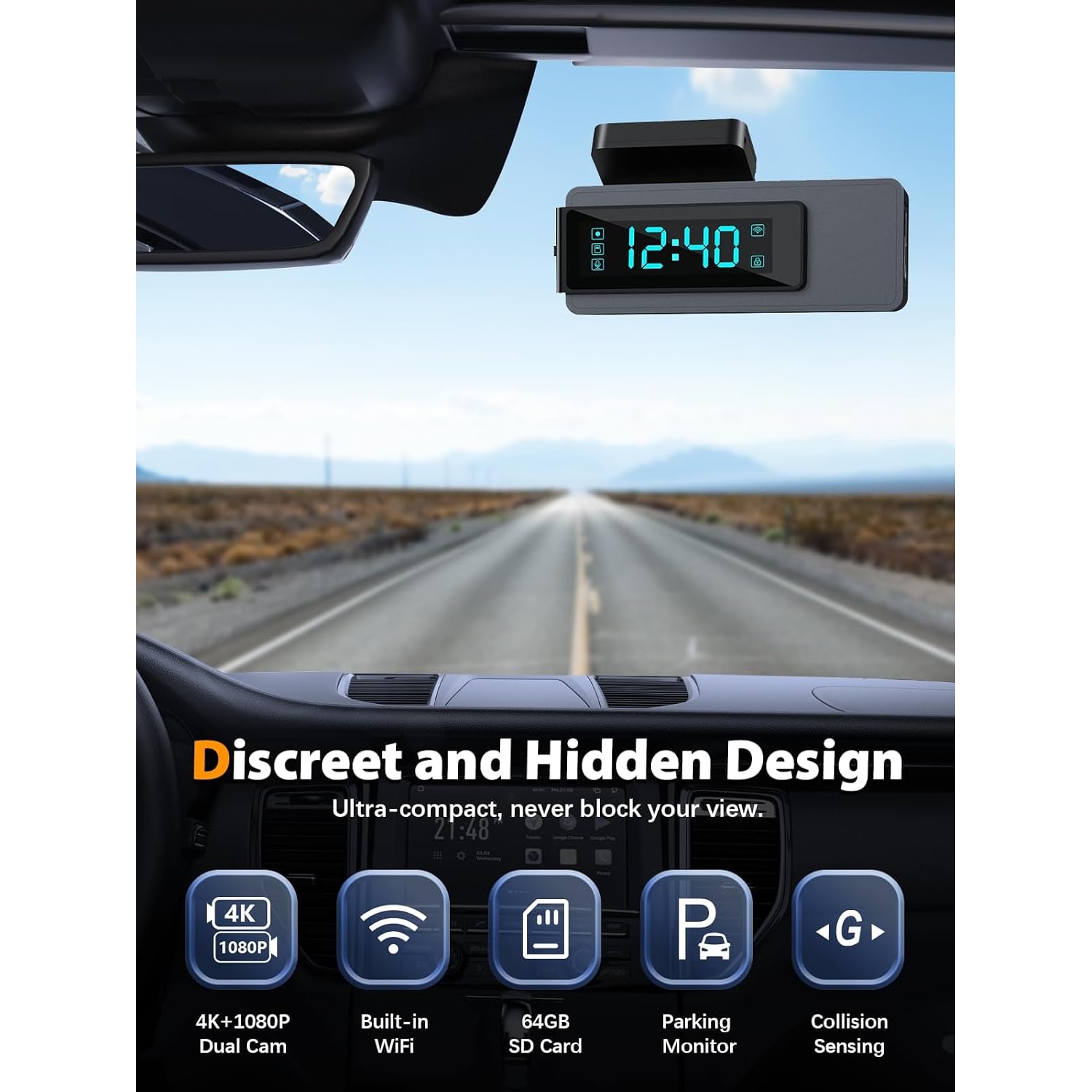
Yes, the maker gives a 2.1 inch screen size. In the product photos it shows the time and status icons. Live view, playback and settings are handled in the phone app, which is the stated control method.

Where should I mount it?

It is designed to sit behind the rear view mirror on the windshield, using the adhesive pad and the supplied electrostatic film. Mounting there keeps it out of your line of sight while still giving the lens a clear view. The maker names both a windshield mount and a rear view mirror mount.

Is it hard to install?

Not particularly. You clean the glass, apply the electrostatic film and adhesive pad, press the camera into place, then run the Type C charger cable up to the headliner and down a pillar to the power socket. The included trim tool and cable clips let you tuck the wire out of sight without tools from the garage.

How do I run the rear camera cable?

The rear camera connects to the main unit with the supplied extending cable. Most people route it along the headliner, down the rear pillar and across to the back window or the top of the trunk lid. Take your time and use the clips so the cable does not sag into your mirror view.

Where does it get power from?

The included 11.5ft Type C car charger plugs into the vehicle's 12V socket, so the camera powers on and off with the car in normal use. The maker gives the battery cell type as lithium polymer and states no capacity or run time for it.

Does it record when the car is parked?

It supports a 24 hour parking mode, but that mode requires a separate Type C hardwire kit which is not included with this package. The hardwire kit draws power from the fuse box so the camera can keep watching once the ignition is off. Without it, the camera records while the car is running.

Can it record audio inside the car?

The maker does not describe the audio settings, though the app screen in the product photos shows a microphone icon. Keep in mind that recording audio and recording other people is covered by federal and state law. Check what applies where you drive.

What file formats does it save?

Clips save as AVI or MP4. Both open in standard video players on Windows, Mac and phones without extra software. That matters when you need to hand a file to an insurer or a repair shop quickly.

Will it work in hot weather?

The housing uses PC and ABS materials and the maker says it operates between -4°F and 167°F (-20°C to 75°C). A parked car in direct summer sun can still get warm inside, so parking in shade helps the electronics and the adhesive pad both last longer. Let the unit cool before you handle it after a hot day.

Does it fit all cars?

The maker names car as the vehicle type and it mounts to the windshield. The main things to check are that you have a 12V socket for power and enough glass behind the mirror for the body. The body measures 3.7 x 1.8 x 1.4 in, which helps in smaller cabins.

How do I get a clip off the camera after an incident?

The quickest route is the app. Join the camera's WiFi, open the app, find the locked clip by time stamp and download it to your phone. If you prefer, you can power the camera down, remove the microSD card and read it on a computer.

How often should I format the memory card?

Roughly once a month is a sensible habit. Loop recording writes to the card constantly, and periodic formatting in the camera keeps the file system clean and reduces the chance of a failed recording. Always copy off any clips you want to keep first.

Can I use a card from another device?

You can, as long as it is a microSD card of 256GB or less and it is formatted in this camera before use. Cards that have lived in a phone or a drone often carry file structures that cause problems with continuous video writing. Formatting in the camera resolves that.

How do I clean the lens?

Use a dry or very slightly damp microfiber cloth and wipe gently. Skip glass cleaners, alcohol wipes and anything abrasive, since those can haze the coating. A smeared lens does more damage to footage quality than any setting change.

Does it make a good gift?

It does, particularly for a new driver, a long distance commuter or someone who has just had a near miss. The 64GB card is already in the box, so the person opening it can mount it and drive that afternoon without a trip to the store. The whole kit arrives in one package.

How long does delivery take?

Most orders arrive within 3 to 8 business days of the order date, so allow for that if you need it by a set date. Delivery is to US addresses only, free on orders of $150 or more and a flat $20 under that, and you get tracking by email once the order is on its way.

What is the return policy?

You have 14 days from delivery to return it, provided it is in resaleable condition. Return shipping is yours to pay. Contact us first and we will walk you through the steps.

What if it is not right for my car?

If the camera does not suit your windshield layout, your power setup or the way you drive, contact us within 14 days of delivery and return it in resaleable condition for a refund. Tell us what went wrong and we can often point you to a better fit from the range, whether that is a different mount style or a simpler single channel unit. Nobody benefits from a camera sitting in a drawer.

How to Choose a Front and Rear Dash Cam That You Will Actually Use

6 min read Camera Company

The gap a dash cam fills

Driving is mostly uneventful until it is not. The problem is that the moments worth recording never announce themselves. A car drifts out of a side street, someone reverses into your bumper in a parking lot, or a cyclist comes off the curb at the exact second you look at your mirror. Afterward there are two versions of what happened and no way to settle it.

That is the gap a camera fills. It does not stop anything from happening. What it does is replace recollection with a time-stamped file you can hand to an insurer, a body shop or a police officer. Most people who buy one say the same thing: they wish they had bought it a year earlier.

A front-only camera covers the common case, since most collisions happen ahead of you. But a meaningful share do not. Rear-enders, parking lot scrapes and tailgaters who back off the instant you brake all happen behind the car, and a single lens will never see them. That is the argument for a dual channel setup.

How this one works

This kit runs two cameras from one unit. The main body sits behind the rear view mirror and records the road ahead. A second, smaller camera connects by cable and watches the rear. The maker describes it as dual channel, 4K at 3840 x 2160 and 30 frames per second at the front plus 1080P at 25fps at the rear. The maker's frame rate line says something different: 4K at 30fps with the front camera alone, and 1080P front and rear when both run together.

Resolution matters for one reason above all others: reading a license plate. A plate on a moving car is a small, fast target. At 4K you have more pixels to pull a readable plate from a frame; at lower resolutions you often get a gray smear. Since the maker's two statements about dual recording differ, ask us before ordering if 4K with the rear camera running is the deciding factor for you.

The front lens covers 160 degrees and the rear covers 150. Those are wide angles, and the wide view is what catches the car that came from the lane beside you rather than straight on. There is a tradeoff. Wider lenses spread the same pixels over a bigger scene, so objects at the edge look smaller. The 4K front resolution gives it enough headroom to absorb that.

Night driving is where cheap cameras fall apart. This one uses a CMOS sensor with an f/1.5 maximum aperture, which is a wide opening that lets in more light than the f/2.0 and f/2.2 lenses common at lower price points. Wide dynamic range processing then balances the exposure between bright headlights and dark road surface in the same frame. It is not magic, and a dirty windshield will undo most of it, but it is a sensible setup for a 4k dash cam.

The WiFi part, and why it matters

Here is the thing nobody tells you about dash cams: the footage is useless if getting at it is a chore. Plenty of people own a camera, have an incident, and then discover they need a card reader, a laptop and twenty minutes they do not have while standing on a freeway shoulder.

Built-in WiFi solves that. The camera creates its own 2.4G connection. Your phone joins it, the app opens, and you can watch a live view, change settings or download a clip straight to your camera roll. From there it behaves like any other video on your phone. You can text it to the other driver, email it to your insurer, or upload it somewhere.

Worth being clear on one point: this local link does not use your cellular data. The phone talks directly to the camera. You only use data if you then send the file onward.

Who this suits

Daily commuters get the most out of it. If you spend an hour a day in traffic, your exposure to other people's mistakes is high and a camera earns its keep fast. Rideshare and delivery drivers are in the same boat, often more so, since a rear view matters when passengers are getting in and out at the curb.

New drivers are another good fit. Not because they cause more trouble, but because they are more often disbelieved when something happens. A video file ends that argument.

Parents buying for a teenager, anyone who parks on a tight residential street, and people who tow a trailer all have reasons for the rear channel specifically. If you only ever drive a quiet rural route and park in a locked garage, a simpler front-only unit may be all you need.

What to check before you buy

Power. The included charger is an 11.5ft Type C cable for the 12V socket, which works for standard driving. It powers up with the car and shuts down with it. If you want the 24 hour parking mode, that needs a separate hardwire kit that draws from the fuse box. It is not included here, so budget for it if parked protection is your main reason for buying.

Card capacity. A 64GB card comes in the box and the slot takes up to 256GB. More capacity does not mean better video, just a longer window before loop recording overwrites the oldest clips. Two cameras fill a card faster than one, so if you drive long hours, a larger card is worth it.

Mounting space. The body is small (3.7 x 1.8 x 1.4 in) and designed to sit behind the mirror. Check you have clear glass there, especially if your car has a rain sensor housing, a forward-facing safety camera or a heated windshield element in that spot.

Rear cable run. Plan the route before you stick anything down. Most people go along the headliner, down a rear pillar and across to the back glass. The supplied trim tool and clips make it a tidy job rather than a cable draped over the back seat.

Living with it

Day to day, there is almost nothing to do. The camera turns on with the engine, loops over old footage, and locks a clip if the G-sensor feels an impact. You forget it is there, which is exactly the point.

Two habits are worth building. First, format the card in the camera roughly once a month. Continuous video writing is hard on flash memory, and a clean format reduces the chance of a corrupted file at the worst possible moment. Copy off anything you want to keep first.

Second, wipe the lens when you clean the windshield. A microfiber cloth, dry or barely damp, is all it takes. Skip glass cleaner and alcohol wipes, which can haze the coating over time. A smeared lens costs you more image quality than any setting ever will.

The maker gives an operating range of -4°F to 167°F, which covers most climates, but a car parked in full summer sun still gets hot inside. Park in shade where you can. It is better for the adhesive pad as much as the electronics.

One legal note worth repeating. Recording audio and recording other people are covered by federal and state law, and the rules vary. Check what applies where you drive. It is worth knowing before your first drive with passengers.

The short version

If you want a camera that covers both ends of the car, gets footage onto your phone without a computer, and arrives ready to use, this fits. The front channel shoots 4K, the rear shoots 1080P, the lens angles are wide enough to catch what happens beside you, and the 64GB card is already in the box.

The two things to know going in are that parking mode needs a hardwire kit sold separately, and that the maker's frame rate line gives 1080P at the front when both cameras run, while the rest of the maker's description says 4K front plus 1080P rear. Ask us if that detail decides it for you, then fit it and let it get on with the job.

Browse the shop

Ready to cover both ends of the car?

This kit ships with the card, the charger and the rear camera already in the box, so you can fit it and start recording the same day.

Ask us a question

Page summary

This is a dual channel car dash cam that the maker describes as recording the road ahead at 4K 2160P 30fps and the view behind at 1080P 25fps (the maker's frame rate line gives 1080P front and rear when both cameras run), with a 160 degree front field of view and 150 degree rear angle. It uses a CMOS sensor with an f/1.5 maximum aperture and wide dynamic range processing for low light driving, and has a 2.1 inch screen. Built-in Wi-Fi allows live view, settings changes and clip downloads through a smartphone app on Android or iOS. A 64GB microSD card is included and cards up to 256GB are supported, with loop recording and a G-sensor that locks files on impact. Files save as AVI or MP4. Parking mode requires a separate hardwire kit, not included. Color is black. Material and country of origin are not specified by the maker.