
The complete guide
How to Choose a Lightweight Camera Tripod You Will Actually Carry
The problem with handheld
Almost everyone starts out shooting handheld, and almost everyone hits the same wall. Indoors, the shutter slows down and your frames go soft. Outdoors at dusk, the same thing happens. Group photos mean asking a stranger to press the button. Video of yourself means propping the phone against a coffee cup and hoping it does not tip.
A tripod fixes all of that in one object. It holds the camera still, it holds a position so you can step into the frame, and it repeats the same composition exactly while you change the lighting or the subject. The catch is that a tripod only helps if it is with you. A heavy, awkward one stays in the closet. That is the whole argument for a lightweight camera tripod that folds to about 20 inches and weighs under 3 pounds.
How a tripod like this works
There are three parts to understand. The legs, the locks, and the head.
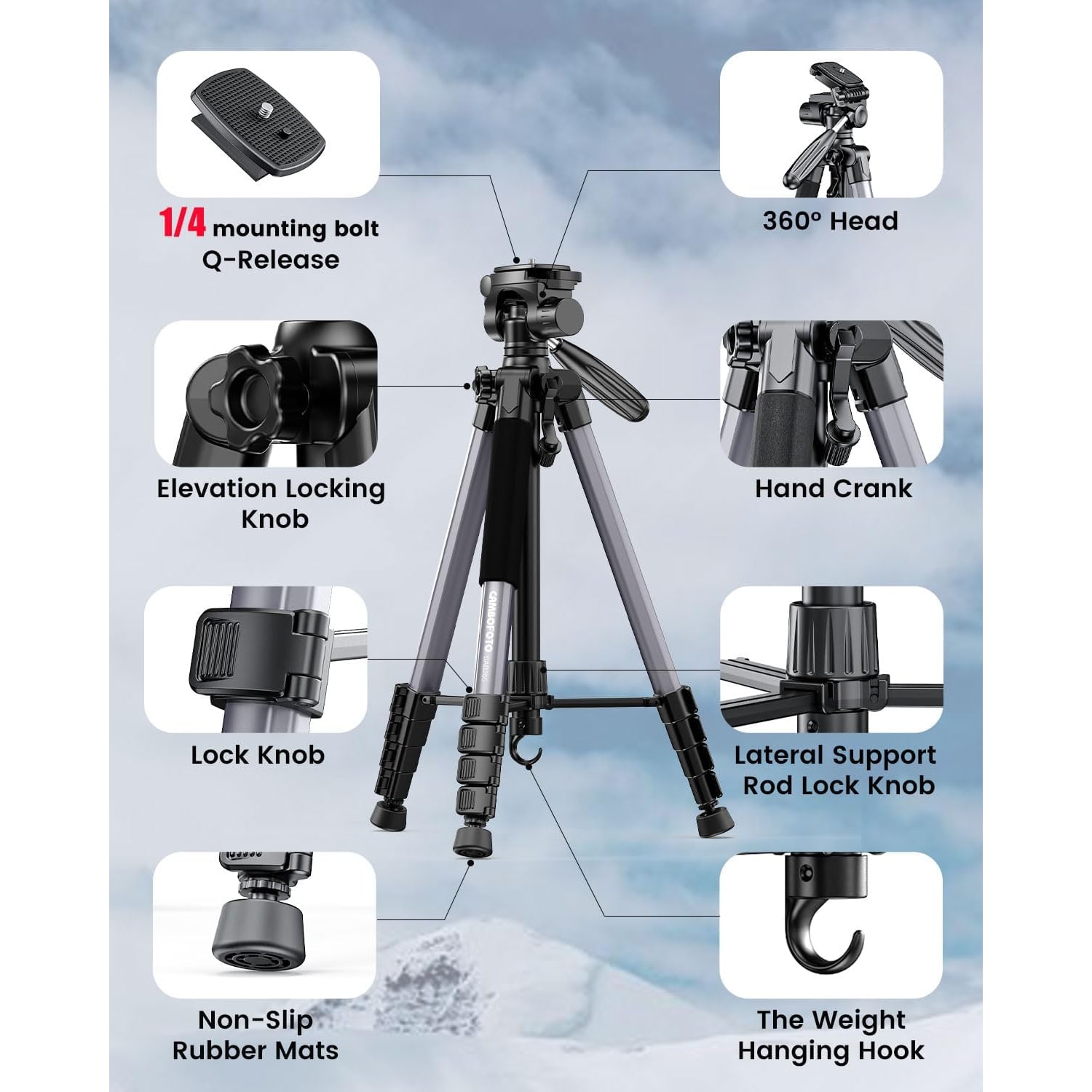
The legs here are telescopic aluminum with a 0.94 inch leg diameter. The specifications give 3 leg sections, and the photos show four flip locks on each leg. More sections fold shorter but add joints, and every joint is a small amount of flex. This one folds to 20.5 inches.
Each leg locks independently. That matters more than it sounds. On stairs, a slope, or a rocky patch, you set each leg to a different length and still get a level camera. The feet are slip resistant, so the tripod stays put on tile and hardwood instead of creeping sideways.
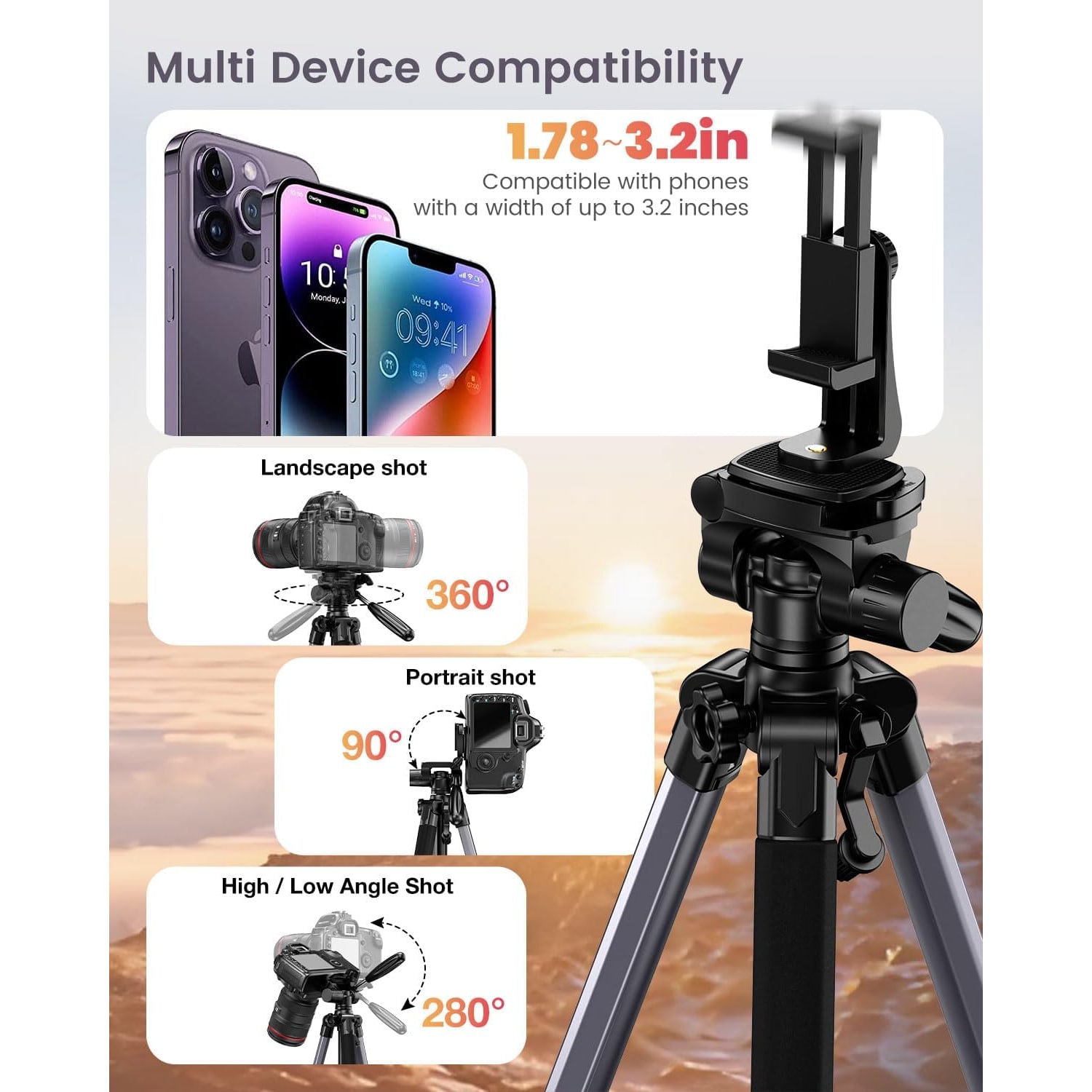
On top is a pan head with 360 degree rotation and tilt, driven by a pan handle. Loosen the handle and the head moves. Tighten it and the frame locks. For stills, you set the composition once and shoot. For video, you can follow a moving subject with a slow, controlled pan. There is a spirit level on the head so you can get the horizon straight before you press the shutter, which is much easier than straightening it afterward and losing pixels to the crop.
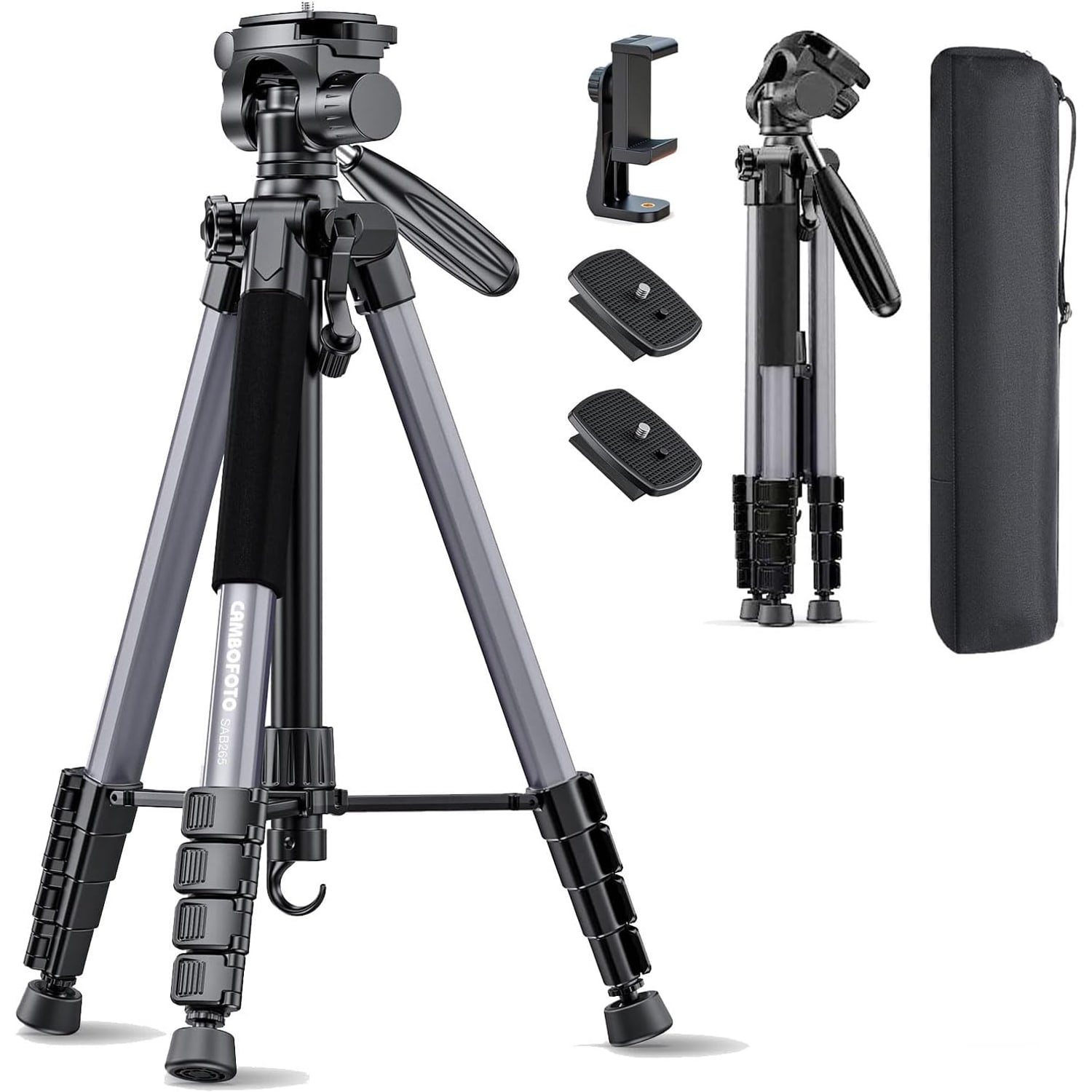
Your camera attaches through a quick release plate. The plate screws to the bottom of the camera and stays there. Clip it into the head when you want the tripod, unclip it when you want to walk around. If you want the phone instead, the included holder screws onto the same mount and grips the handset.
Who this suits
This kind of tripod makes sense for a wide group of people.
Beginners and hobbyists get full standing height, a workable head, and a phone mount for one modest price. That covers landscapes, family photos, long exposures at night, and basic video without committing to a system.
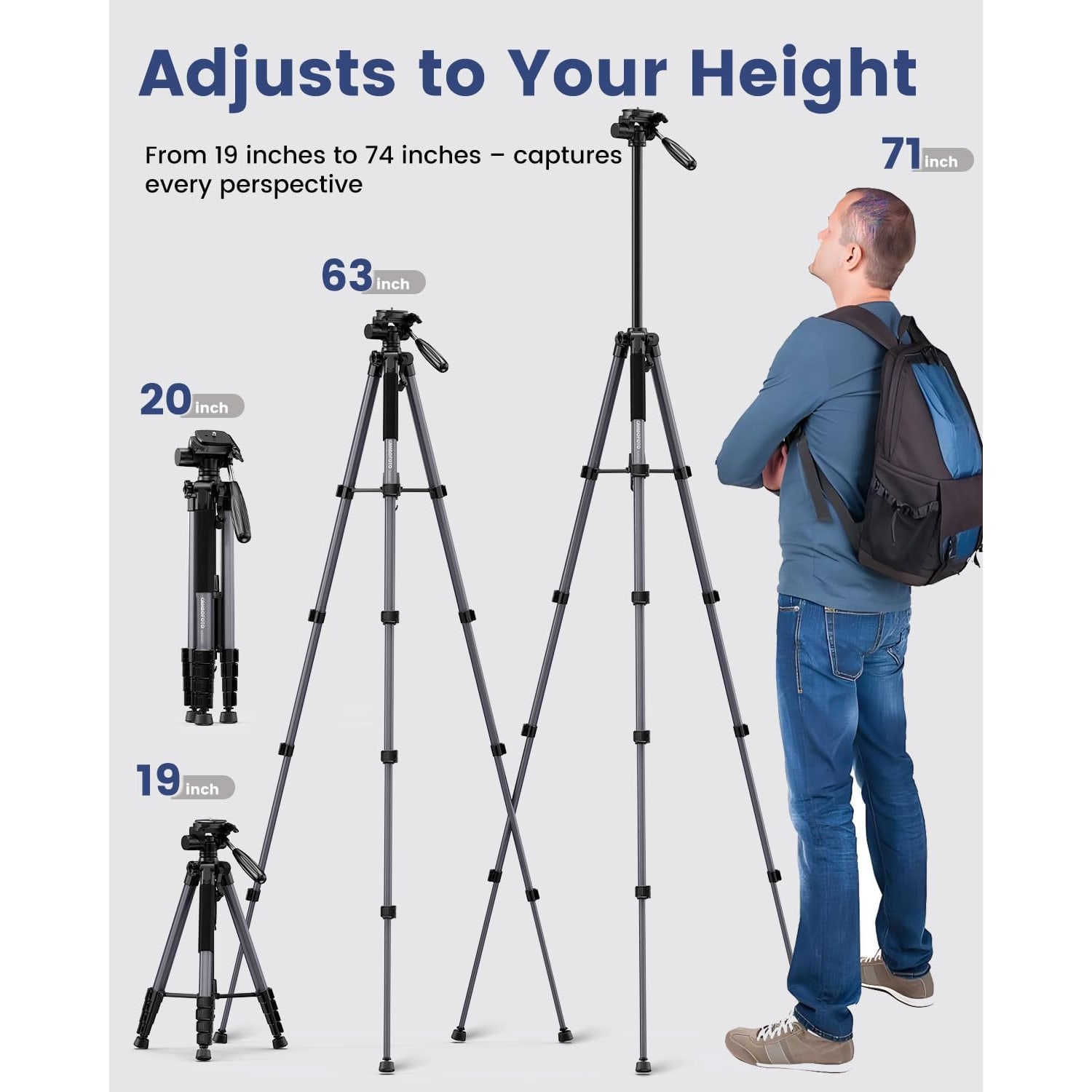
Content creators who film themselves benefit most from the 74 inch maximum. Standing talking-head shots need the camera at eye level, and a lot of cheap stands top out around 50 inches, which leaves you filming up your own nose.
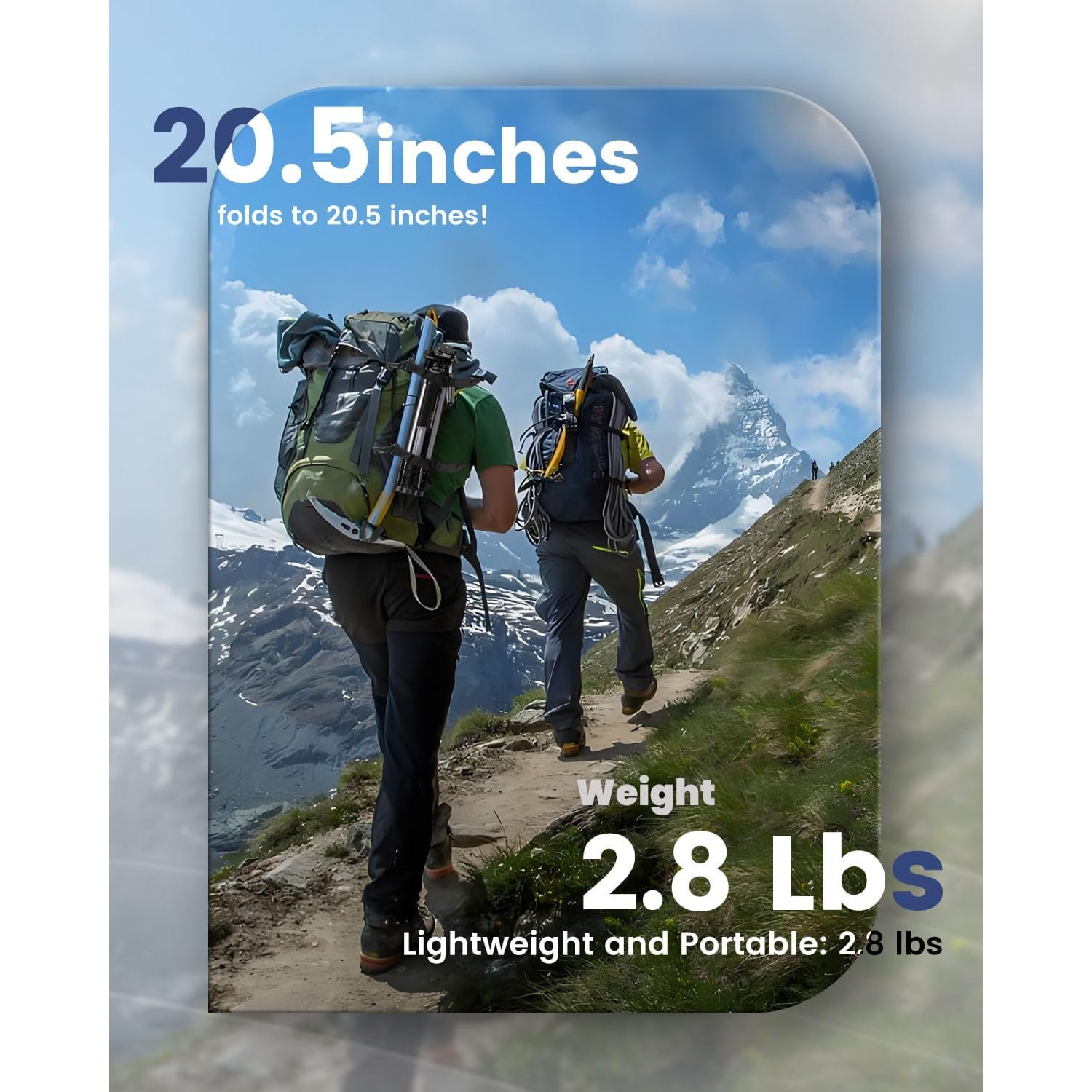
Travelers and hikers care about the 2.8 pound weight and the 20.5 inch folded length. It straps to a daypack without dominating it.
People doing calls, streams, and small product shoots will use the 19 inch minimum more than the maximum. Low and locked off is often exactly what a tabletop setup needs.
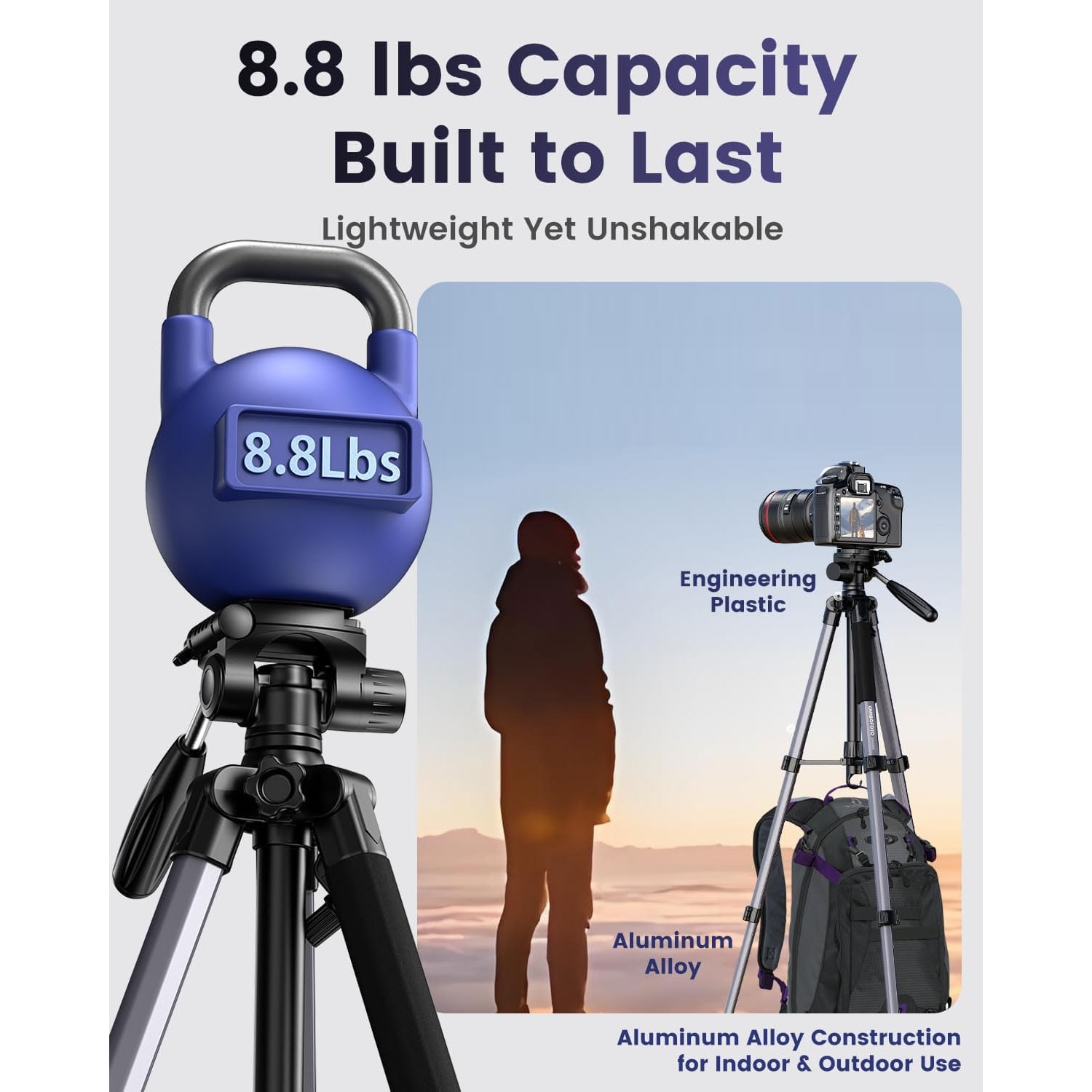
Who it does not suit: anyone running a heavy pro body with a long telephoto lens, a gimbal rig, or studio lighting on the same stand. The 8.8 pound limit is the maker's figure, and respecting it is how you look after your gear.
How to choose
Start with weight, not height. Add up your camera body, your heaviest lens, and anything that clips on like a microphone or a small light. If that total is close to 8.8 pounds, look at a sturdier stand. If it is well under, you have margin, and margin is what gives you stability on a breezy day.
Then think about the height you actually need. Maximum height gets the attention, but minimum height decides what kind of shots you can even attempt. A tripod that only drops to 30 inches cannot do a low flower shot or a tabletop scene. At 19 inches, this one can.
Next, consider the head. Pan and tilt heads with a handle are easy to learn and good for anything that needs a level, deliberate frame. Ball heads are faster for quick repositioning but harder to keep perfectly level. If you shoot video or landscapes, a pan handle is usually the more forgiving choice.
Check the folded size against where you will carry it. Twenty inches fits most backpacks. If you commute with a slim laptop bag, measure before you buy.
Finally, look at what comes in the box. A quick release plate, a phone holder, and a carry bag included means you are not buying three accessories afterward at full price. That bundle is a big part of the value here.
Getting the most out of it in the field
A few habits make a light tripod behave like a heavier one.
Extend the thick upper leg sections first and leave the thin bottom sections retracted if you do not need the full height. The thin sections flex the most, so skipping them buys you stability for free.
Spread the legs fully. A narrow stance is a tipping risk, especially with a long lens pointed forward.
Keep the center of weight low. If you can get the shot without raising the center column to its limit, do that.
If there is wind, hang your camera bag from the center of the tripod to add downward load, or simply shield the setup with your body. Use a two second shutter delay or a remote so you are not touching the camera at the moment of exposure.
Indoors on hardwood, watch for floor bounce. Walking near a tripod on a suspended wooden floor transmits vibration straight up the legs. Stand still during the exposure.
Care and storage
Aluminum is forgiving, but grit is not. Sand and dust work into the telescopic joints and make the locks stiff. After a beach or trail day, wipe the legs down and brush the joints clean before you collapse the sections.
The tripod is not water resistant. Do not leave it wet inside its bag. Dry it, then store it. Salt water is the worst case, so rinse with fresh water and dry thoroughly if that happens.
Do not force a lock that will not close. Open it, look for debris, clear it, and try again. Forcing is how plastic lock levers crack.
Check the quick release plate screw now and then. Plates loosen slightly over weeks of use, and a loose plate is the most common cause of a camera that seems to wobble for no reason.
Keep it in the carry bag between uses. That stops the legs scratching your other gear and keeps the head clean.
The short version
If you want a stand that reaches standing eye level, drops low enough for tabletop work, handles both a camera and a phone, and still weighs under 3 pounds, this covers it. Height runs from 19 to 74 inches, the aluminum legs take up to 8.8 pounds, and the 360 degree pan head with a spirit level makes it easy to get level, repeatable frames.
Match the load limit to your heaviest setup, use the thick leg sections before the thin ones, keep the joints clean, and it will earn its place in your bag. The best lightweight camera tripod is the one you are willing to bring, and at 20.5 inches folded, this one is easy to bring.