
The complete guide
How to Choose a Camera Sling Bag That Actually Gets Used
The bag problem nobody warns you about
Most people buy a camera, then buy a bag, then buy a second bag about four months later. The first one is usually too big. It made sense in the store, where the salesperson showed you how six lenses fit into the padded cells, but you do not own six lenses and you never will. So the big backpack lives in a closet and the camera ends up riding in a tote with a sweater wrapped around it.
The second bag is almost always a sling. It holds what you actually carry, it stays on your body, and you can get the camera out without putting the bag on the ground. That is the whole reason this style keeps winning.
A camera sling bag 10L sits at a useful point on that curve. Ten liters is enough for a body, a short list of lenses and the small items that make a shoot work. It is not enough to tempt you into packing things you will not use, which turns out to be a feature.
How a sling carry actually works
The mechanics are simple. One strap crosses your chest and the bag rides on your back or hip. When you want the camera, you grab the bag and rotate it around to the front of your body without taking the strap off. You unzip, lift out the camera, shoot, and swing it back.
Compare that to a backpack. Every lens change means both straps off, bag down, crouch, open, swap, close, stand, straps on. In a dry park that is annoying. On a wet sidewalk or a crowded train platform it is a reason to just not change lenses, which quietly shrinks what you shoot.
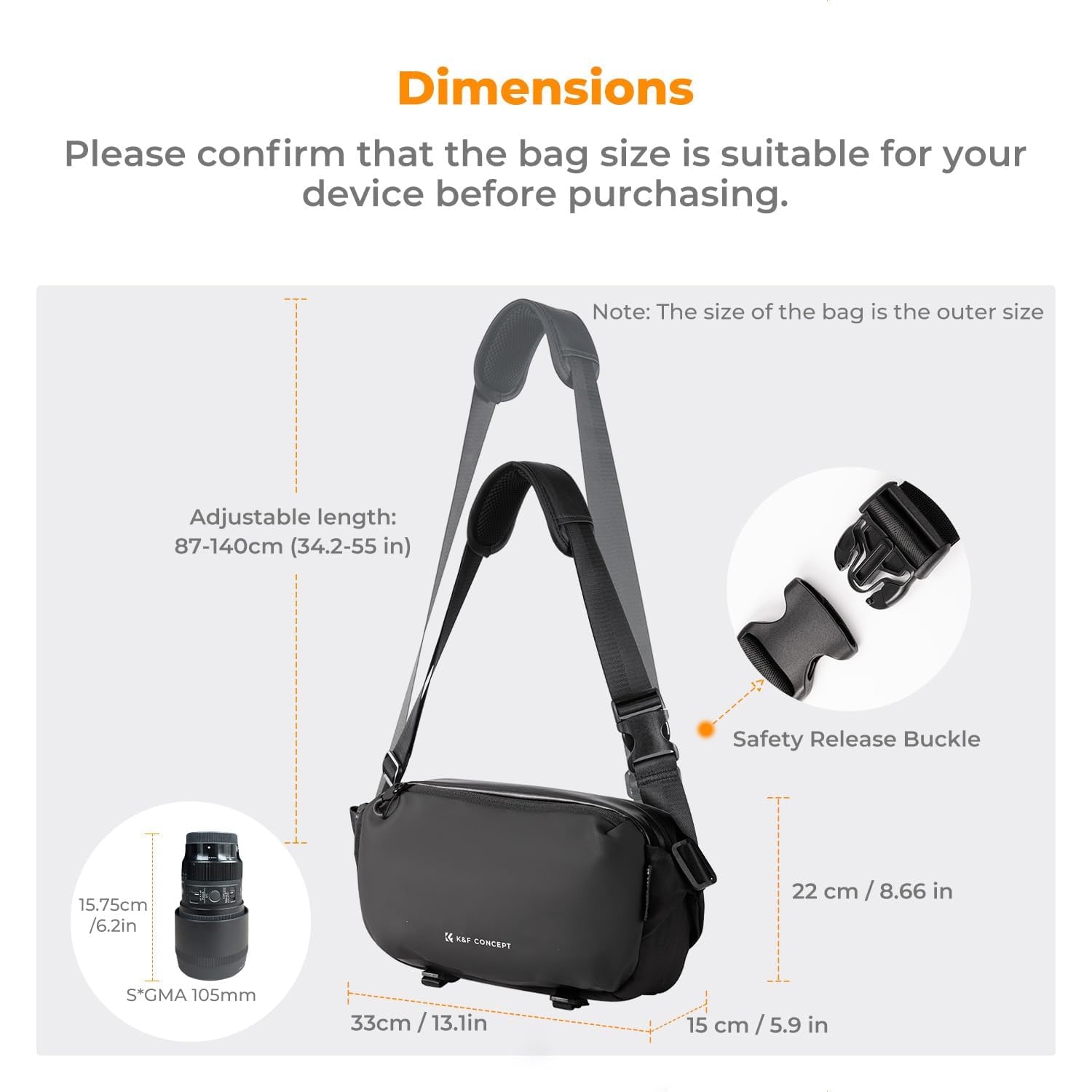
The adjustable strap on this bag matters for that rotation. Set it too short and the bag sits high and will not swing past your ribs. Set it too long and it sags behind your hip and bangs your leg when you walk. Spend two minutes finding the length where the bag sits at the small of your back and swings clean to your stomach. Once you find it, you will not touch it again.
What fits inside ten liters
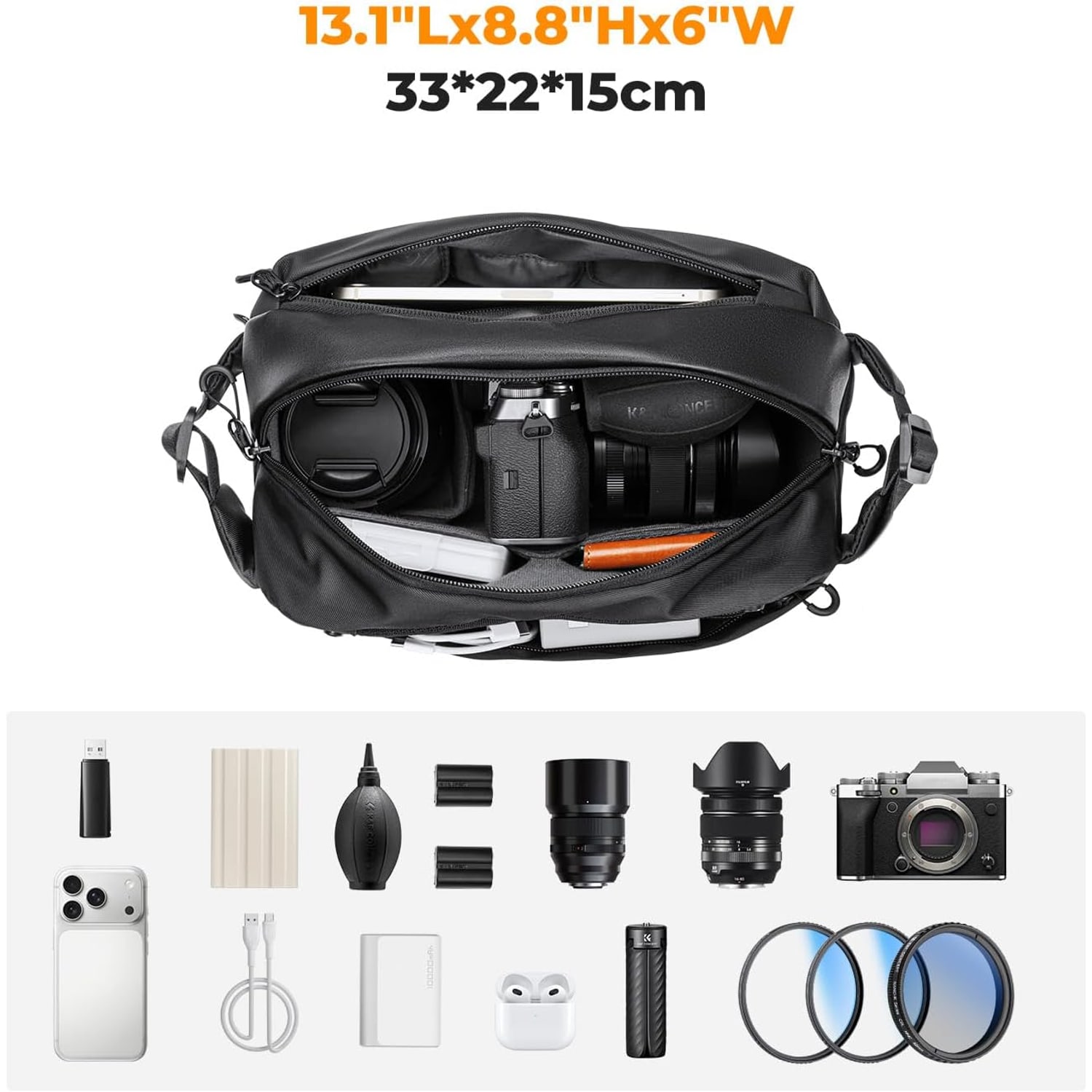
The exterior measures 12.99 inches wide, 8.66 inches long and 5.91 inches high. The bag weighs 600 g empty, so it adds very little to what you are already carrying.
The internal size is 10.6×6.7×4.1 inch, and the maker gives the maximum as 1 camera and 2 lenses. Two primes and a body is comfortable. A body with a standard zoom and one prime is comfortable. A body with a 70-200 mm attached is not going to happen, and that is true of nearly every bag this size.
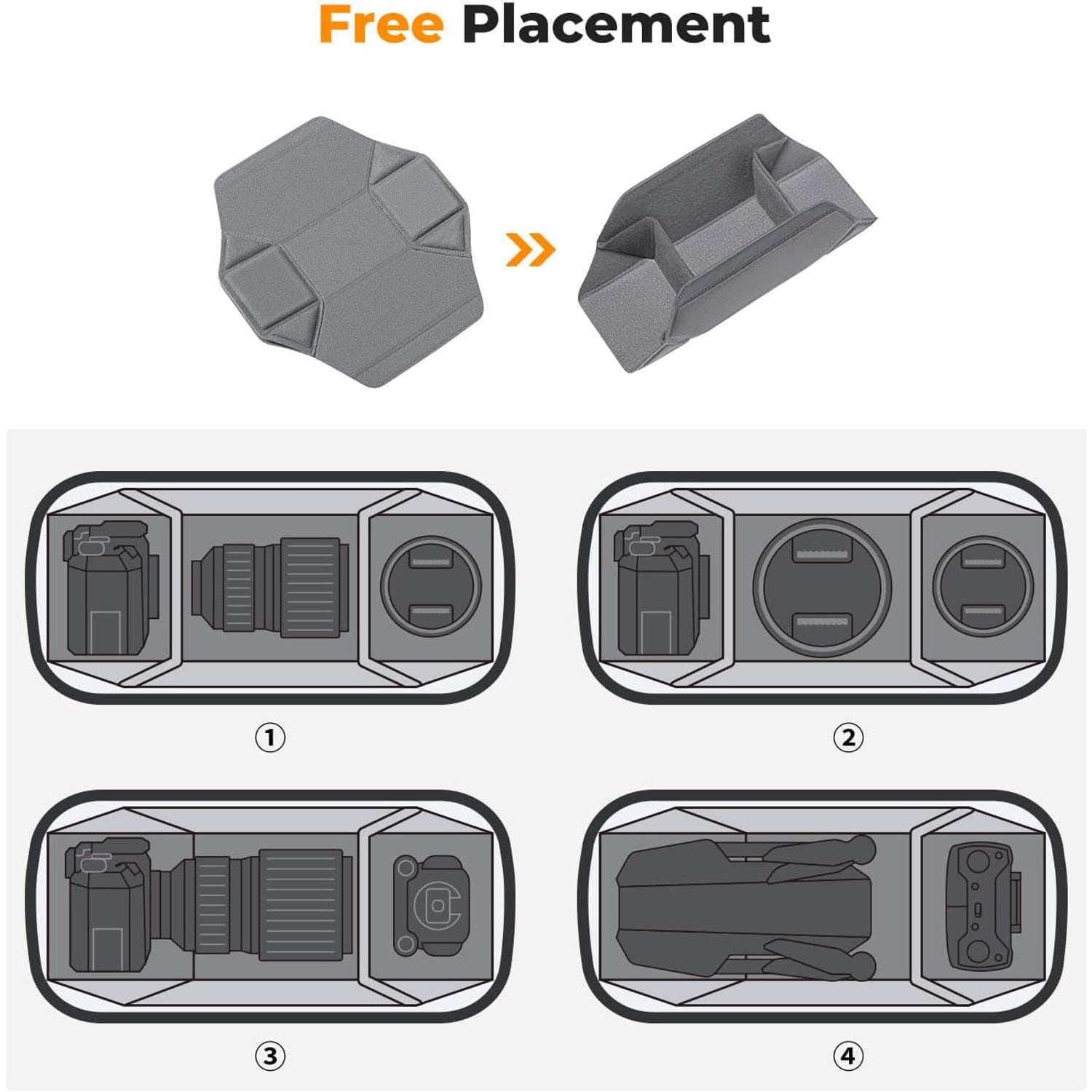
The folding divider is the part people underestimate. It reshapes, and you can take it out completely. That means the same bag can be a tidy three-section camera carrier on Saturday and an open padded box on Sunday when you want to bring a small drone instead. If you are shopping for a camera bag for two lenses, the ability to reset the walls is worth more than an extra pocket.
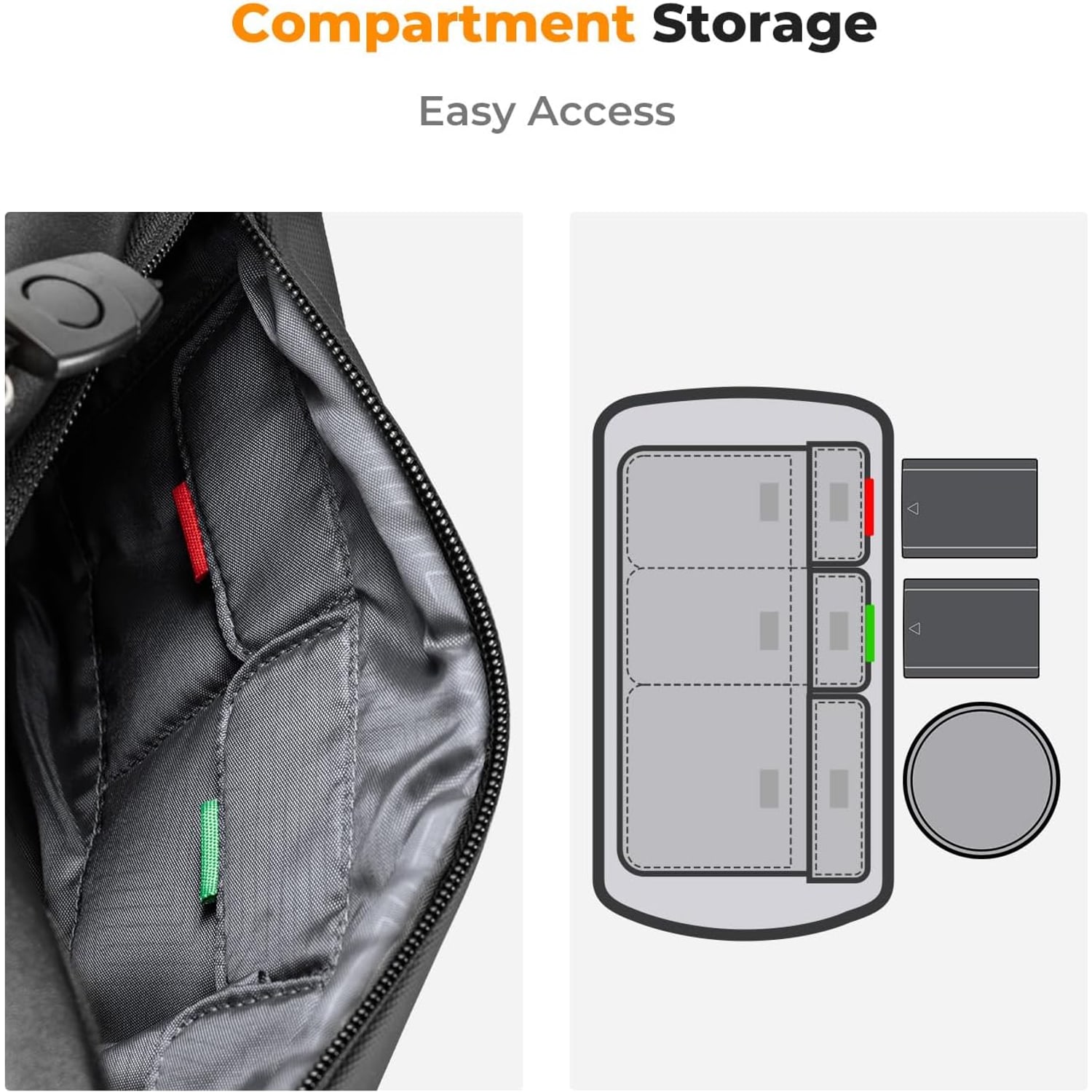
Speaking of pockets, there are four to work with outside the main space. Two multi-function pockets sit inside, one zipper pocket is on the front and one is on the back panel. Put the things you touch most in the back pocket. It is against your body, it is fast to reach, and it keeps your phone away from the camera.
Who this suits, and who it does not
This is a good fit if you shoot a mirrorless or compact DSLR system and travel light by choice. Street photographers, travelers, parents at a soccer game, hobbyists walking the dog with a camera, people documenting a weekend away. The bag disappears into daily life and comes out when something happens.
It also suits anyone who wants an everyday camera bag that does not announce itself. The all black, solid finish reads as an ordinary shoulder bag. In a busy market or a transit hub, looking unremarkable is a practical advantage.
It is not the right call if you work with long telephoto lenses, carry two bodies, or need a padded laptop sleeve for client work. The maker describes no laptop compartment for this bag. Event and wedding shooters will need something bigger with more structure. Nothing wrong with a sling in those jobs, it just becomes your second bag rather than your only one.
The tripod straps and why they matter
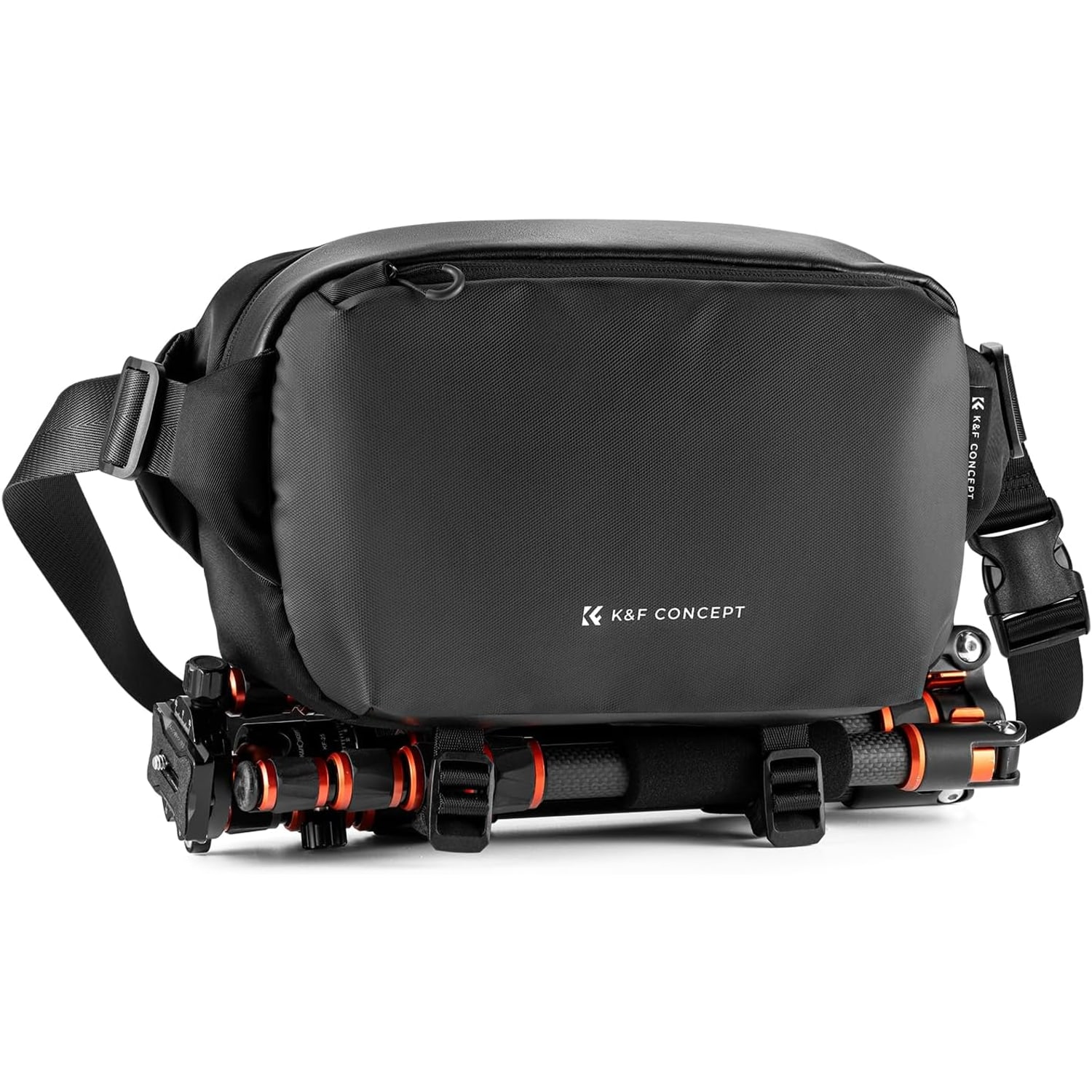
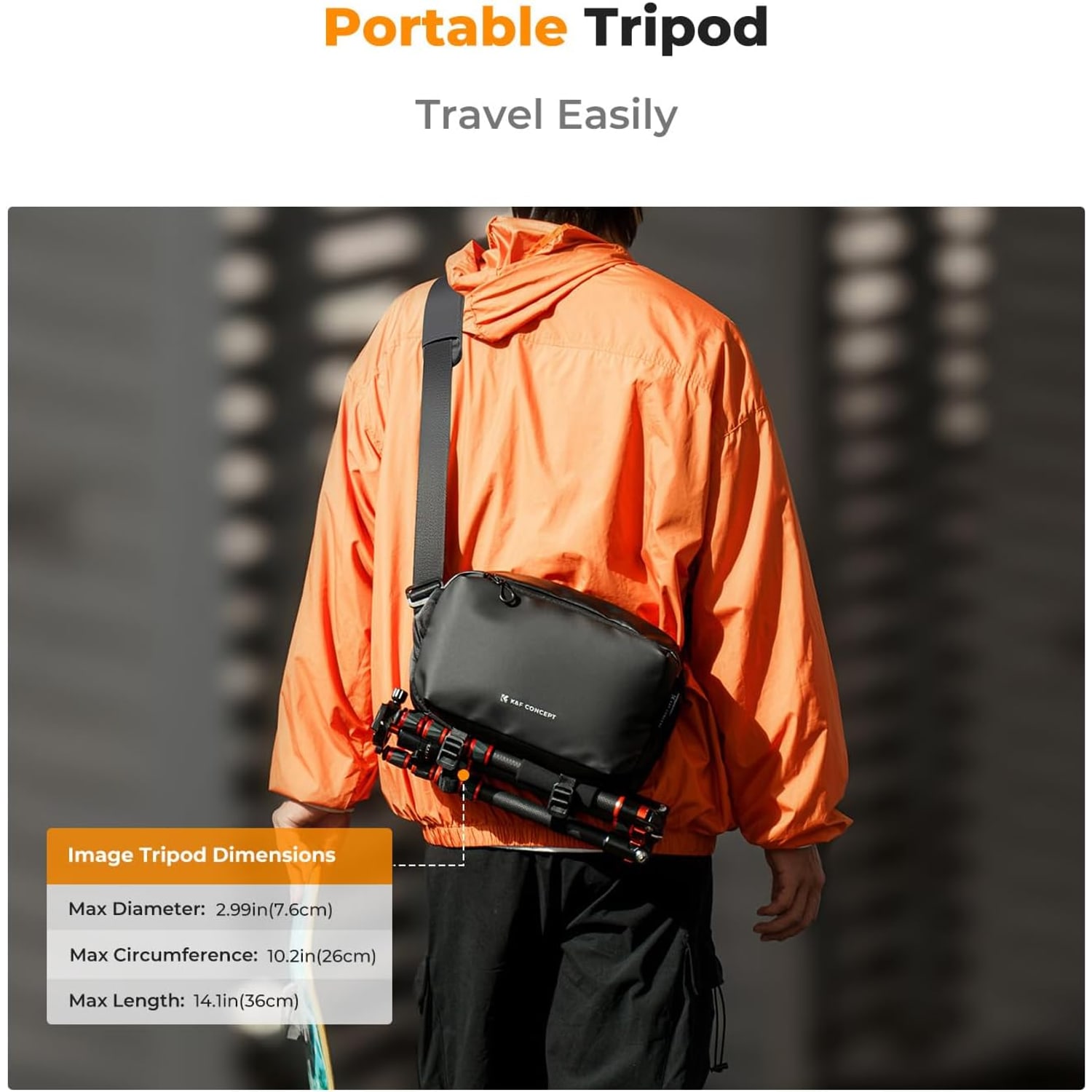
Underneath the bag there are straps for a small tripod. This sounds like a small detail until you have walked three miles carrying a tripod in one hand. Strapping it to the base frees both hands and keeps the weight low and close to your back, which is where you want it.
Keep it to compact travel tripods. The maker gives a max tripod diameter of 2.99inch, and no tripod is included. Cinch the straps down tight before you start walking, then check them once after the first few minutes. Straps settle, and a loose tripod swings.
Weather, care and the long haul
The maker gives the water resistance level as water resistant and describes the shell as weatherproof with a double PU coating. It is not described as waterproof and should not be treated like a dry bag. If the sky genuinely opens up, get under cover or throw a jacket over it.
Cleaning is straightforward. Empty it out, shake the grit loose, then wipe the shell with a damp cloth and a bit of mild soap. Let it air dry with the zippers open so the inside dries too. Skip the washing machine, the dryer, bleach and the iron. Padding and coatings do not survive any of those.
Store it dry and loosely packed. A bag crushed at the bottom of a closet for six months will come out with permanent creases in the padding. Leave something soft inside to hold the shape.
Check the strap hardware and the zipper pulls every couple of months. These are the parts that wear first on any bag, and catching a sticky zipper early means a drop of lubricant instead of a replacement.
How to decide before you buy
Do one thing before you order any bag, including this one. Put your camera on a table with the lens you leave attached most of the time. Measure it, body plus lens, height and depth. Then compare that to the 10.6×6.7×4.1 inch internal size.
Next, lay out everything you carried on your last three shoots. Not everything you own, just what you actually took. If that pile fits in a shoebox, a 10 liter sling is right for you. If it needs a laundry basket, you want a backpack.
Finally, think about how you move. If you shoot while walking and want the camera out in seconds, a sling wins. If you hike to a spot, set up and stay there, a backpack is more comfortable over distance. Plenty of photographers end up owning both and picking based on the day.
The short version
A camera sling bag 10L holds a body, a couple of lenses and the small stuff, on one adjustable strap you can swing from back to front without stopping. This one is a soft shell, water resistant, 600 g empty, with a padded folding divider, four pockets and straps on the base for a small tripod.
It suits mirrorless and compact DSLR kits, travel, city walking and anyone tired of hauling a half-empty backpack. It does not suit long telephotos, two-body setups or anyone needing a laptop sleeve.
Measure your camera with its lens on, check it against the dimensions, and if the numbers work, this is the bag that tends to get used rather than stored.