

The complete guide
Mini Phone Tripods: How To Pick One You Will Actually Carry
The problem with holding your phone
Phone cameras have gotten extraordinary. The sensors are better, the software is smarter, and a good phone in good light beats a mid-range camera from ten years ago. Then you hold it in your hand, tap the screen, and the picture comes out slightly soft.
That tiny movement at the moment of capture is the single most common reason a photo disappoints. It gets worse in low light, because the camera holds the shutter open longer and has more time to record your wobble. It gets worse again on video, where a shaky frame is obvious to everyone watching.
The second problem is simpler. You cannot be in the photo and hold the phone at the same time, not without an outstretched arm and a strange angle. Self-timers help, but then you are sprinting back into frame with four seconds to arrange your face.
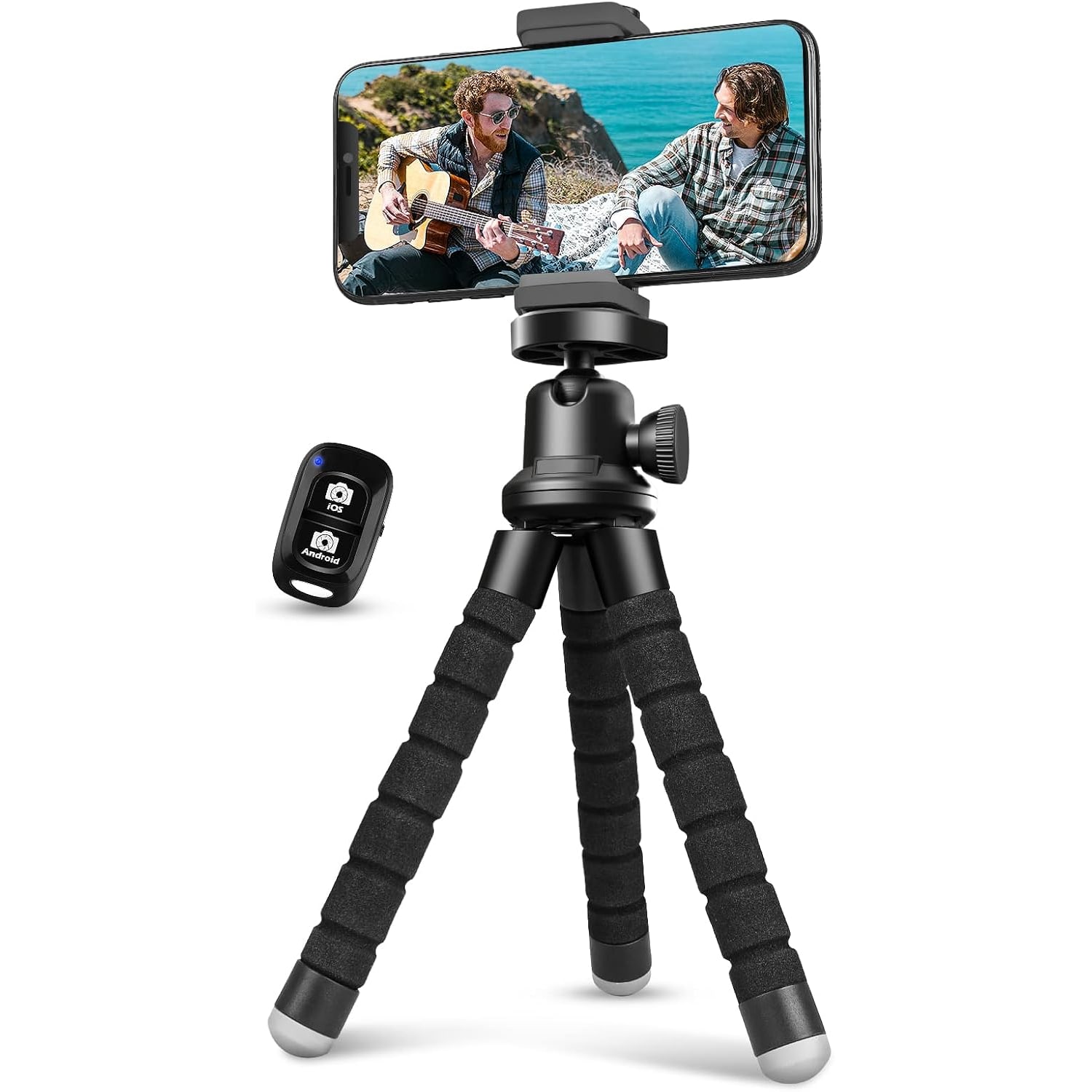
A mini phone tripod solves both at once. It holds the phone steady, and a remote lets you fire the shutter from a distance. The reason this particular format has caught on is that it weighs 87 grams and folds to 9.4 inches, which means you carry it instead of leaving it at home.
How a bendable mini tripod works
There are two families of small tripod. Rigid ones have fixed legs that splay to a set angle and that is that. Bendable ones, like this, have jointed legs you can shape by hand.
This model has three legs, each one bendable along its length and each one holding the shape you put it in. The legs are metal, padded with foam, and capped with non-slip rubber feet. The foam matters more than you would think, because you will spend a lot of time holding these legs squeezed together as a grip rather than standing them on anything.
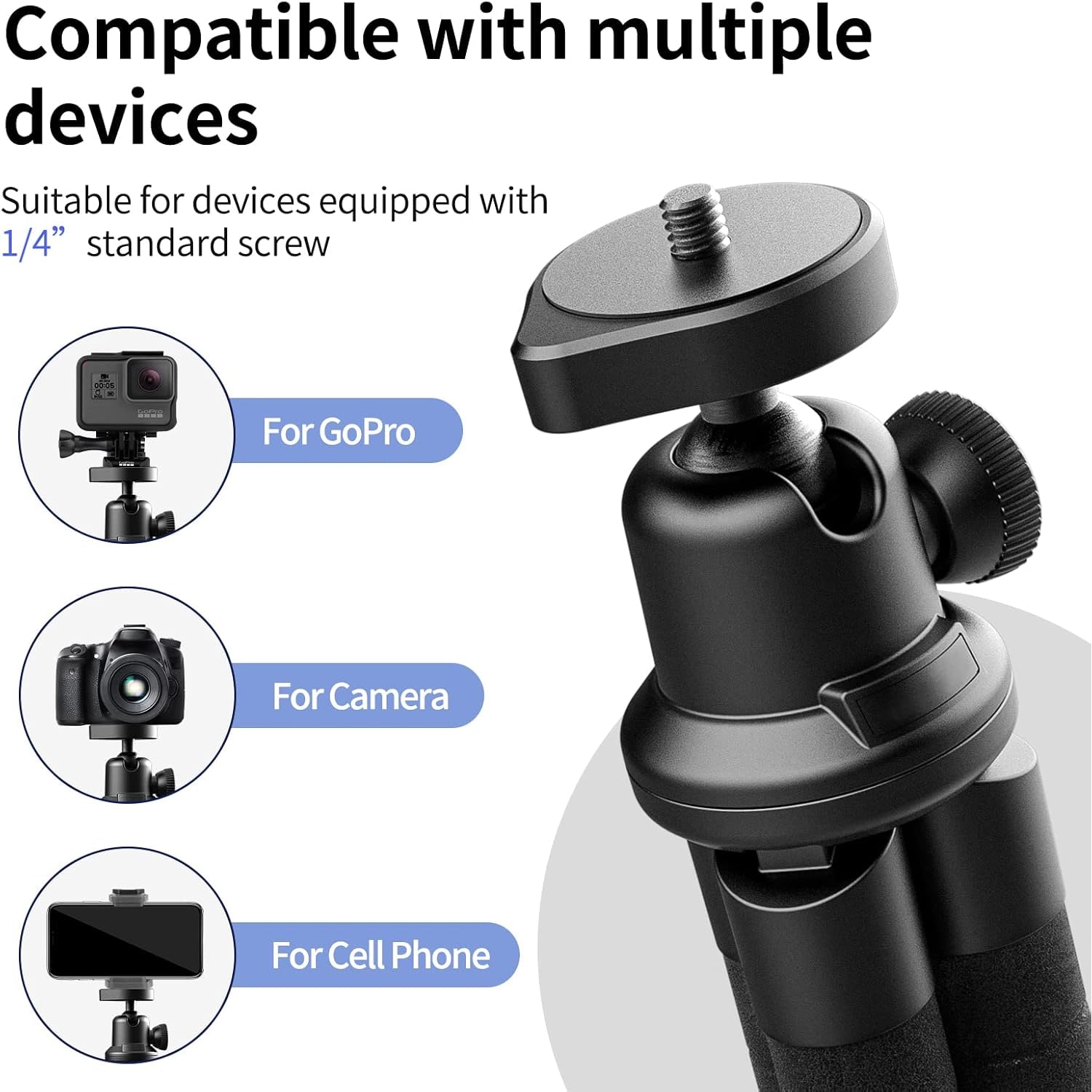
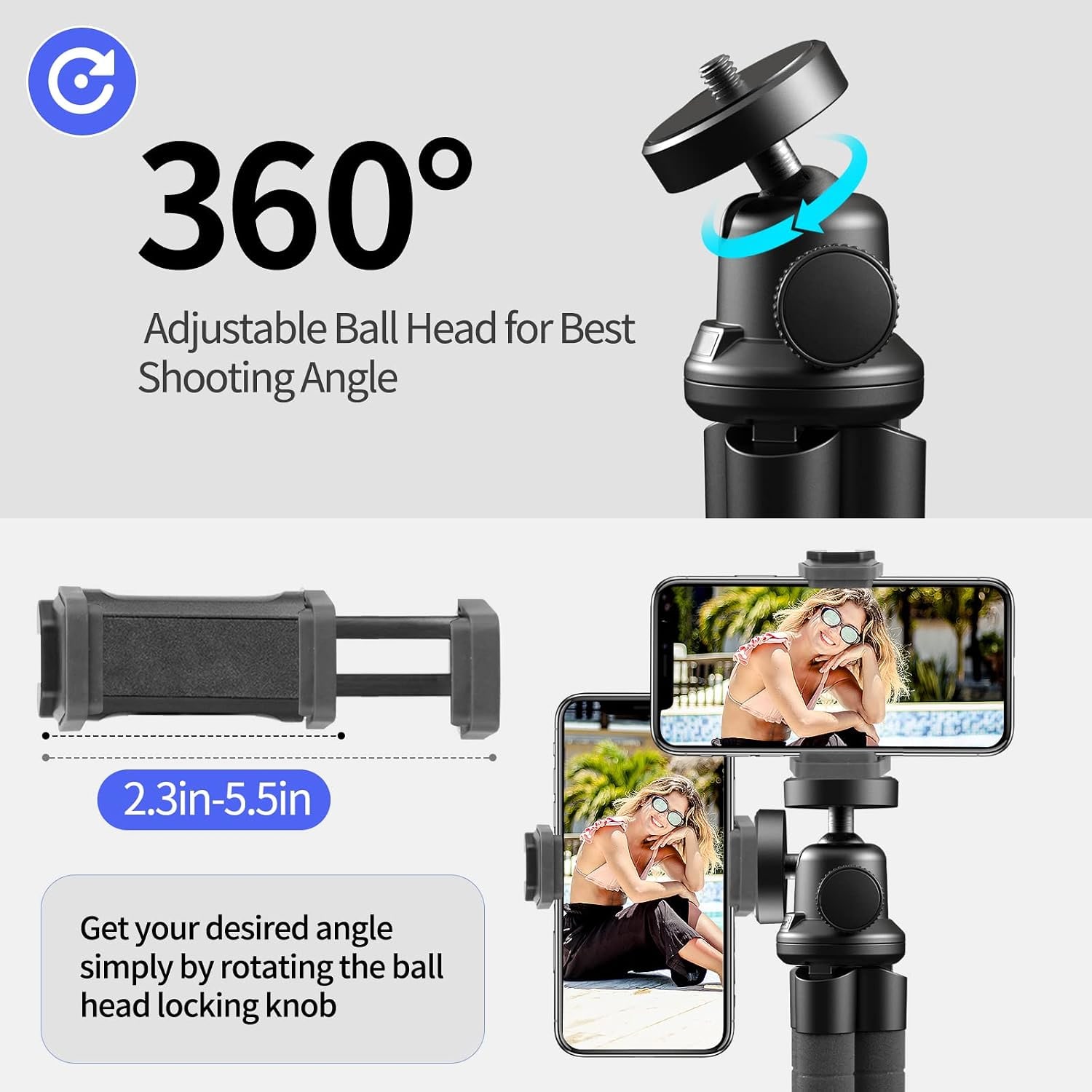
On top is a ball head with full 360-degree rotation. Loosen it, tilt and swing the phone to whatever angle you want, tighten it and it stays. That is how you switch between a vertical clip for social and a horizontal frame for a landscape.
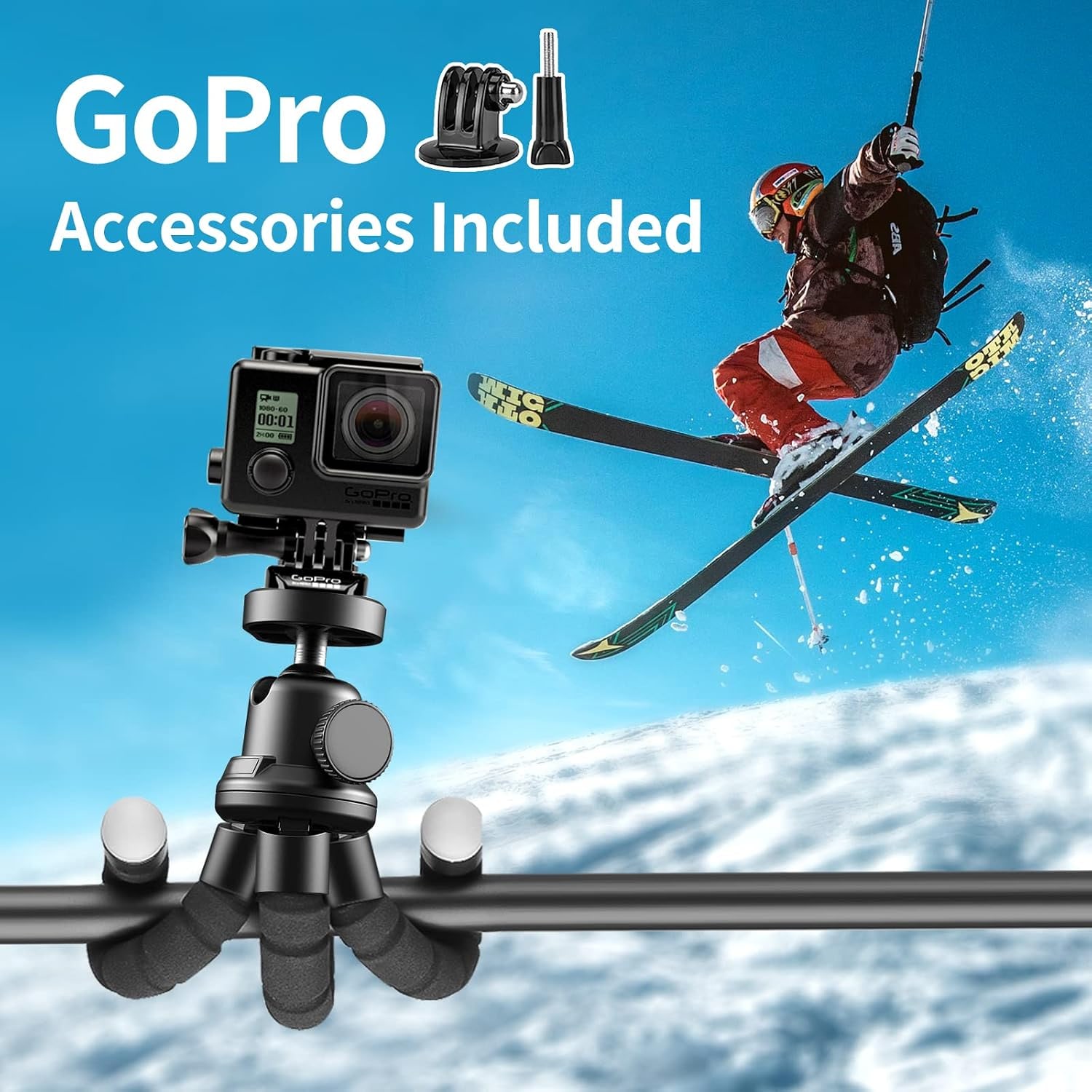
The phone itself sits in a spring-loaded clip that opens from 2.3 inches to 5.5 inches. That range covers the iPhone family and the large majority of Android handsets, with a slim case on. The whole rig is rated to hold up to 6.6 pounds, which is far more than any phone needs and leaves headroom for a small camera on a standard thread.
The maker describes the height as 9.4 inches, and the legs bend rather than telescope. Leg diameter is 0.75 inches, which is slim but gives the legs enough body to stay where you bend them.
The remote is the part people underrate
A wireless shutter remote sounds like a small extra. In practice it changes how you use the tripod.
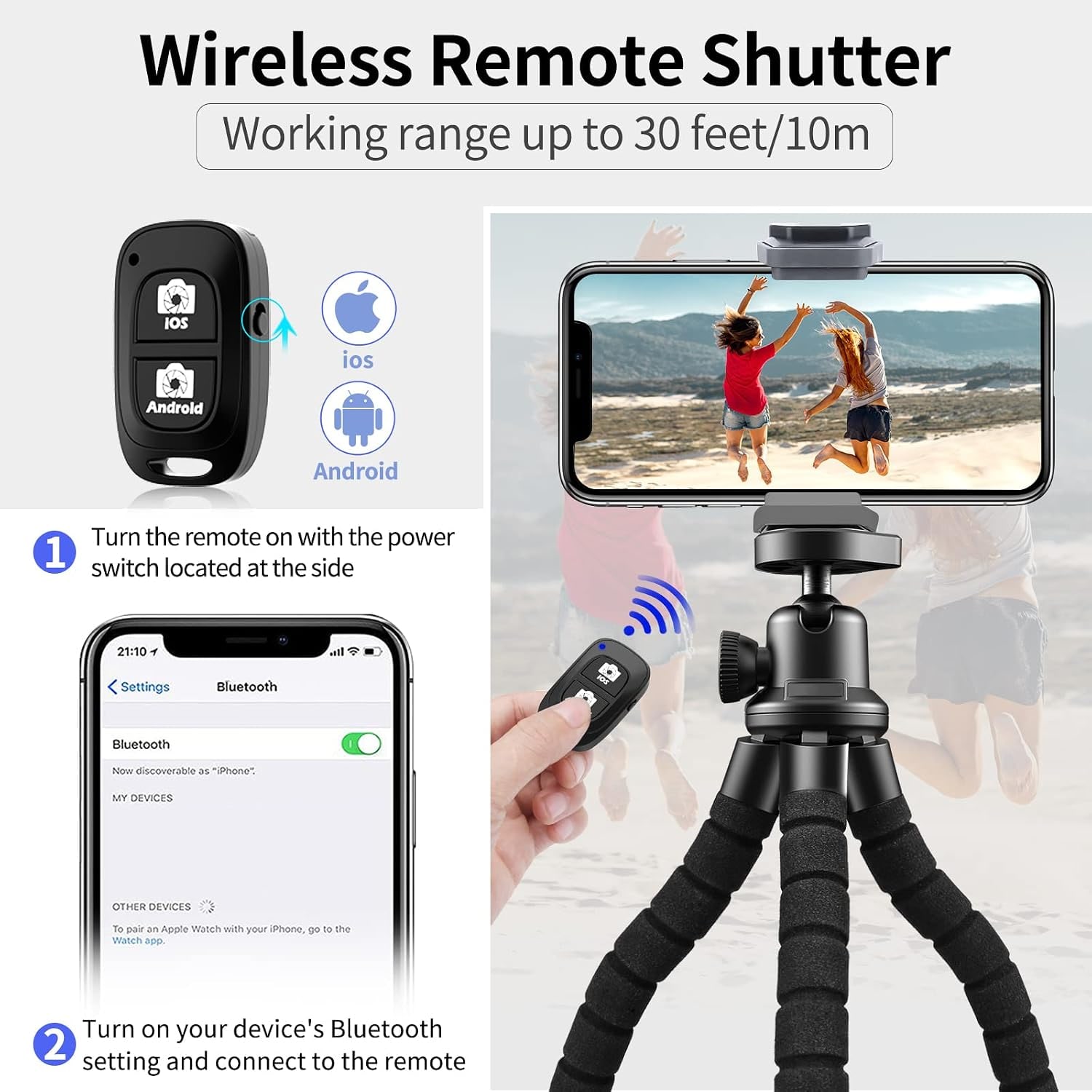
Range is up to 33 feet, or 10 meters. That is the width of most rooms, the depth of a yard, and plenty of distance for a group shot with everybody in it. You press a button in your hand and the phone takes the picture without anybody touching it.
For solo video, it means you can start and stop a take from where you are standing rather than walking in and out of frame. For family photos, it means nobody is the designated photographer who never appears in the album. For long exposures or tricky low-light shots, it removes the last source of shake, which is your finger on the screen.
Anyone comparing options for the best compact tripod for selfies tends to end up weighing remote range against size, and 33 feet from an 87 gram package is a strong trade.
Who it suits
Travelers are the obvious group. If you are packing light, a full tripod is out of the question, but a 9.4 inch stick in a side pocket costs you nothing.
Desk users are the quiet second group. Set it on a table, put the phone at eye level, and your video calls stop looking like you are filming from your lap. It also works as a second-camera mount if you are recording something on a laptop and want an overhead or side angle.
People making short video get a lot out of the grip mode. Fold the legs together, hold the padded body, and you have a stable handheld rig that keeps your fingers off the screen. It is not a gimbal, so it will not smooth out your walking, but it stops the small hand tremor that makes footage look amateur.
Hikers use the wrap. Curl the legs around a rail, a gate, a branch or a signpost and you have a mount at chest or head height where no tripod could stand. This is also the mode where people find the best bendable tripod legs earn their keep, because a rigid tripod simply cannot do it.
It is less suited to anyone shooting with a serious camera body. Six and a half pounds is the ceiling, and a big lens will tip the balance well before you hit the weight limit.
How to choose between options like this
Start with the clip range, because nothing else matters if your phone does not fit. Measure across the widest point of the handset with the case you actually use. If that number sits between 2.3 and 5.5 inches, you are fine. Thick rugged cases and battery cases are the usual problem.
Then look at folded size and weight. A tripod you leave in a drawer is worth nothing. At 9.4 inches folded and 87 grams, this one passes the pocket test, which is really the only test that counts for everyday carry.
Check the head next. A ball head that rotates fully gives you portrait, landscape and everything between. A cheap fixed head locks you into one orientation and you will notice the limitation on day two.
Look at the leg construction. Legs that bend along their length give real shaping ability. Foam padding and rubber feet are the difference between a tripod that grips a smooth café table and one that slides.
Finally, be realistic about the load. The 6.6 pound figure here is generous for a tripod this small, but weight is only half the story. A tall, front-heavy setup will topple before it strains the legs.
Looking after it
This is not a water resistant product, so treat rain as a reason to pack it away. If it does get damp, wipe it and let it dry fully before folding it into a bag, because trapped moisture is how metal joints go stiff.
Clean it with a dry or barely damp cloth. Keep solvents away from the foam. Brush grit out of the rubber feet now and then, since packed dirt is what makes feet slip on smooth surfaces.
Bend the legs with a firm, steady hand rather than snapping them into position. Forcing them hard and fast is how any bendable leg eventually loosens.
Do not over-tighten the ball head. Snug is enough. If the head drifts under the weight of your phone, tighten a little more and check the phone is seated deep in the clip rather than perched on the edge.
Store the clip relaxed instead of stretched open. Springs left under tension for months get lazy.
The short version
This is a mini phone tripod built around one idea, that the best support is the one you have with you. It folds to 9.4 inches, weighs 87 grams, and takes phones from 2.3 to 5.5 inches wide.
Three bendable metal legs let it stand on a table, grip in your hand, or wrap around a rail or branch. A 360-degree ball head handles portrait and landscape. A wireless remote fires the shutter from up to 33 feet, which is the feature that gets you into your own photos.
It is not water resistant and it is not meant for heavy camera bodies. Inside those limits, for phone photography, video calls, travel snaps and short-form video, it does a solid job for very little weight and very little money. Buy it, drop it in a bag, and forget about it until the moment you need it.