
The complete guide
How to Choose a Phone Tripod and Selfie Stick That You Will Actually Use
The problem with holding your own phone
Phone cameras got good years ago. What did not keep up is where you put the phone. Anyone who has tried to film themselves cooking, record a short tutorial, join a video call from a kitchen counter or get the whole family into one photo knows the routine. You stack books. You lean the phone against a mug. You run back from the timer and arrive half-ready with a strange expression. Or you hand the phone to a passerby and get a picture with your feet cut off and a lamp post growing out of your head.
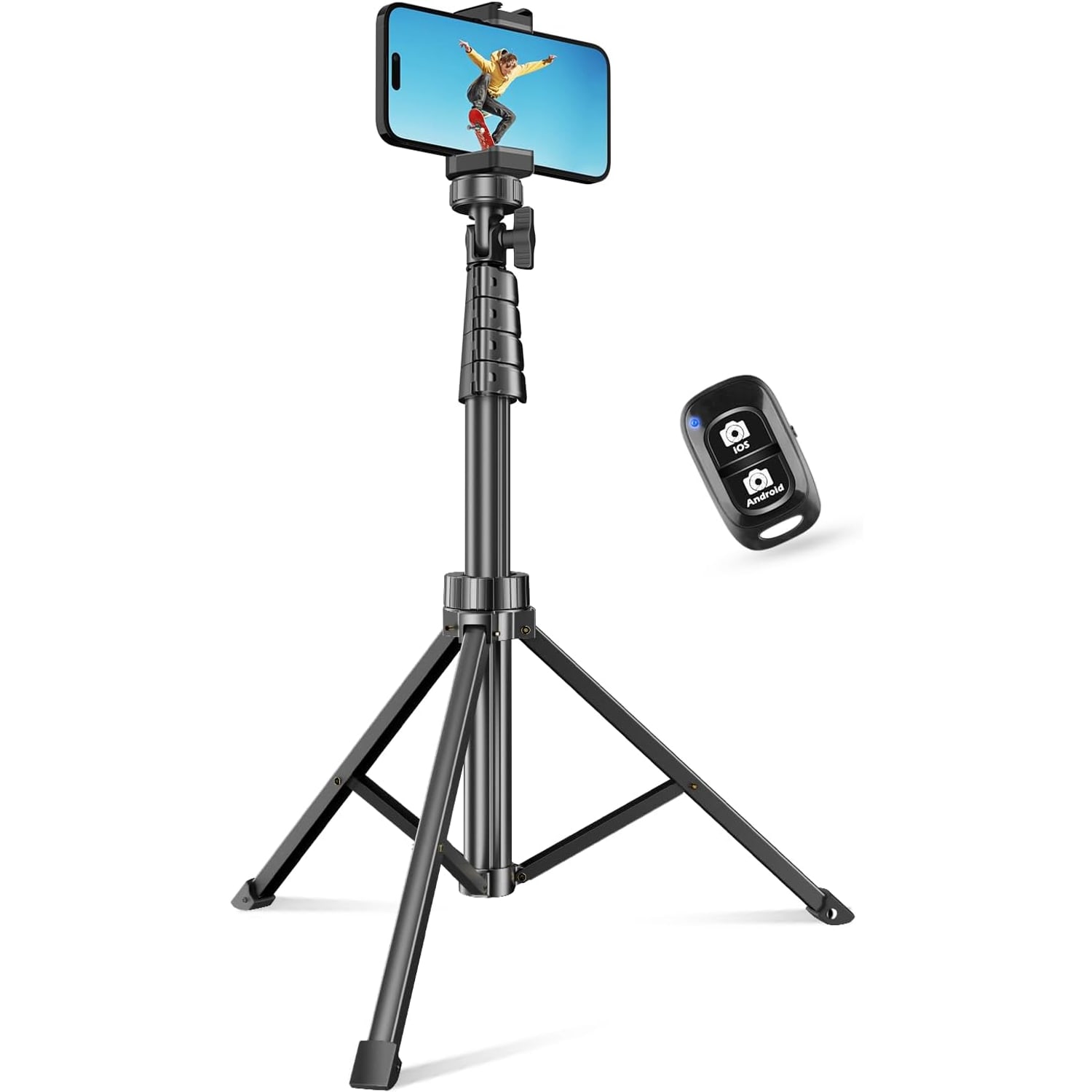
A phone tripod fixes a small, specific problem: it gives the phone somewhere to stand at the height you choose, pointed where you want, without a hand on it. Once you have one, you use it far more often than you expected. A 62-inch tripod with a selfie stick mode and a remote covers most of the situations where a phone needs a place to be.
How this one works
There are two modes and the switch between them takes about a second.
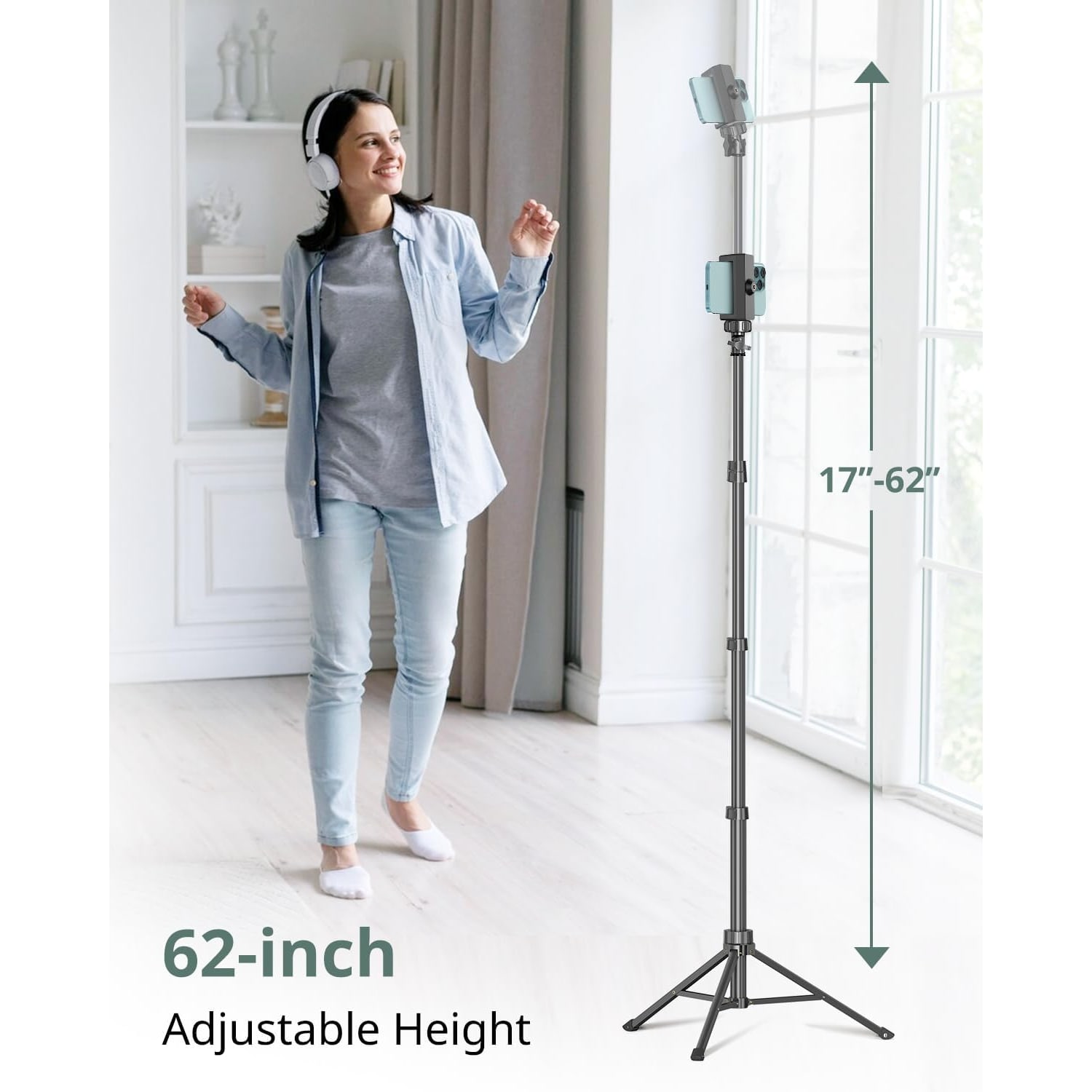
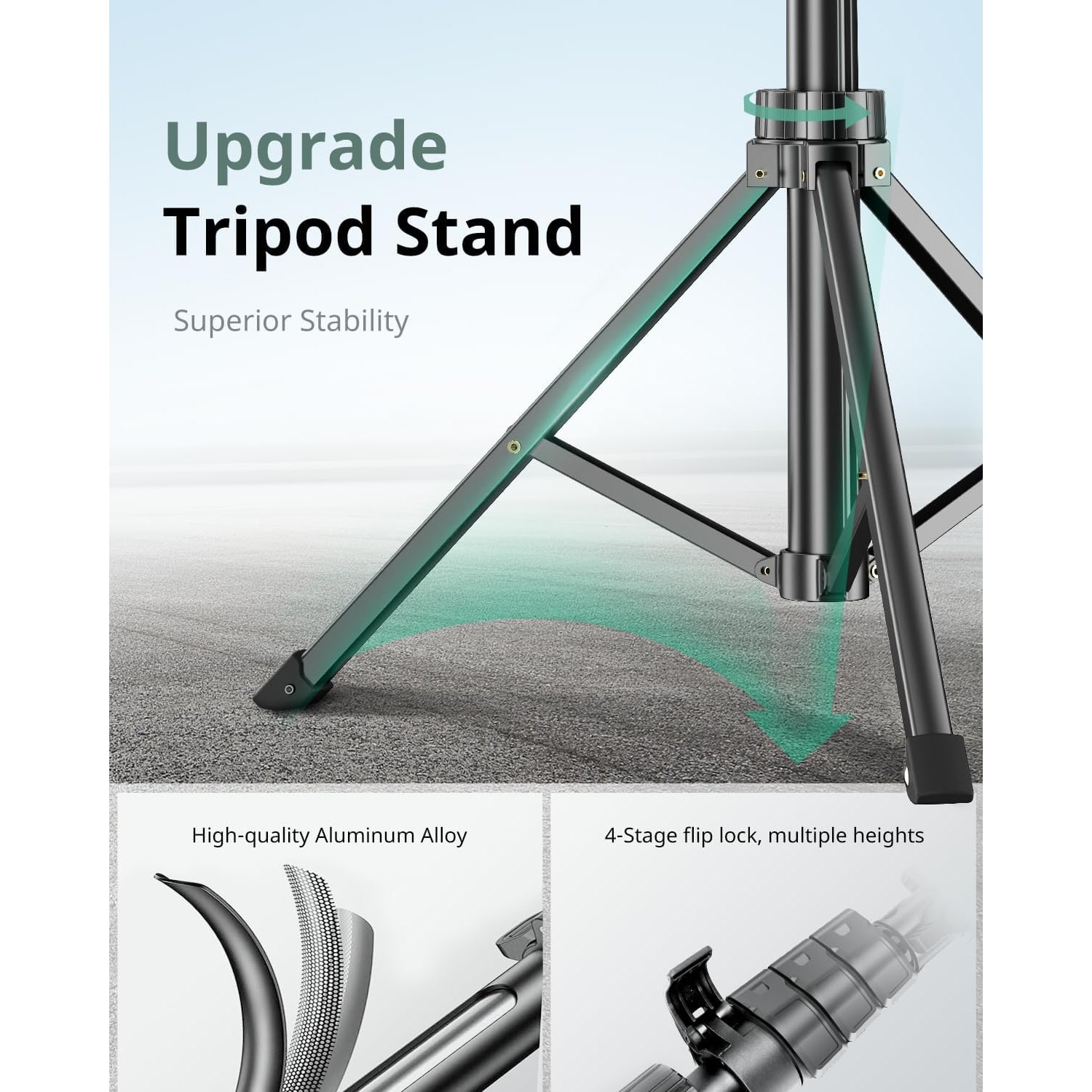
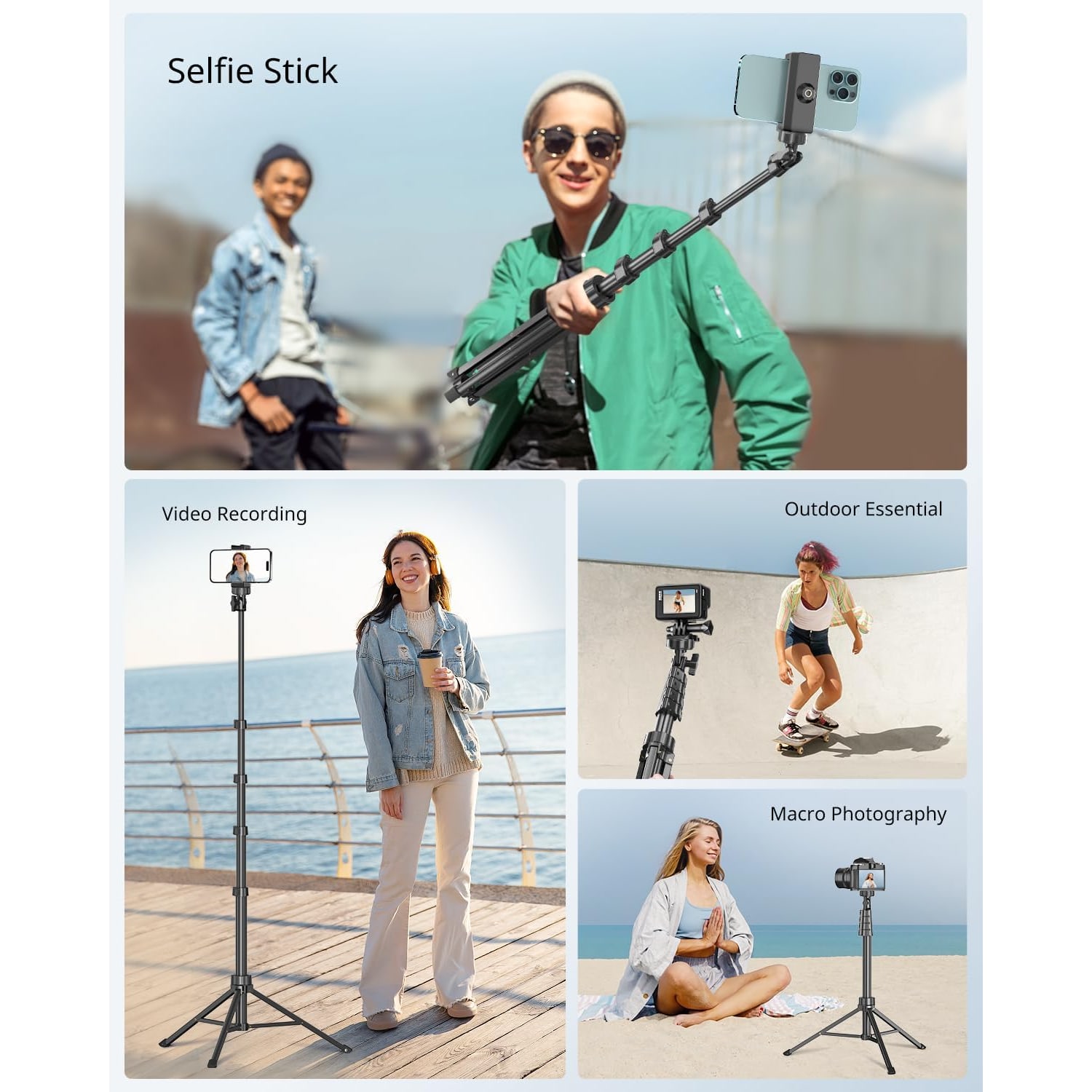
With the legs folded shut, it is a selfie stick. You hold the shaft, extend as far as the shot needs, and shoot handheld. With the legs open, it is a tripod. Open the flip locks, pull the sections out, close them again, and it stands by itself. Fully extended it reaches 62 inches. The maker's photos show the height adjusting from 17 to 62 inches, while its spec table gives a 50 inch minimum height and a 5 inch folded size.
Folded length matters more than most people realize, because a tripod that fits your bag is the one you actually use. Since the maker's two figures disagree, plan around the longer one, about 17 inches, and treat anything shorter as a bonus.
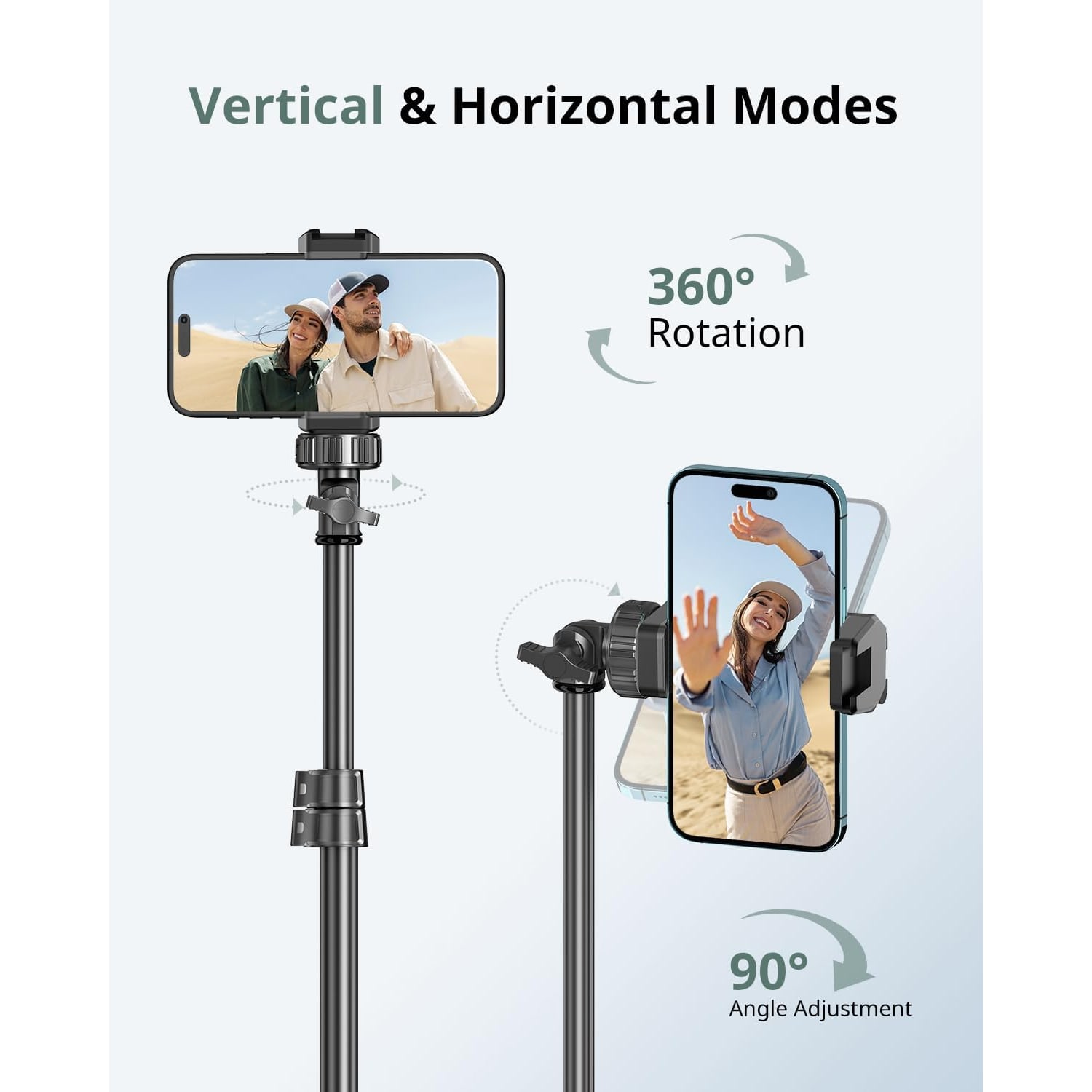
The head rotates 360 degrees. Spin the holder upright and you are set for vertical video. Spin it sideways and you are set for wide landscape framing. No need to touch the legs. If you are posting the same clip to a vertical feed and a horizontal one, you can shoot both takes in a row.
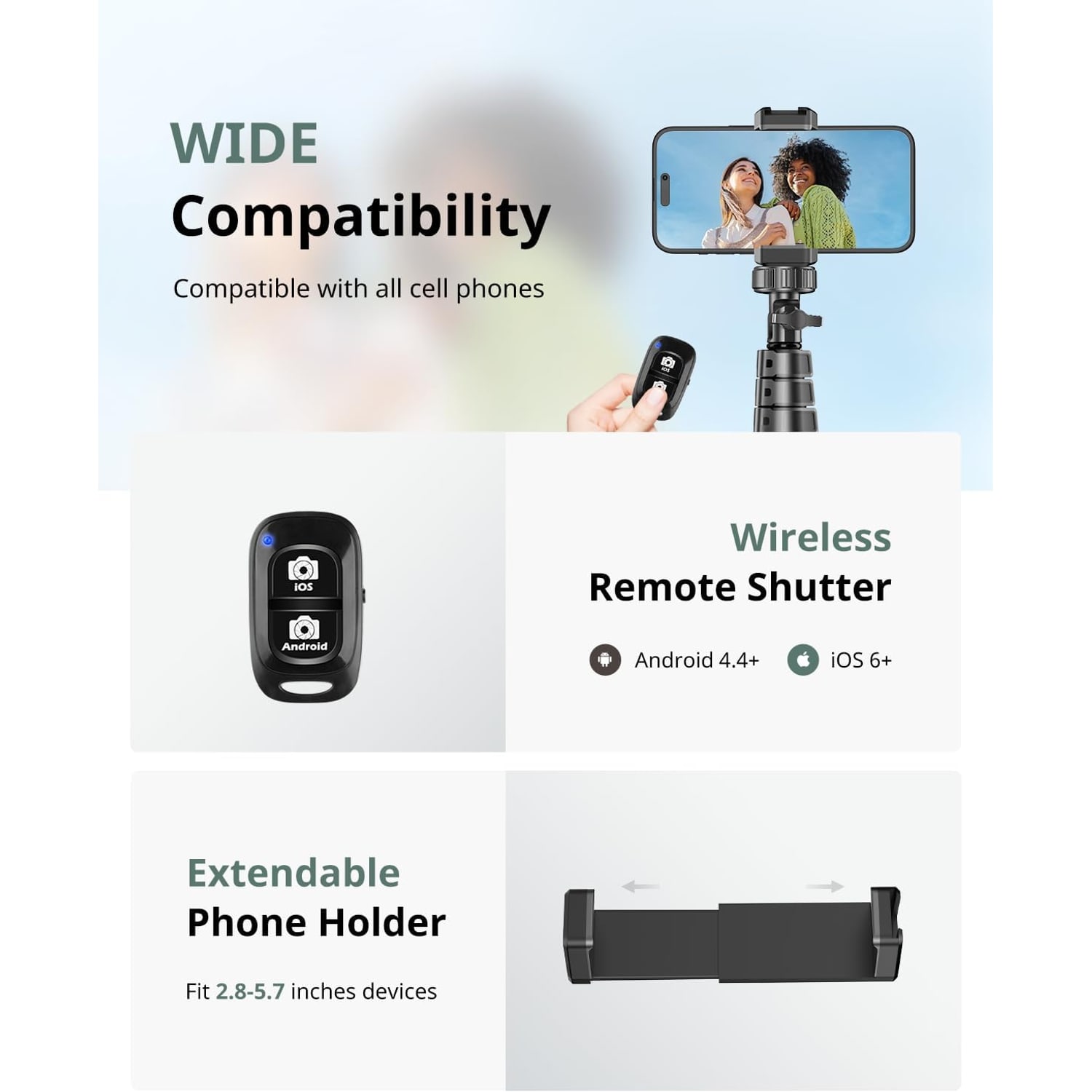
The wireless remote is the quietly useful part. Set the shot, walk into frame, press the button. That is the whole workflow. It turns group photos from a scramble into something relaxed, and it means you are not stabbing at the screen and knocking the framing out of alignment.
Who it suits
People who travel. The 650 g weight is the number that matters here, along with a collapsed length you should plan at about 17 inches. If you want a best travel tripod for phone option and you are carrying everything on your back, folded length is usually the deciding factor.
People making video content. Vlogs, tutorials, product demonstrations, cooking clips, craft work. You get standing-height shots for pieces to camera, and handheld selfie stick mode for anything where you are walking. It handles the two modes most creators switch between without needing two separate pieces of gear.
People who take a lot of video calls. Propping a phone on a desk points it up at your chin and the ceiling. Standing the tripod next to the desk puts the camera at your actual face height. Your hands stay free, which matters if you are demonstrating something while you talk.
Families. Group shots, birthdays, anything where the person holding the phone keeps missing out. Set it up, use the remote, everyone is in the picture.
People with action cameras or small compacts. Pull the phone holder off and there is a 1/4-inch screw thread underneath, the same standard used across the camera world. Action cameras, webcams, small camcorders and compact digital cameras all mount directly.
What to check before you buy
Phone width with the case on. The holder grips phones from 2.8 to 5.7 inches wide. Nearly every current phone is inside that range, but a chunky rugged case can add enough bulk to matter. Measure across the widest point with the case fitted.
Your gear's weight. The limit is 2.2 pounds. That is generous for a phone, fine for action cameras and compact cameras, and not the right choice for a heavy camera body with a long lens. Match the tripod to the gear rather than hoping.
The height you actually need. 62 inches is the ceiling, not an obligation. For seated video calls you will probably use around half of it. For standing portraits you will use most of it. Shorter settings are always steadier, so only extend as far as the shot requires.
Whether you want one thing or two. Some people buy a selfie stick and a separate mini tripod. That works, but it is two items to remember and two to lose. A combined unit is the simpler answer if you want one thing in the bag.
Getting steady shots
A light tripod is a trade-off. Low weight is what makes it portable, and it is also what makes it less planted than a heavy one. A few habits help.
Use the lowest height that gives you the framing you want. Every extra section you extend adds a little flex. On uneven ground, adjust the leg positions so all three feet make contact before you trust it with your phone. Check each flip lock is properly closed before you let go, especially the thinnest sections near the top.
Outdoors in wind, come down in height. A tall stand with a light base is the classic recipe for a tipped-over phone. Find a wall, a hedge or a parked car to shelter behind if the weather is doing something unhelpful.
Indoors, watch your cables. If you are charging while filming, make sure the cable has slack and is not pulling on the phone from one side.
Looking after it
This is not water resistant, so treat rain, pools and the beach with caution. A quick wipe with a dry or slightly damp cloth after use keeps the legs clean. The real enemy is grit, which works its way into the locks and makes them stiff. If you have been somewhere sandy, brush the leg sections off before you collapse them.
Collapse the sections gently rather than slamming them shut. Store it folded in a dry spot. If you are not using the remote for a long stretch, check it before an important shoot so you are not discovering a dead battery at the wrong moment.
Mounting other gear
The 1/4-inch screw thread is the universal camera mount standard, which is why unscrewing the phone holder opens up a lot of options. Action cameras mount either directly or via the frame they came with. Tripod-ready webcams screw straight on, which is handy for a desk setup. Compact cameras and small camcorders work too, as long as they come in under the weight limit.
The adapter supplied in the kit is what bridges those connections, so keep it somewhere sensible rather than losing it in a drawer.
A note on recording
If you are filming in public, or recording other people, be aware that recording audio and recording other people is covered by federal and state law. The rules vary by state. Worth a quick check if you are shooting anything beyond your own family and friends.
The short version
This is a 62-inch aluminum phone tripod and selfie stick that collapses for carrying and weighs 650 g. The head rotates 360 degrees for vertical or horizontal shooting. It holds phones from 2.8 to 5.7 inches wide, carries up to 2.2 pounds, and takes cameras, action cameras, webcams and camcorders through a universal 1/4-inch mount. A wireless remote shutter, the phone holder and an adapter all come in the box.
If the main thing stopping you from filming more, or from being in your own photos, is simply not having anywhere to put the phone, this is the inexpensive piece of gear that removes the excuse. It is small enough to carry, tall enough to be useful and simple enough that you will reach for it without thinking.