
The complete guide
How to Choose an Overhead Phone Tripod for Top-Down Filming
The shot everyone wants and nobody can rig
Top-down video looks simple. A pair of hands, a cutting board, a sketchbook, a set of nails being painted, all seen from directly above. It is the clearest way to show someone how to do something, because the camera sees what you see.
Getting there is the annoying part. A regular tripod points forward. Tilt the head all the way down and the legs are still in the shot, or the phone is too far back to fill the frame. So people improvise. Books stacked on a chair. A phone taped to the underside of a shelf. A friend holding it and slowly drifting out of alignment over ten minutes.
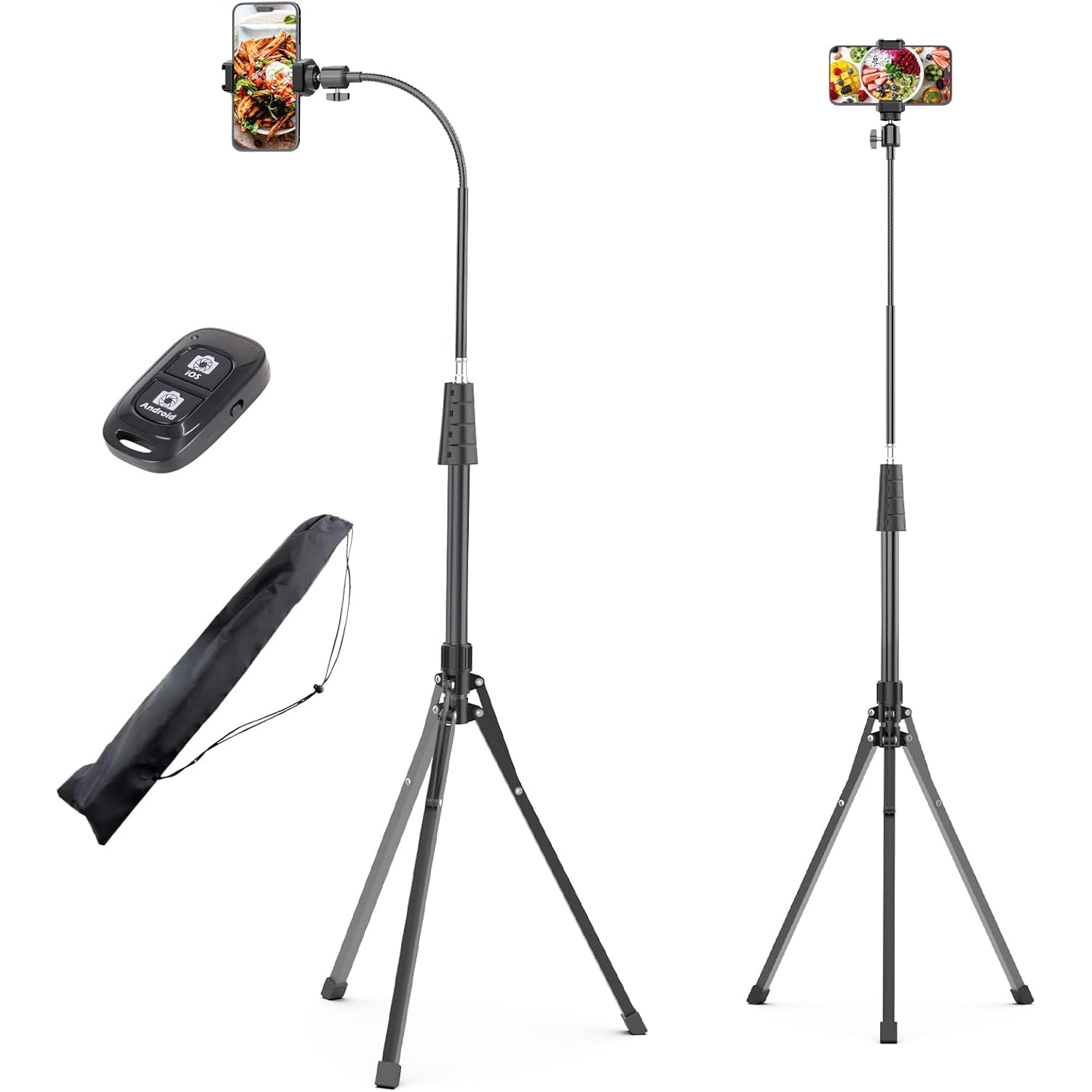
A gooseneck tripod fixes this with one change. Instead of a short, rigid head, there is a long bendable arm. You plant the legs beside your work surface, bend the arm out over it, and the phone looks straight down. The legs stay out of frame because they are off to the side. Once you have used one, the book-stacking era feels very far away.
How the gooseneck part works
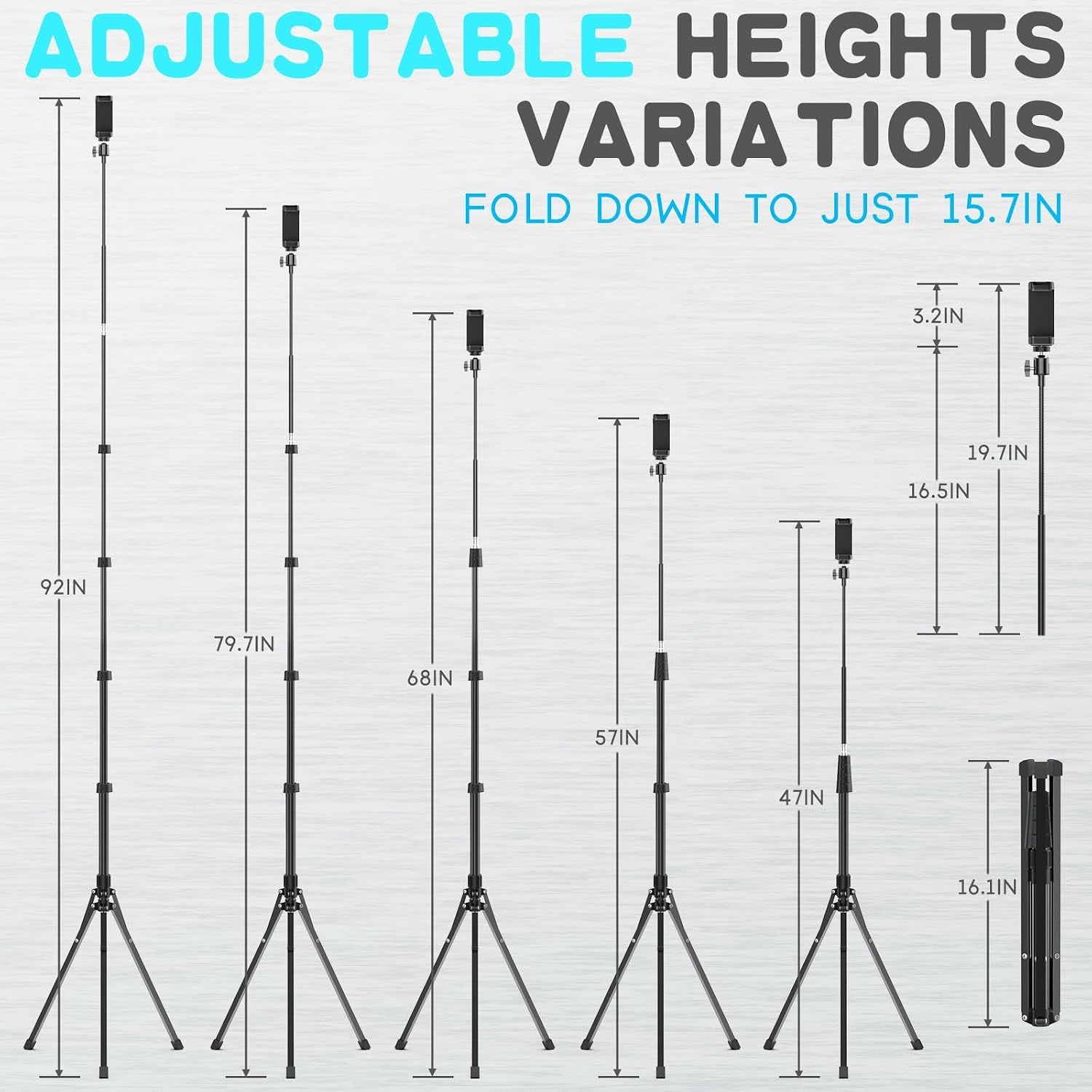
The arm on this model is 16.5 inches long. It is a flexible section that holds whatever shape you bend it into, with a 1/4 inch ball head at the end for the phone clip.
That reach is what decides your framing. If the base sits a foot from the edge of your table, the arm can carry the phone roughly over the middle of a standard work area. For a wide dining table you may need to move the base closer or accept a slightly off-center view. It is worth measuring your surface before you buy any gooseneck product, because arm length is the one spec you cannot adjust later.
The ball head at the tip does the fine work. Get the arm roughly into position first, then use the head to square the phone up so the edges of your board run parallel with the edges of the frame. Crooked top-down shots are distracting, and the ball head is how you fix them in seconds.
Height matters more than people expect
The legs here run from 16 inches at the bottom to 92 inches at the top, folding back to 16 inches for storage. That is a wide range, and it is the reason this stand does more than one job.
At the short end it sits on a desk or a counter for close work. Somewhere in the middle it stands on the floor beside a kitchen island, with the arm reaching across. At the tall end it clears a standing person's head, which is what you need for a full-body shot, a dance clip, or a group photo where you want a bit of downward angle.
The maker describes a flip-lock design that folds the stand down quickly. It does not go into more detail than that, so read the instructions before your first setup.
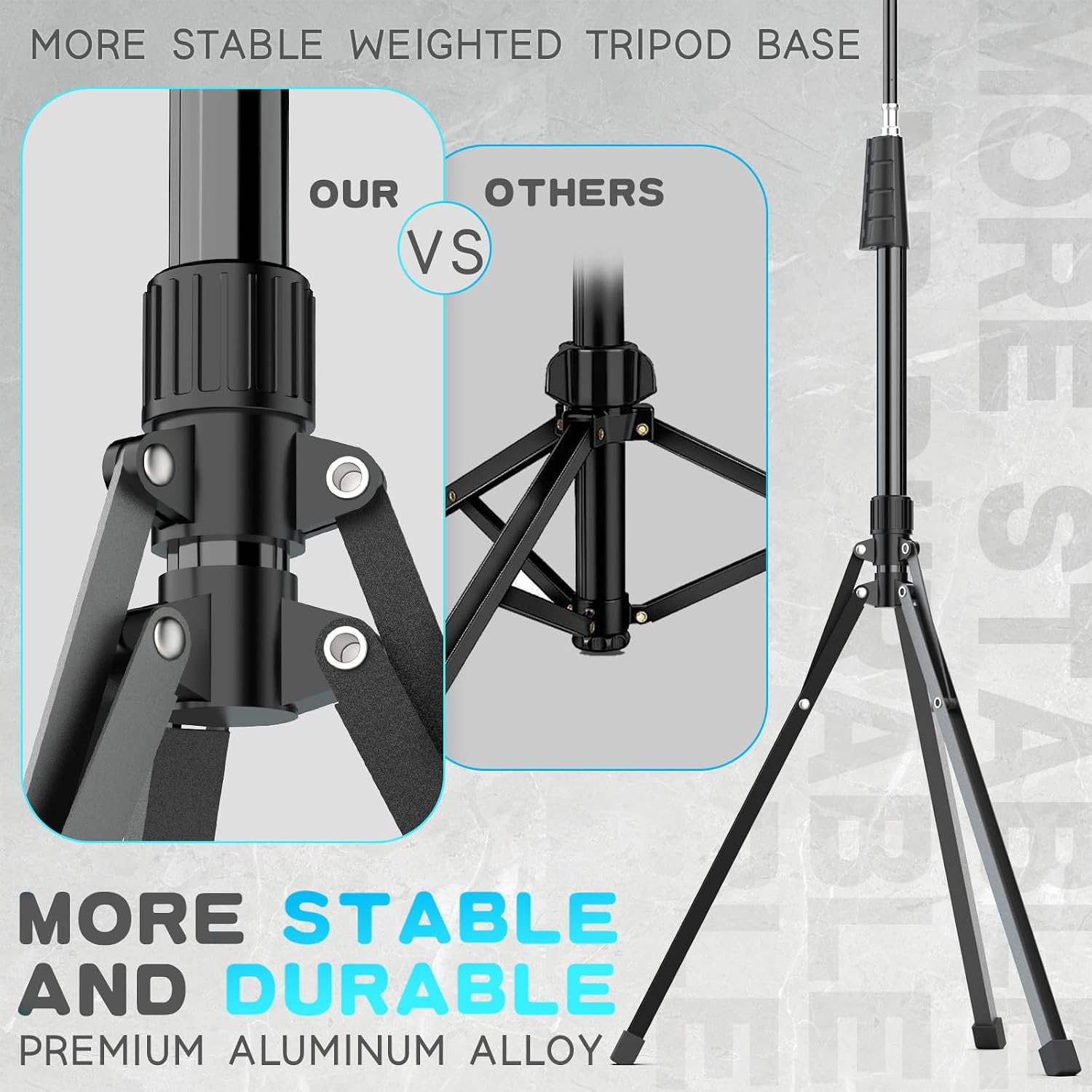
A note on height and stability. Every tripod gets twitchier as it gets taller, because the same small nudge at the base turns into a bigger swing at the top. The weighted base on this one helps a lot, but at 92 inches you still want the legs spread wide and nothing bumping into them. Indoors that is easy. Outside in a breeze, drop the height a little.
Does your phone fit, and what else can you mount
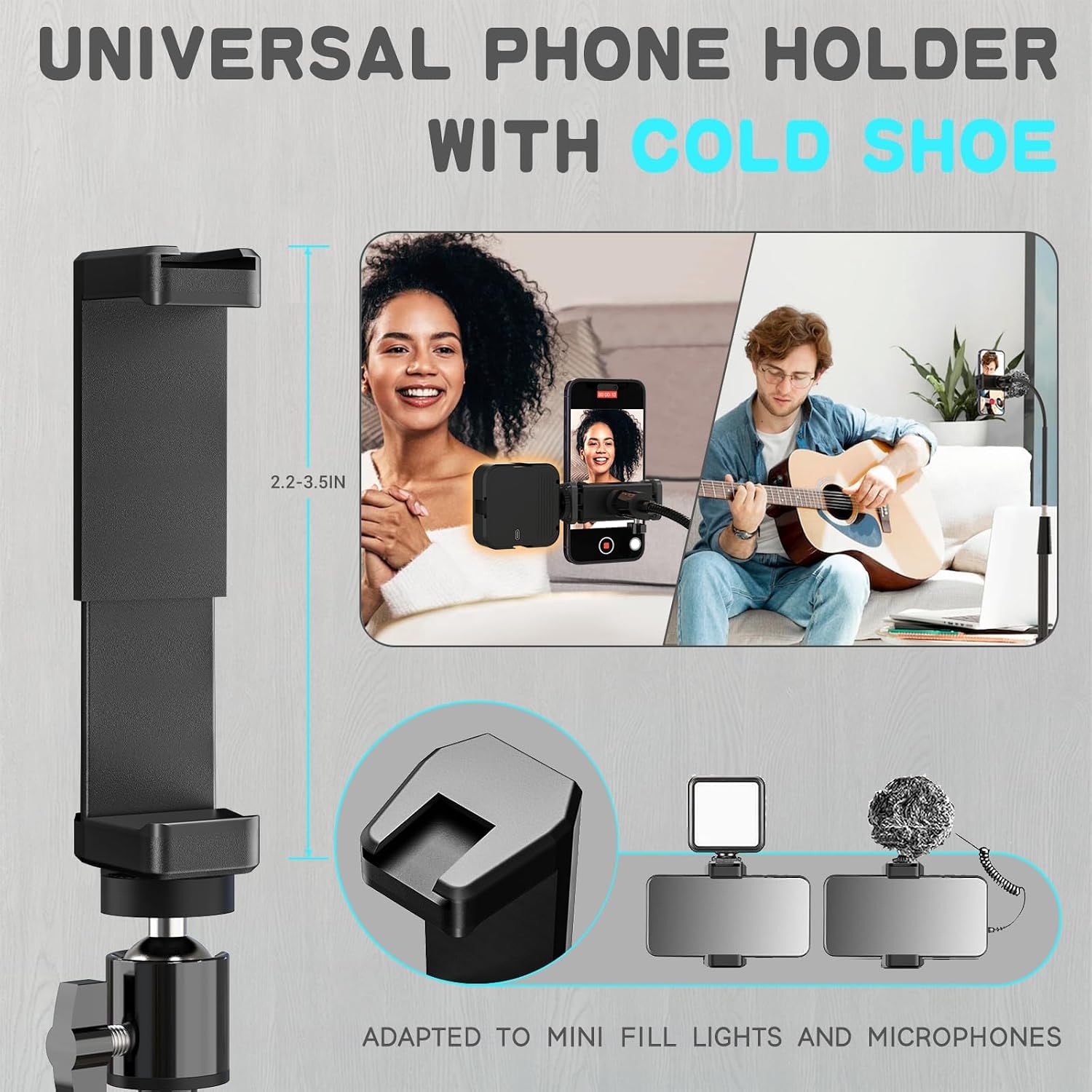
The maker's text gives the clip an adjustable extension from 2.8 to 5.7 inches and says it takes iPhone and Android phones even in bulky cases. Its own photo of the holder marks the opening as 2.2 to 3.5 inches. If your phone is large or lives in a thick case, measure it against the smaller figure.
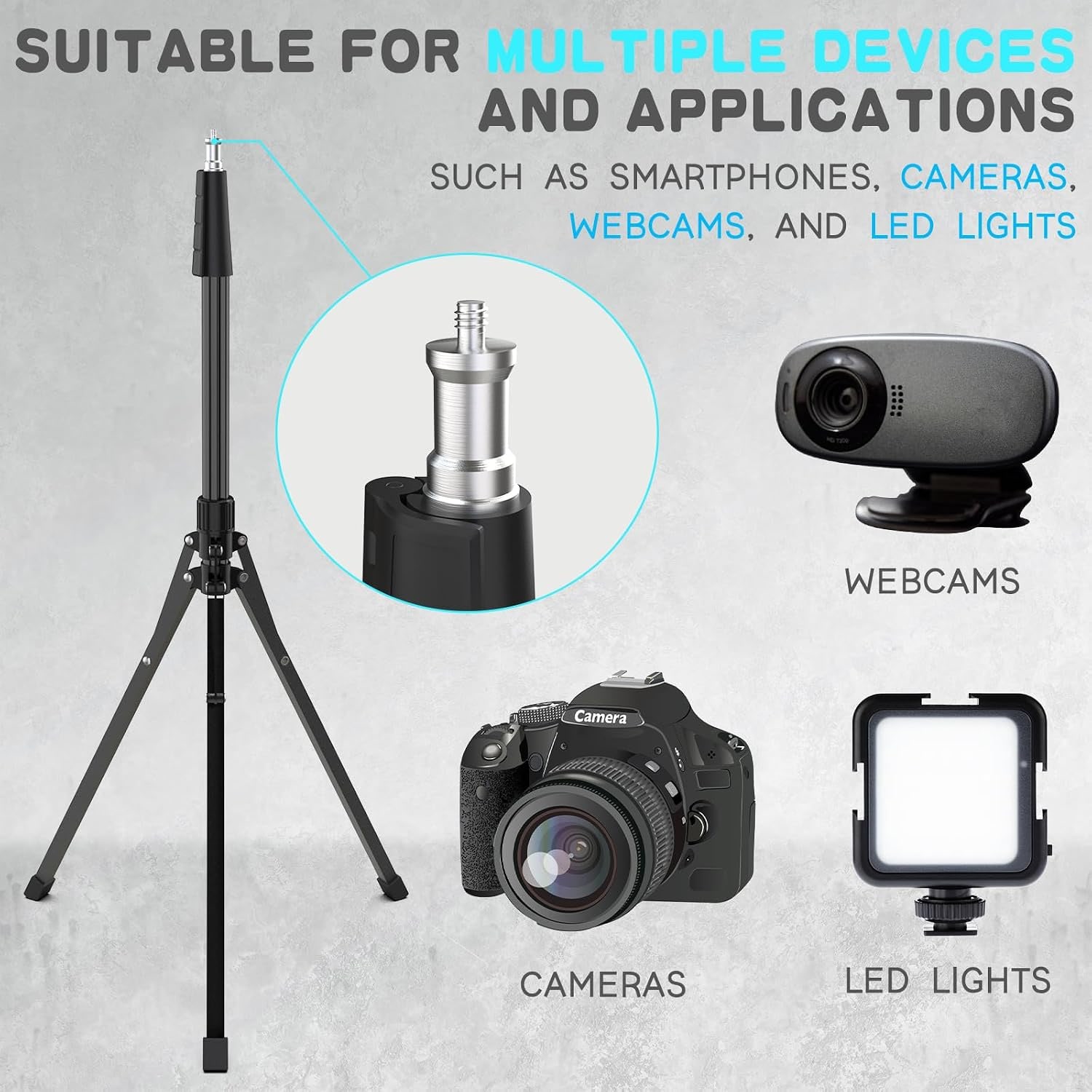
The stated weight limit is 2.2 pounds. That sounds modest until you work out what it actually includes. A large phone weighs around half a pound. Add a small shotgun mic and an LED panel and you are still comfortably inside the limit. A compact camera or action camera also fits, since there is a standard 1/4 inch thread. What does not belong here is a mirrorless body with a chunky lens. That is a job for a heavier video tripod.
The phone clip also carries a cold shoe mount. This is a small bracket where accessories slide in. For overhead cooking or craft work, a little directional mic on that shoe picks up your voice far better than the phone's own mic pointing at the ceiling. A small light on it kills the shadow your own head casts over the work. Those two accessories change the quality of a top-down video more than almost anything else you can buy.
The remote is not a gimmick
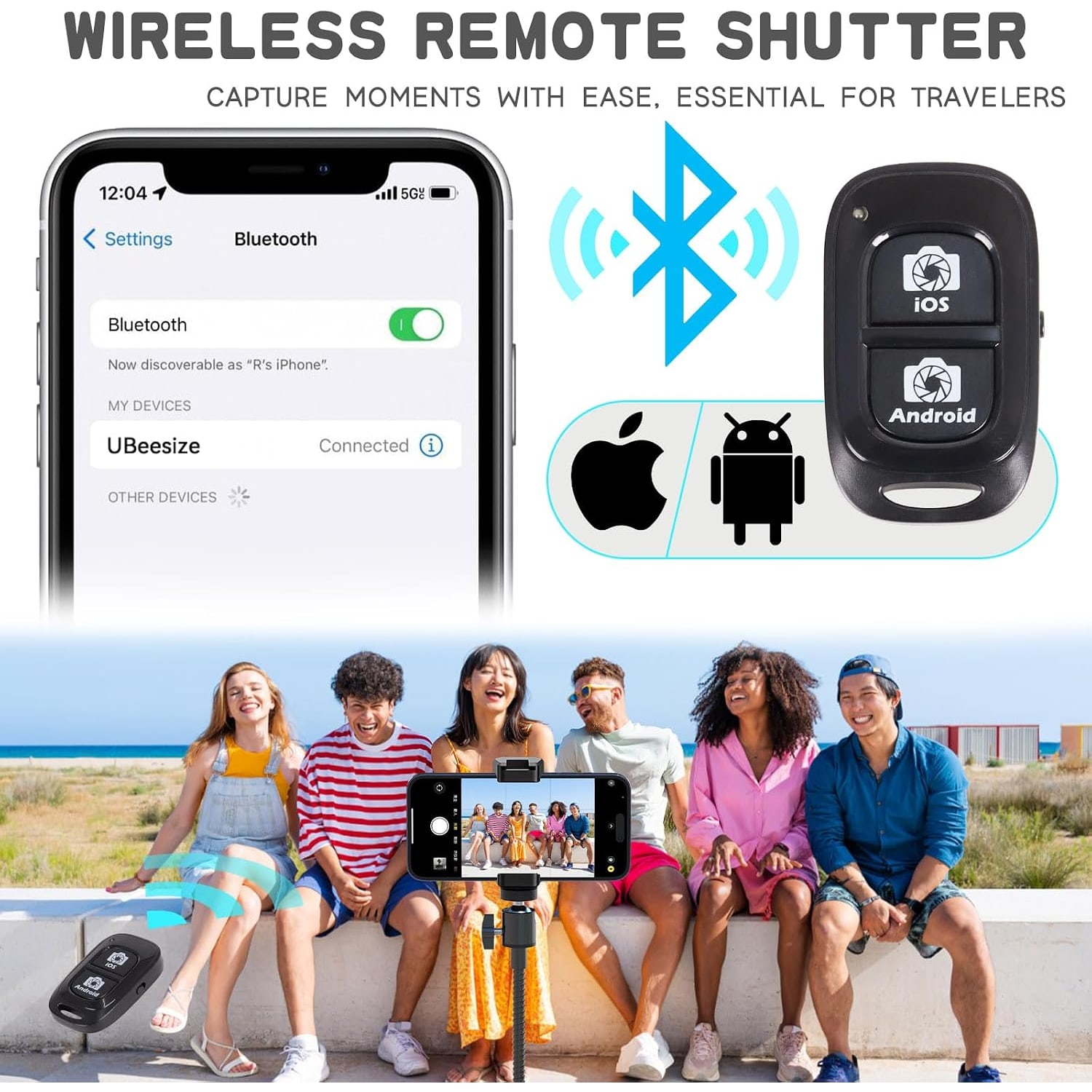
A Bluetooth remote comes in the box, with a range of up to 30 feet. It pairs with your phone the way any Bluetooth accessory does and fires the shutter.
If you only ever film seated at a desk, you may rarely touch it. The moment you are shooting anything where you have to be in frame, it becomes the most used part of the kit. Set up the shot, walk over, press the button, no sprinting back to the stand with a self-timer counting down. For group photos outdoors or solo vlogging, this is the difference between five usable takes and forty.
One practical tip. The maker does not say what battery the remote uses, so check the battery compartment and the instructions when you unbox it.
Who this suits
Anyone who films their hands. Cooks, bakers, crafters, artists, people doing product demos, repair tutorials, unboxings, resin pours, hobby painting. If the useful view is from above, this is the shape of stand you want.
It also suits people who film themselves. The height range covers seated and standing, and the remote makes solo shooting workable. Live streamers use it at eye level with a mic on the shoe.
And then there is the quiet third group. People who bought it for filming and now use it to hold the phone over the bed, or beside the couch, or propped up in the kitchen while they follow a recipe. The gooseneck is genuinely good at that, because it puts the screen where your eyes already are instead of making you crane your neck.
Who it does not suit: anyone needing to support a heavy camera rig, anyone who needs weather resistance, and anyone whose work surface is wide enough that 16.5 inches of arm will not reach the middle.
Looking after it
There is not much to it. Wipe the legs and arm with a dry or barely damp cloth and dry everything before you fold it. The locks are the only part that really suffers from neglect, and the culprit is grit. Sand and dust in a lock makes it stiff and eventually stops it gripping. If you have been at the beach, brush the sections off before you collapse them.
Loosen locks before extending or retracting rather than forcing sections. Store it folded in a bag so the gooseneck is not pressed against something hard, since a permanent kink in the arm is the one piece of damage you cannot undo. Pull the battery from the remote if it is going into storage for a season.
The maker states it is not water resistant, so keep it under cover in rain.
Choosing between designs
If you are comparing options, three things decide it.
Arm reach against your surface size. Everything else is adjustable. This is not.
Height range against your use. A short tabletop gooseneck is cheaper but will never do a standing full-body shot. A tall tripod without a gooseneck will never do a clean overhead. This one tries to cover both, which is why the 16 to 92 inch spread is the headline number.
Weight limit against what you actually mount. If a microphone and a light are in your plans, make sure the combined load sits inside the 2.2 pounds here.
The short version
This is a black aluminum tripod with a 16.5 inch flexible gooseneck, a height range of 16 to 92 inches, and a folded size of 16 inches. The clip has a stated 2.8 to 5.7 inch adjustment, the ball head and 1/4 inch thread take cameras and ring lights, and the stated limit is 2.2 pounds. A Bluetooth remote with up to 30 feet of range and a cold shoe mount for a mic or light come in the box.
If you film from above and you are tired of balancing your phone on a stack of books, this is the straightforward fix.