
The complete guide
How to Choose a Travel Tripod That You Will Actually Carry
The tripod problem nobody warns you about
Almost everyone buys the wrong tripod first. It usually goes like this. You pick the cheapest one on the shelf, take it home, extend it, and realize the camera sits somewhere around your sternum. So you bend. Then the ball head starts to creep, so your carefully framed horizon tilts a degree every thirty seconds. Then you try to pack it for a trip and discover it is 24 inches long folded and will not go in anything.
The second tripod is usually the opposite mistake. You overcorrect, buy something heavy and tall and genuinely rigid, and then you leave it in the closet because carrying 7 pounds of aluminum up a hill is not fun. A tripod you do not carry takes exactly zero photos.
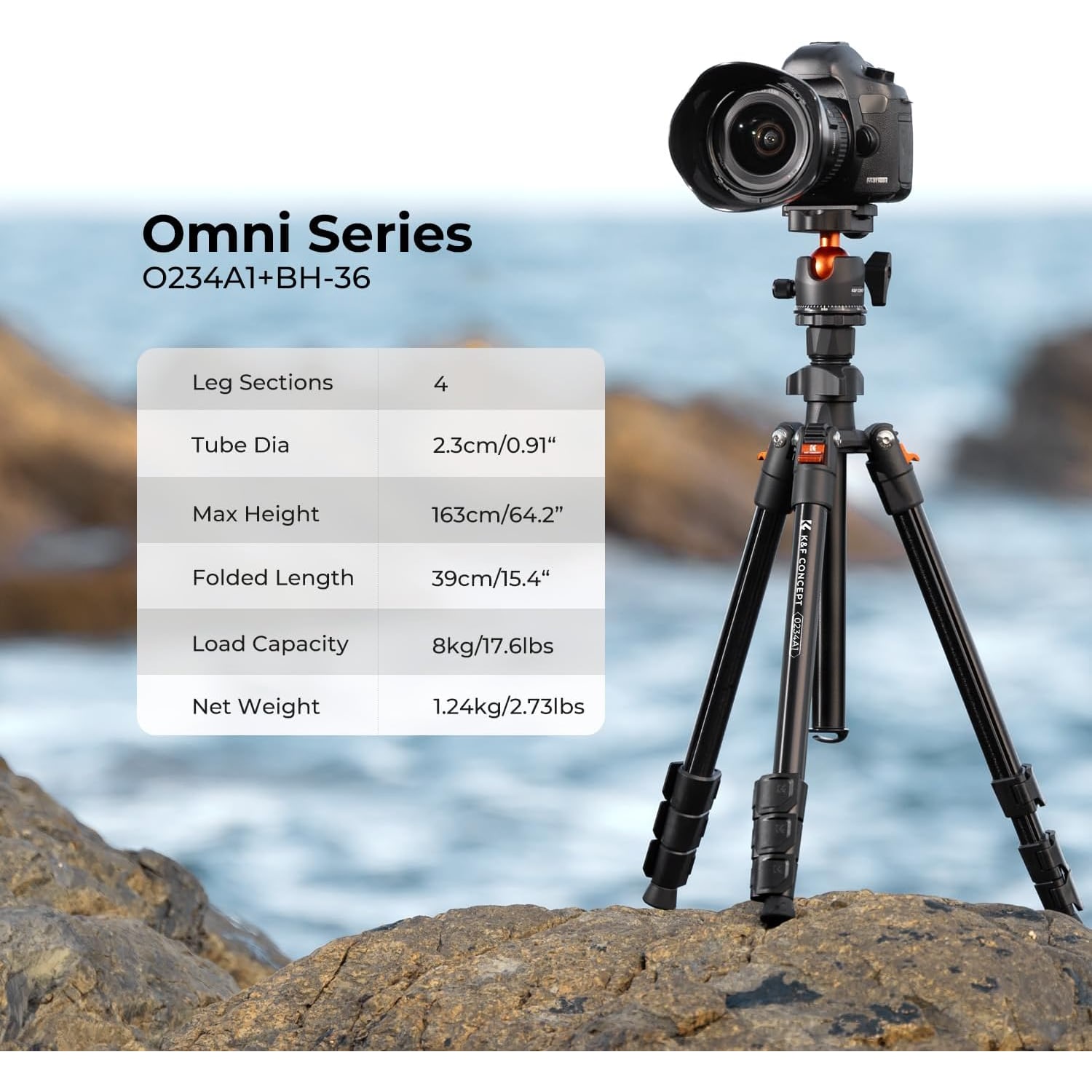
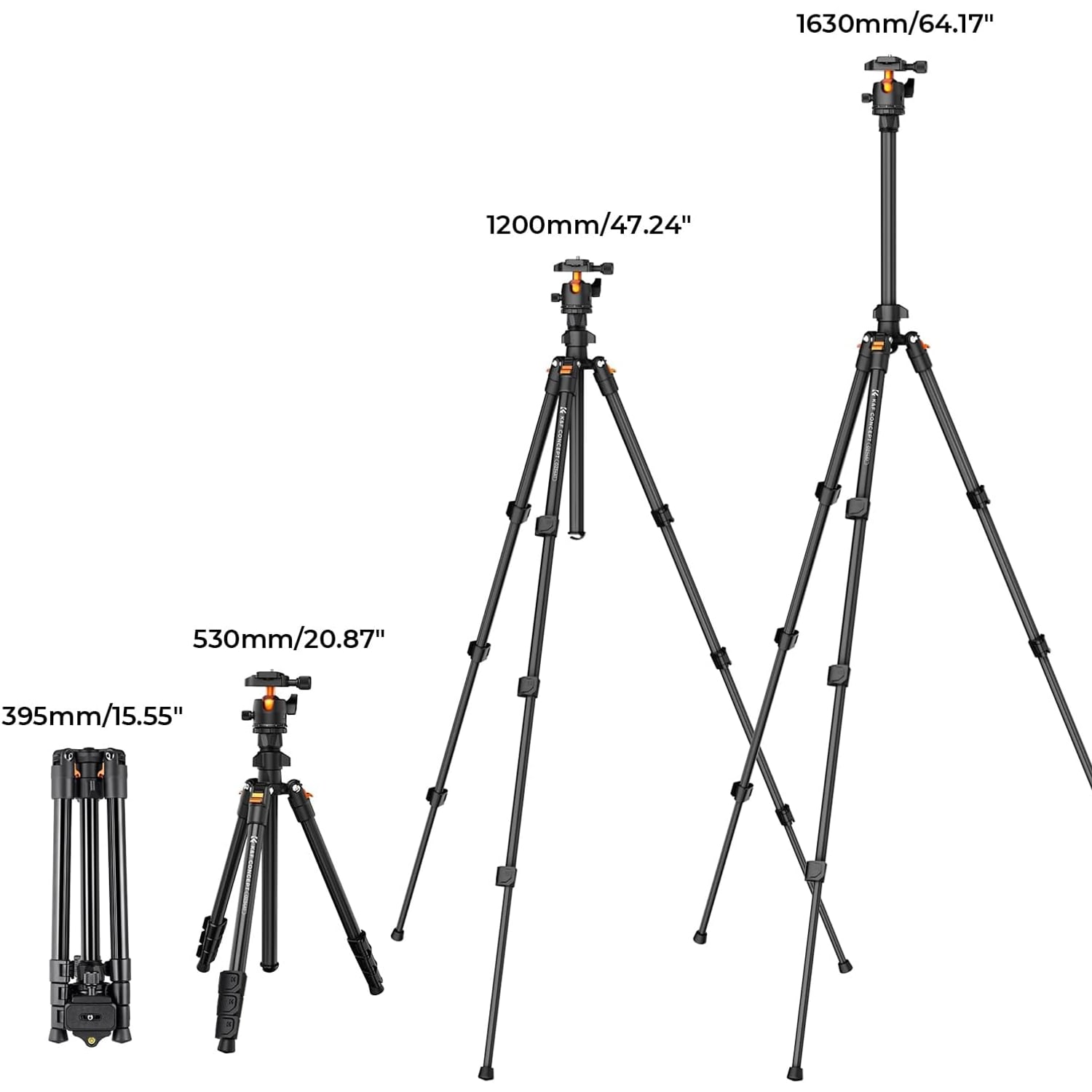
The useful middle ground is a tripod that is tall enough to shoot standing, strong enough for your actual camera, and small enough that bringing it is not a decision you have to think about. That is the gap this one aims at. It reaches 64.1 inches, holds 17.6 pounds, folds to 15.5 inches and is listed at 2.53 pounds with the head on.
What the numbers actually mean
Maximum height. 64.1 inches, or 163 cm, is the figure with the center column raised. That is roughly eye level for an average adult. Height matters for comfort, not just reach. If you are stooping, you stop composing carefully and start rushing.
Minimum height. 20.4 inches with the legs collapsed. Go lower by inverting the center column or fitting the short column that comes in the box. Low angles change the character of a photo more than almost anything else, so it is worth having that option.
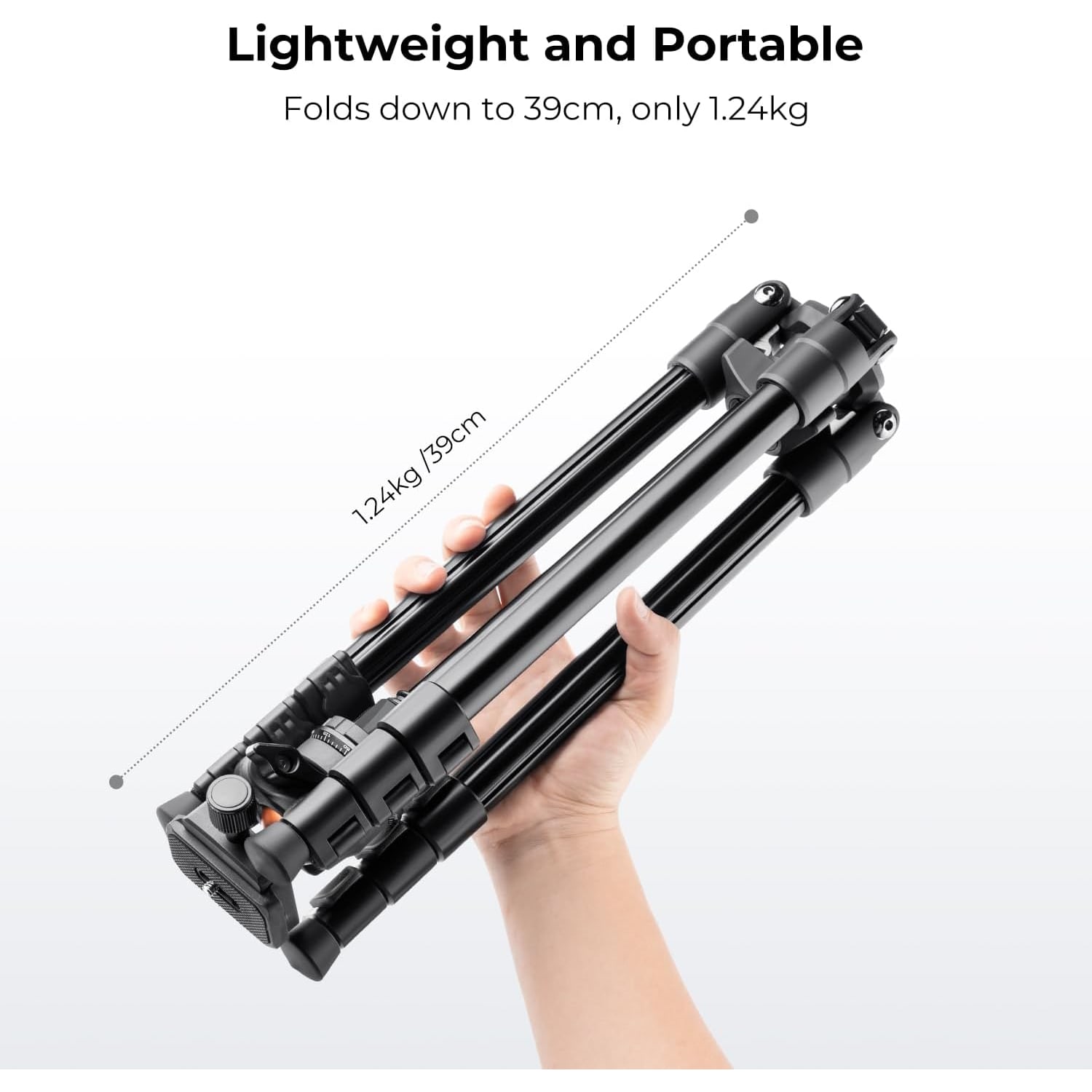
Folded length. 15.5 inches is the number that decides whether the tripod comes with you. Under about 18 inches, it goes in a carry-on bag or straps to a daypack without being awkward. Above that, it becomes a separate thing to carry, and separate things get left behind.
Weight. The maker's description says 2.53 pounds (1.15 kg) including the head, and one of its photos says 1.24 kg. Either figure is light enough for a day hike.
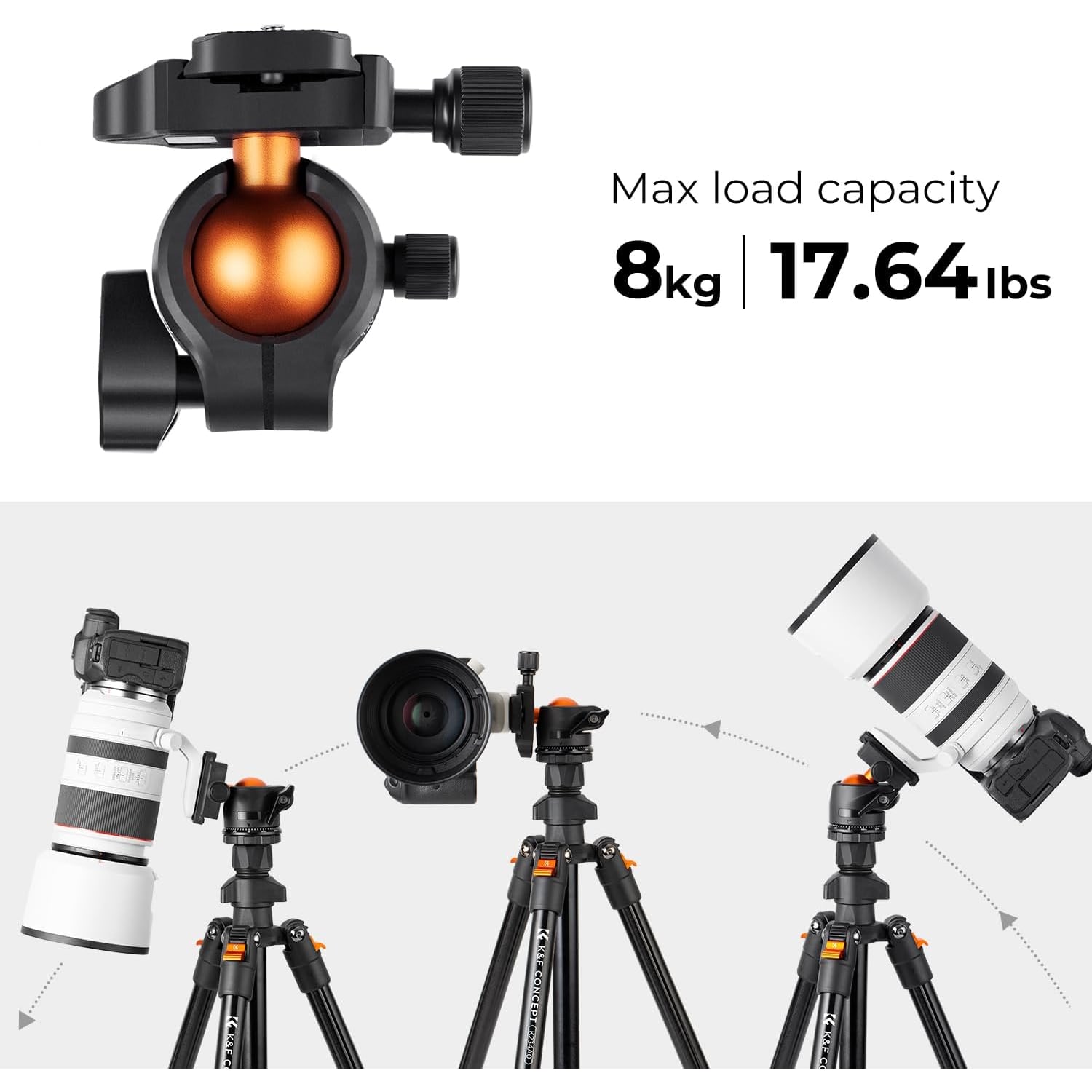
Load capacity. 17.6 pounds, which is 8 kg. That is a generous rating for a tripod of this size. A full-frame body with a 24 to 70 zoom is maybe 4 pounds. You have headroom for a battery grip, a flash or a heavier telephoto.
How the parts work together
The legs are aluminum in four sections. Four sections is what gets the folded length down. The trade is that the bottom section is the thinnest and therefore the least stiff, which is why experienced users extend the thickest sections first and only drop the thin bottom leg when they really need the last few inches. The maker gives the leg diameter here as 1.5 inches.
The leg locks are flip style. Pull the lever, slide the section, push the lever back. You can do all four with one hand while holding the camera in the other, and you can see at a glance whether a lock is engaged. Twist locks are a little more weather-resistant but slower and fiddlier when your hands are cold.
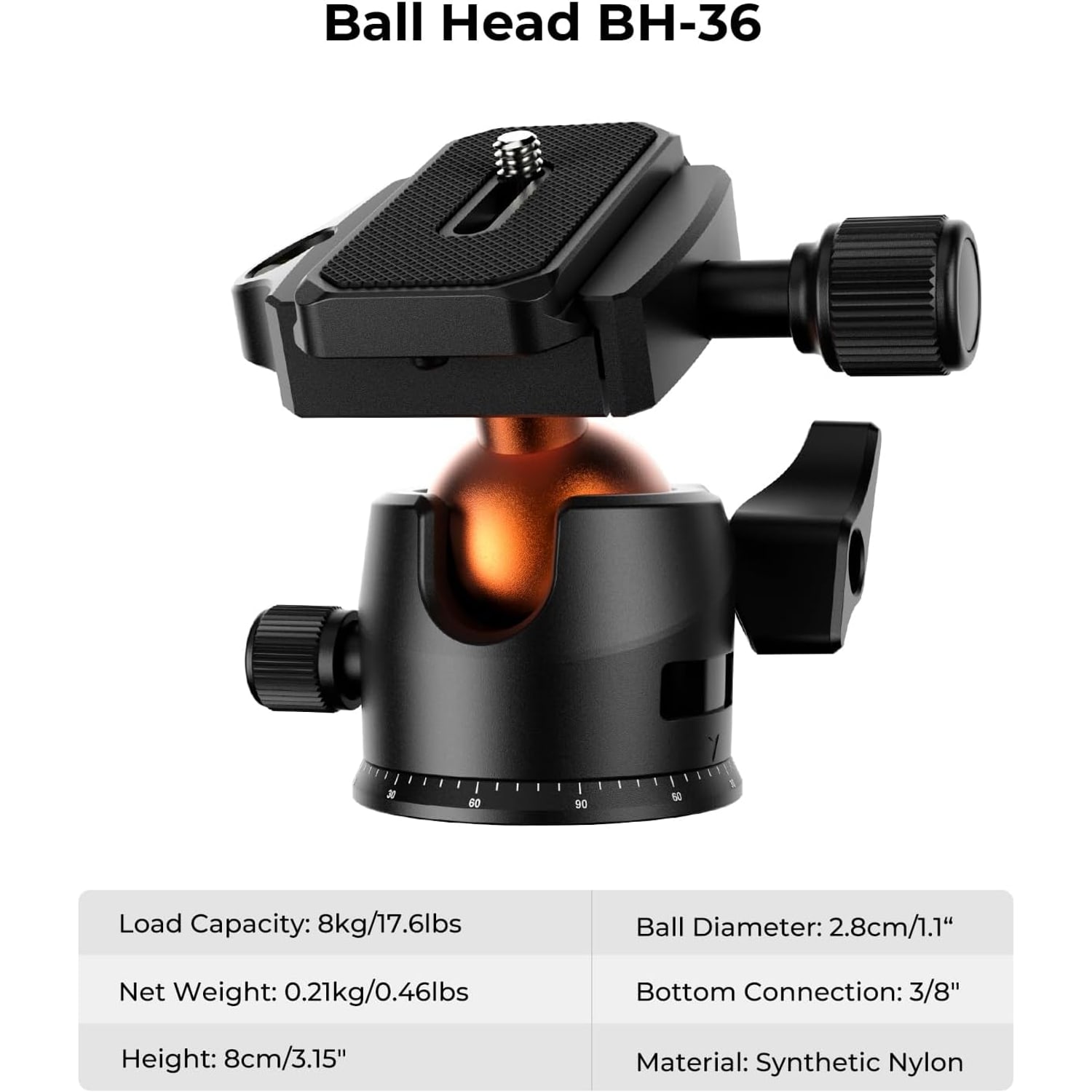
The maker calls the head a 36mm ball head, and its photo of the head gives the ball diameter as 2.8 cm. Loosen the main knob and the camera moves in any direction at once, which is fast and intuitive once you get used to it. Lock it and it stays. A separate panning dial lets you rotate on a level plane without touching your tilt, which is the thing that makes panoramas line up and makes video pans look deliberate.
On top is a quick release plate, Arca-Swiss compatible. That is the most common plate standard in photography. It means you can leave the plate screwed to your camera, clip in and out in a second, and if you ever add a different head or an L-bracket, the same standard carries over.
Who it suits
Travelers and hikers. This is the obvious fit. The folded size and the low weight are the whole point. If your photography happens away from home, the best travel tripod for DSLR work is simply the one you did not resent carrying.
Landscape shooters. Eye-level height, a panning dial for stitching panoramas, and enough capacity for a wide zoom. Keep the center column down for the steadiest frames and you will get clean long exposures.
Vloggers and streamers. The included phone holder means you can run the same stand for phone video and for camera work. The ball head handles framing fast, and the height range works for both seated desk setups and standing pieces to camera.
Product and macro shooters. The short center column is the quiet hero here. It puts the camera low and upright over a table, which is far more workable than the inverted column trick for close-up work.
Who it does not suit. If you shoot long telephoto wildlife with a 500mm lens, you want something heavier with a gimbal head. If you need buttery cinematic pans, you want a dedicated fluid video head. And if you only ever shoot in one room, a bigger studio tripod will serve you better than a packable one.
How to pick between options
Start with your heaviest camera and lens together. Weigh them if you can. Then look for a tripod rated at least double that, because ratings assume ideal loading and you will not always be ideal. At 17.6 pounds, this one gives most enthusiast kits a wide margin.
Next, check the folded length against the bag you actually use. Not the bag you might buy. The one on your shelf.
Then look at the maximum height, and look at it honestly. Some makers quote a height that only happens with the center column fully raised, which is also the least stable configuration. A tripod that reaches eye level with the column mostly down is doing better than one that only gets there on tiptoes.
Finally, think about the head. A ball head is the right default for stills: fast, light, compact. A pan-tilt head gives finer single-axis control. A fluid head is for video. Most people are well served by a ball head.
Getting steady results
A few habits do more for sharpness than any amount of extra money spent.
Spread the legs wide rather than tall. Extend the thick upper sections before the thin lower ones. Keep the center column retracted unless you need the height, because a raised column is a lever and levers wobble. On soft ground, push the feet in and give the setup a moment to settle before you shoot.
In wind, get lower and add weight. Hanging your camera bag near the base of the column is a standard trick and it works. Use a remote release or the self-timer so you are not touching the camera at the moment of exposure. If your lens or body has stabilization, check the manual, since some systems should be switched off on a tripod.
Care and keeping
This tripod is not water resistant, so treat water as something to clean off rather than something it shrugs at. Salt and sand are the real enemies. After a beach session, wipe the legs down with a damp cloth, dry them, and leave them extended for a while before folding.
Now and then, open all the flip locks and wipe inside the leg sections. Grit in there is what makes legs feel gritty and eventually scores the tubing. Check the ball head knob and the lock tension occasionally and use the included Allen wrench to snug up anything that has worked loose. That is genuinely the whole maintenance routine.
The short version
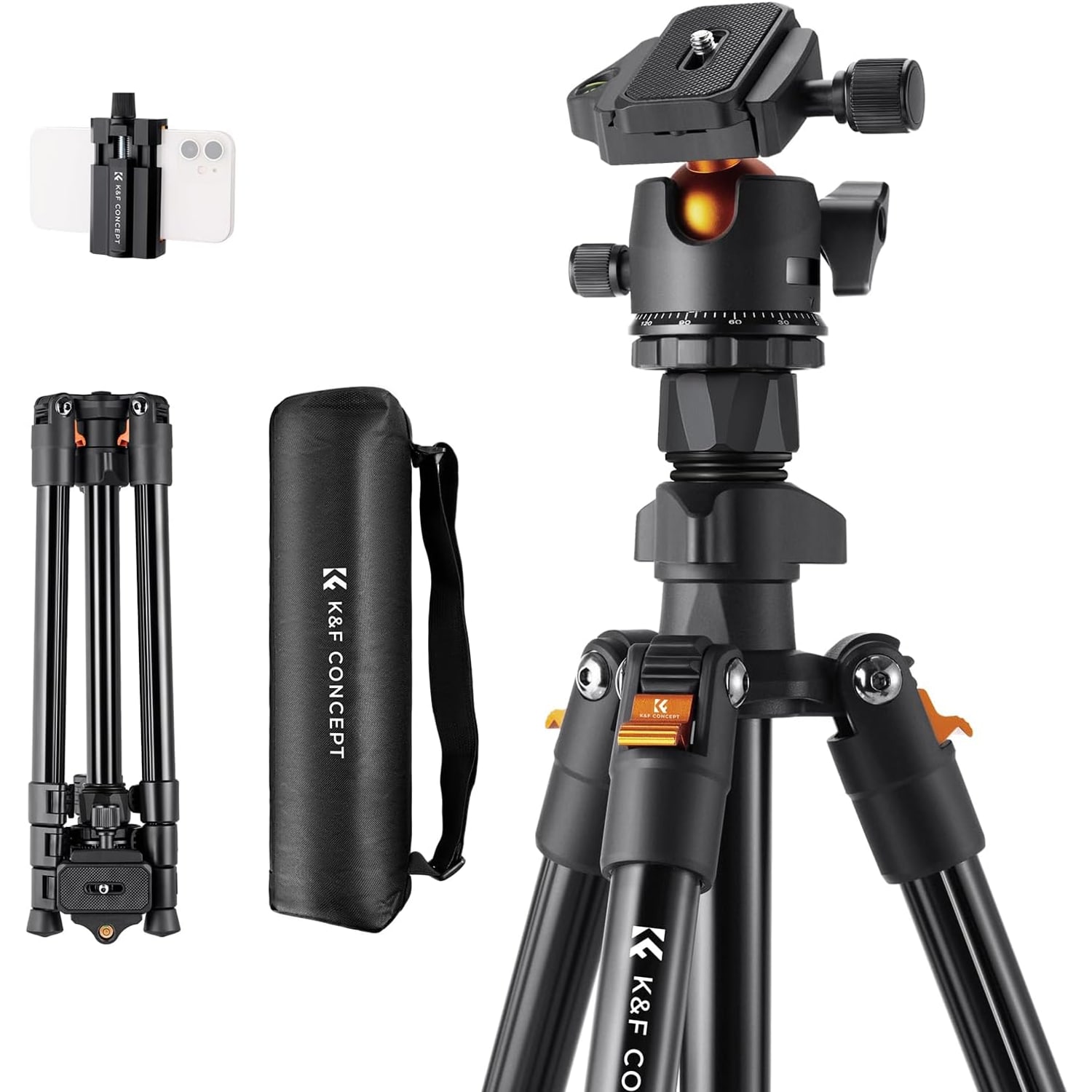
This is a 64 inch camera tripod built around a simple idea: make it tall enough and strong enough to be useful, and light enough and small enough that you bring it. 64.1 inches up, 15.5 inches folded, a listed 2.53 pounds on your shoulder, 17.6 pounds of gear on top. Four aluminum legs with flip locks, a 36mm ball head with a panning dial, a reversible column plus a short column for low work, and a phone holder, plate, wrench and bag in the box.
It will not replace a heavy studio rig or a gimbal for big glass. For nearly everything else, from landscapes and travel to tabletop product shots and streaming, it does the job and then packs away without complaint. If you are not sure it is right for your camera and lens, tell us what you shoot and we will give you a straight answer.