
The complete guide
How to Choose a 1080p Autofocus Webcam for Calls, Classes and Streaming
The problem with the camera you already have
Open your laptop, start a call, and look at yourself in the preview window. Most people see a slightly soft, slightly washed out version of their face, with the skin tones pushed a little too warm or a little too green. That is not your fault and it is not the lighting. Laptop cameras are squeezed into a lid that is a few millimeters thick, which means a tiny sensor and a tiny lens. There is only so much light they can gather.
The second problem is focus. Almost every built-in camera uses fixed focus. The manufacturer picks one distance, usually about an arm's length, and everything is tuned for that. Sit back in your chair and you drift out of it. Lean forward to point at something on screen, and you go soft at exactly the moment you want to be clear. Hold a document or a product up to the camera and it turns to mush.
A separate USB webcam fixes both things at once. It gets a bigger lens, a proper sensor, and in this case a focusing motor that keeps adjusting instead of guessing once at the factory.
What autofocus actually changes
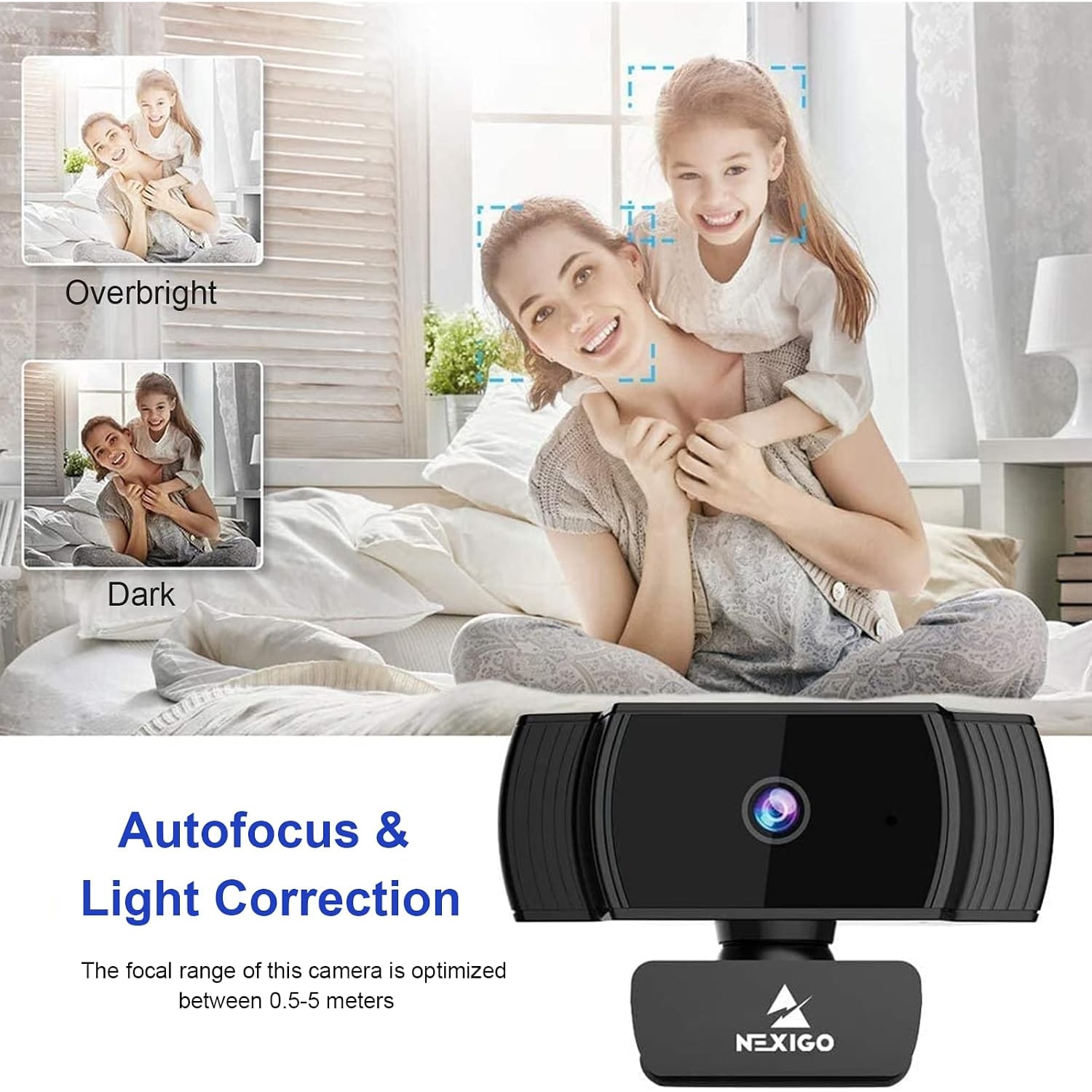
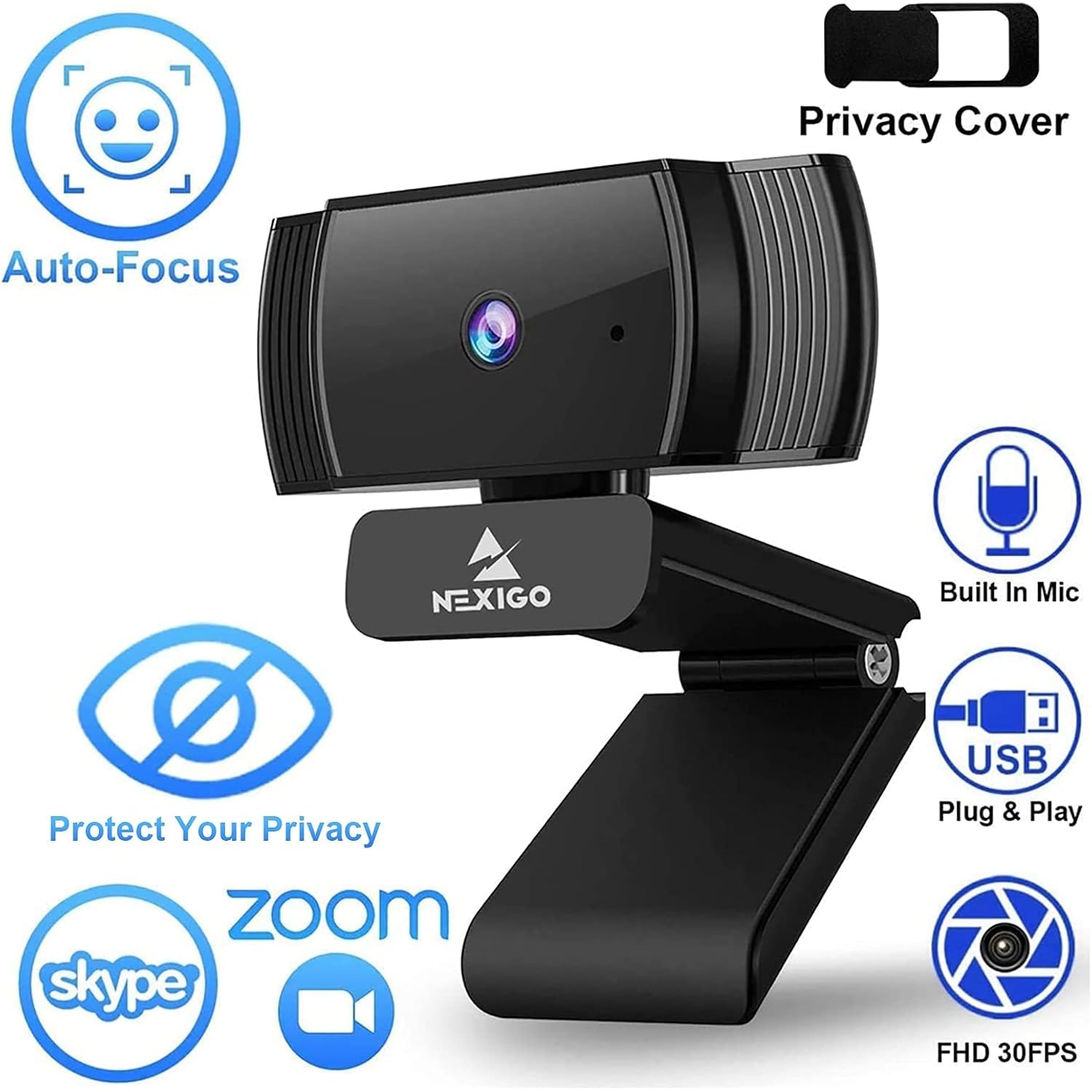
This camera focuses from around 7 cm outward and keeps tracking as you move. In practice, that means three everyday situations get noticeably better.
Holding something up to the lens is the obvious one. If you teach, sell, repair things or run craft sessions, showing an object close to the camera is routine. A fixed focus lens cannot handle it. Second, leaning in and out. Nearly everyone shifts position during a long meeting, and with autofocus that costs you nothing. Third, moving the camera itself. Clip it to a tripod and point it at a whiteboard, and the lens works out the new distance on its own.
There is a flip side worth knowing. Autofocus systems sometimes hunt, meaning they pull focus back and forth when the scene is busy or the light is low. That is why the manual override matters. You can switch autofocus off, set the point where you want it, and the lens stays put. For a fixed product demo or a locked-down stream layout, manual is often the better choice. Having both options is the point.
Resolution, frame rate and what they feel like
The sensor is a two megapixel CMOS recording 1080p at 30 frames per second. Those two numbers do different jobs.
Resolution is detail. At 1080p your face has enough pixels to read expression properly, and text held up to the lens is legible rather than suggested. Most conferencing platforms compress what you send anyway, so starting from a clean 1080p signal gives the compression something good to work with. Starting from a muddy 720p signal does not.
Frame rate is smoothness. At 30 frames per second, hand gestures and head movement look natural. Drop below that and movement starts to stutter in a way viewers register as cheap even if they cannot name it. For talking to camera, teaching, interviews and most streaming, 30 fps is the right target. Faster rates mainly matter for gaming capture and sports.
The aspect ratio is 16:9, which matches every modern monitor and every video platform, so nothing gets mailboxed or cropped awkwardly.
Light is the thing nobody budgets for
If you only change one thing about your setup, change the lighting, not the camera. An f/2 maximum aperture and low light correction help this camera cope with ordinary rooms, but physics still applies. Cameras need light.
The single most common mistake is sitting with a window behind you. The camera exposes for the bright background and your face turns into a silhouette. Turn your desk around, or close the blind, so the window is in front of you or off to one side. Soft daylight on your face is better than any lamp.
If daylight is not available, put a lamp behind your monitor, pointed at you, with something to diffuse it. A sheet of paper taped over a shade works. Avoid a single harsh ceiling light directly overhead, which carves shadows under your eyes and nose.
Good light also helps autofocus. Focusing systems need contrast to work with, and dim scenes give them less to lock onto. A well lit room means faster, steadier focus.
Sound, and why the mic is half the job
People will forgive a mediocre picture. They will not forgive bad sound. If your audio is hollow, clipped or buried in background noise, listeners tune out within a minute.
The built-in microphone here has noise cancellation, which targets steady background sound: fans, air conditioning, the low rumble of traffic. It thins that layer out so your voice sits forward. It is not magic. Sudden sounds like a door slamming or a dog barking will still come through, and a very reverberant room will still sound like a very reverberant room.
A couple of simple fixes help more than most people expect. Sit closer to the camera, because microphone distance matters enormously. And soften the room. A rug, curtains, a bookshelf or even a jacket over the back of a chair absorbs reflections and makes voices sound less boxy. Supported audio formats are MP3, WAV and AAC, so recordings drop straight into common editing tools.
The privacy cover, and why physical beats software
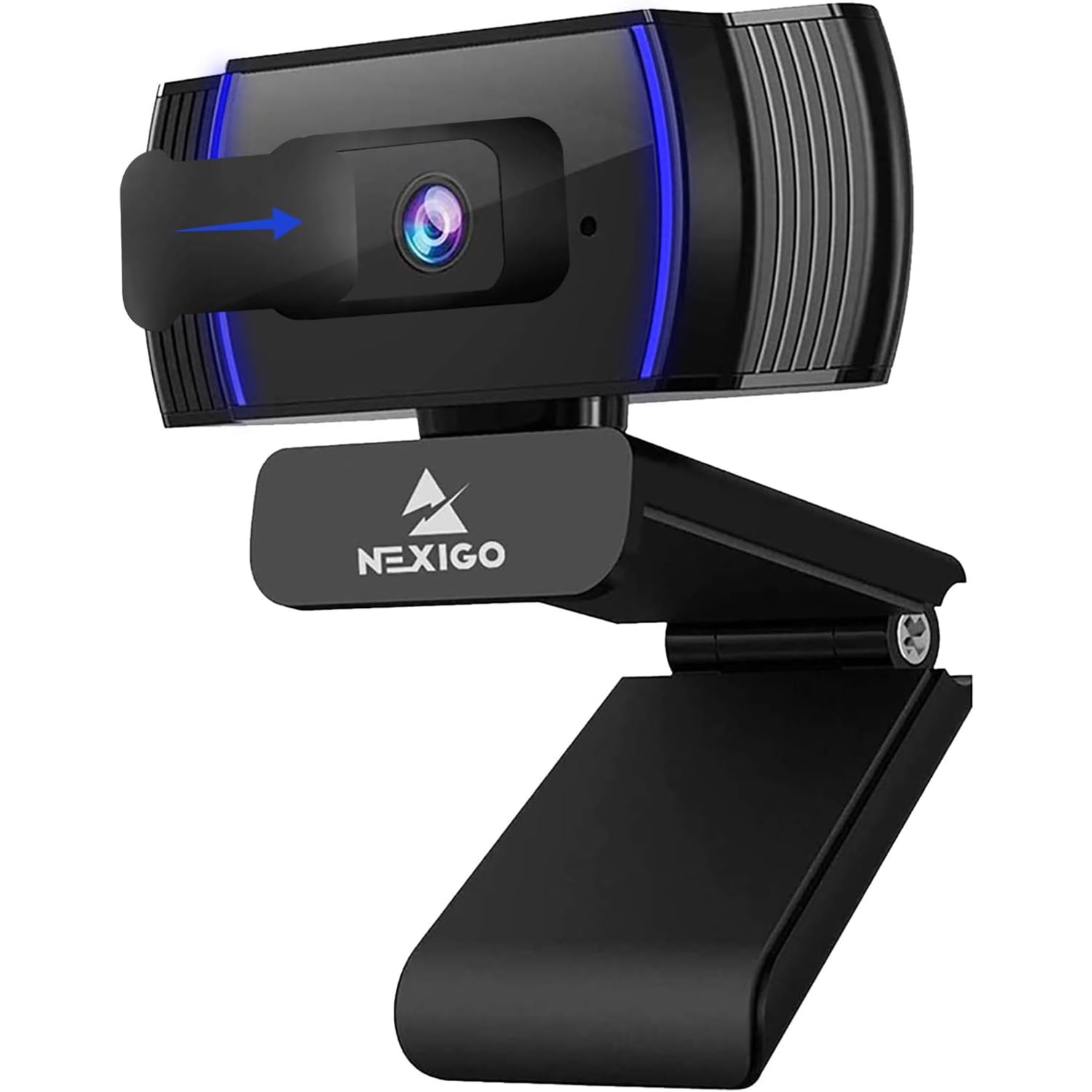
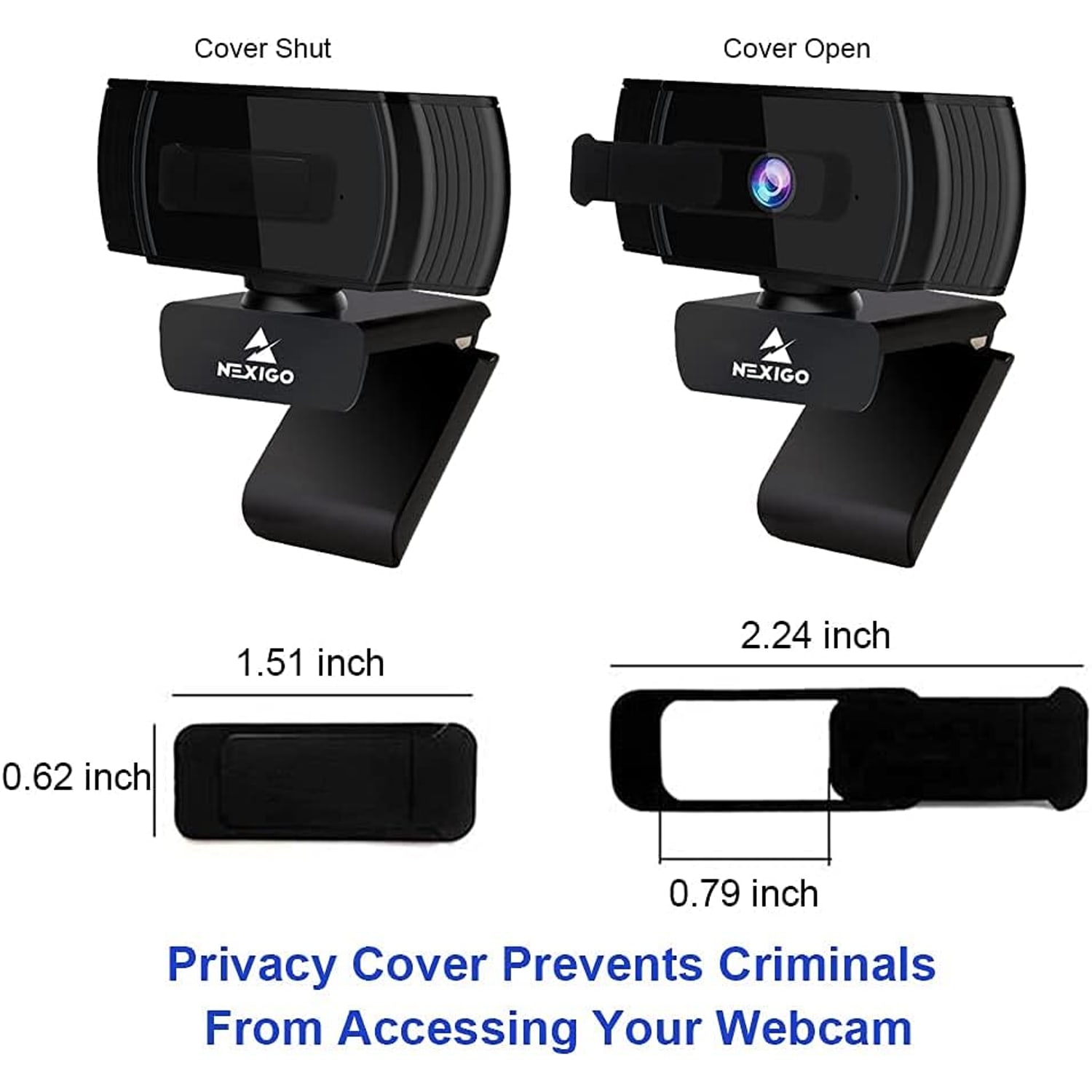
Software indicator lights tell you a camera is active. A sliding cover makes it impossible for the camera to see anything at all. For a lot of people that peace of mind is the deciding feature, especially if the camera lives on a monitor in a bedroom or a shared space.
There is a second, less discussed benefit. Lenses collect dust and fingerprints, and a dirty lens is a slow decline in image quality that you often do not notice because it happens gradually. Keeping the cover closed between sessions means the glass stays clean, and clean glass is free sharpness.
Mounting, cable and moving it around
The folding clip grips monitor bezels and laptop lids, then folds flat so the camera can sit on a desk, a shelf or a stack of books. There is also tripod mounting, which opens up overhead shots and whiteboard angles.
The USB cable is 6.5 ft, which is 2 meters. That matters more than it sounds. A short cable forces you to position the camera wherever the port happens to be. Two meters gives you room to run down to a tower under the desk or across to a second screen.
At 0.19 kg the whole thing packs into a bag without thought. If you move between a home desk and an office, or travel for work, a folding camera that needs no drivers is one less thing to plan around.
Setup, compatibility and care
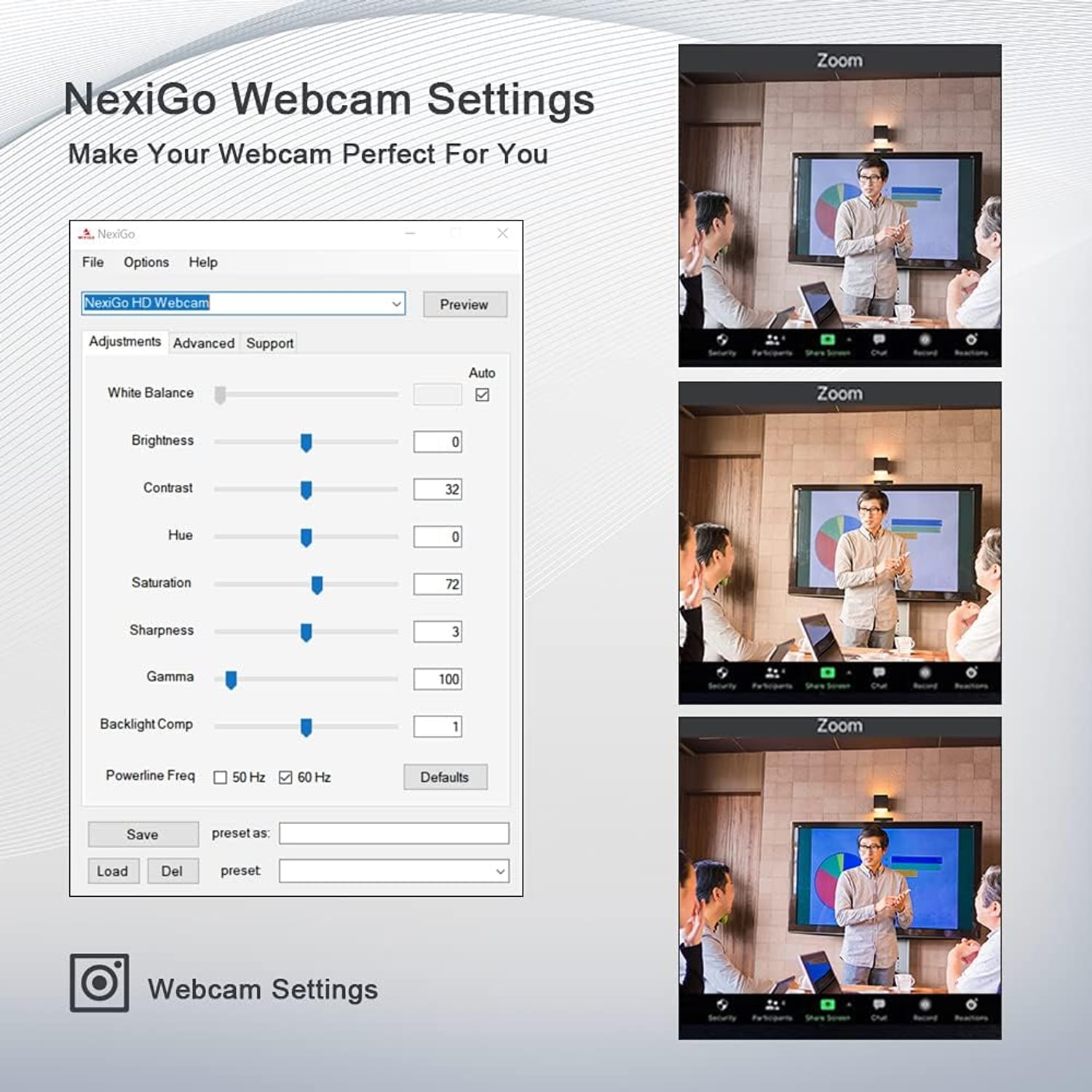
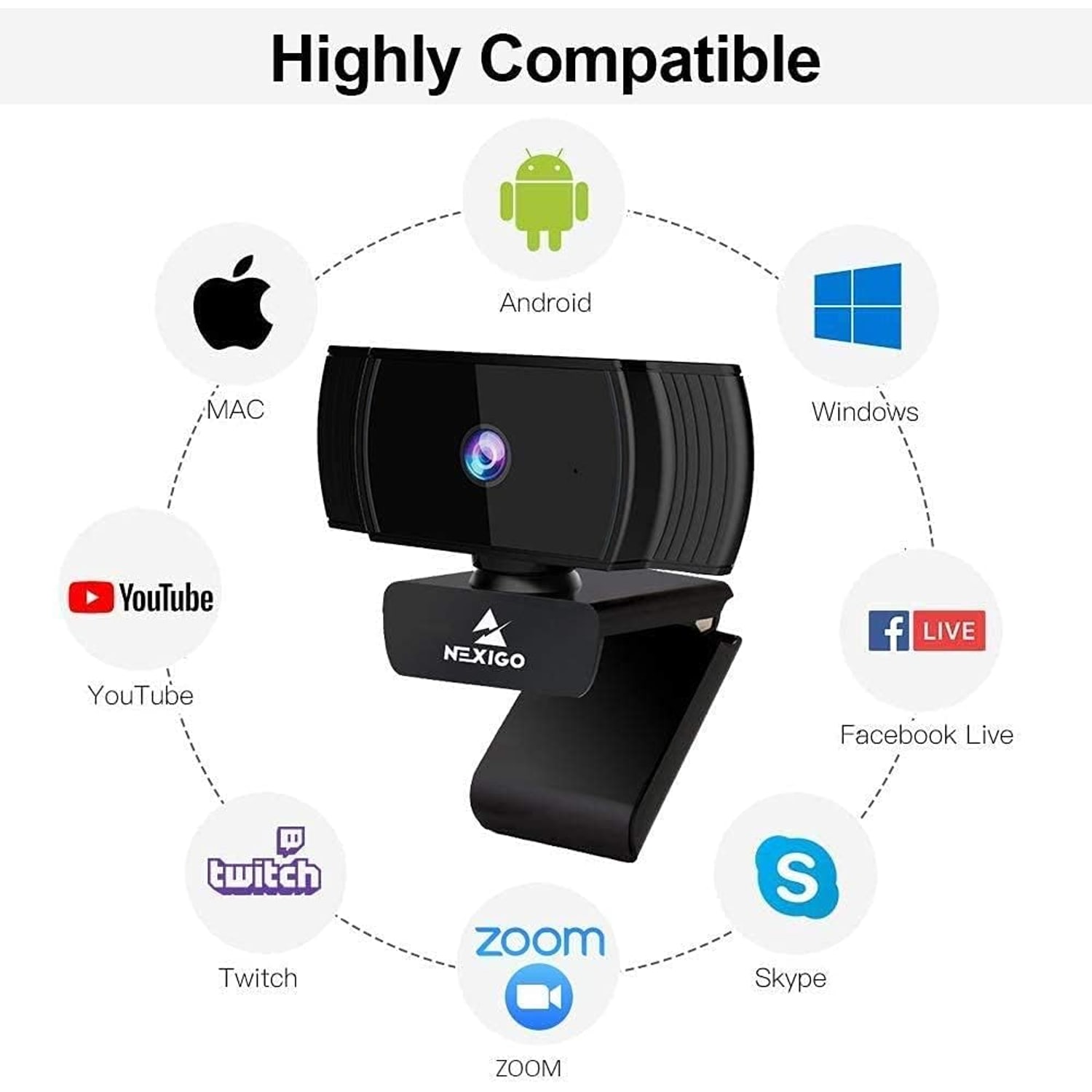
Plug and play means exactly that. There is nothing to download. Connect the USB cable, open your video app, and pick the camera from the device list. Supported systems include Windows XP SP3 through 10, macOS 10.6 or above, Ubuntu 10.04 or above, Linux 2.6.24 or above, Chrome OS 29.0.1547 or above, and Android 5.0 or above. Optional webcam software is available if you want to adjust camera settings while a call is running.
Care is minimal. Dry microfiber on the lens, no liquids, no solvents. Unplug by the connector rather than yanking the cable, and avoid tight coils that stress the wire where it enters the body. The camera is not water resistant, so keep it indoors and away from steam. Close the privacy cover when you are done.
One note on recording. Recording audio and recording other people is covered by federal and state law, and what is allowed varies. Check the rules that apply to you before you record anyone besides yourself.
The short version
If your current camera is a laptop lid camera, almost anything is an upgrade. What makes this one worth a look is the combination of real autofocus with a manual override, a 1080p 30 fps signal that survives platform compression, a noise-canceling mic that handles ordinary room hum, and a physical lens cover.
Put light on your face, sit a comfortable arm's length away, and let the lens do the rest. For calls, classes, meetings and straightforward streaming, that setup covers almost everything people actually need.