
The complete guide
The Honest Guide to Buying a Mini Tabletop Tripod
The problem a small tripod actually solves
Most people buy their first tripod, use it four times, and then leave it in a closet. It is not that tripods are useless. It is that a full size one is a commitment. You have to decide, before you leave the house, that today is a tripod day. Nine times out of ten you decide it is not, and then you end up bracing a camera against a railing with a shutter speed that is a little too slow.
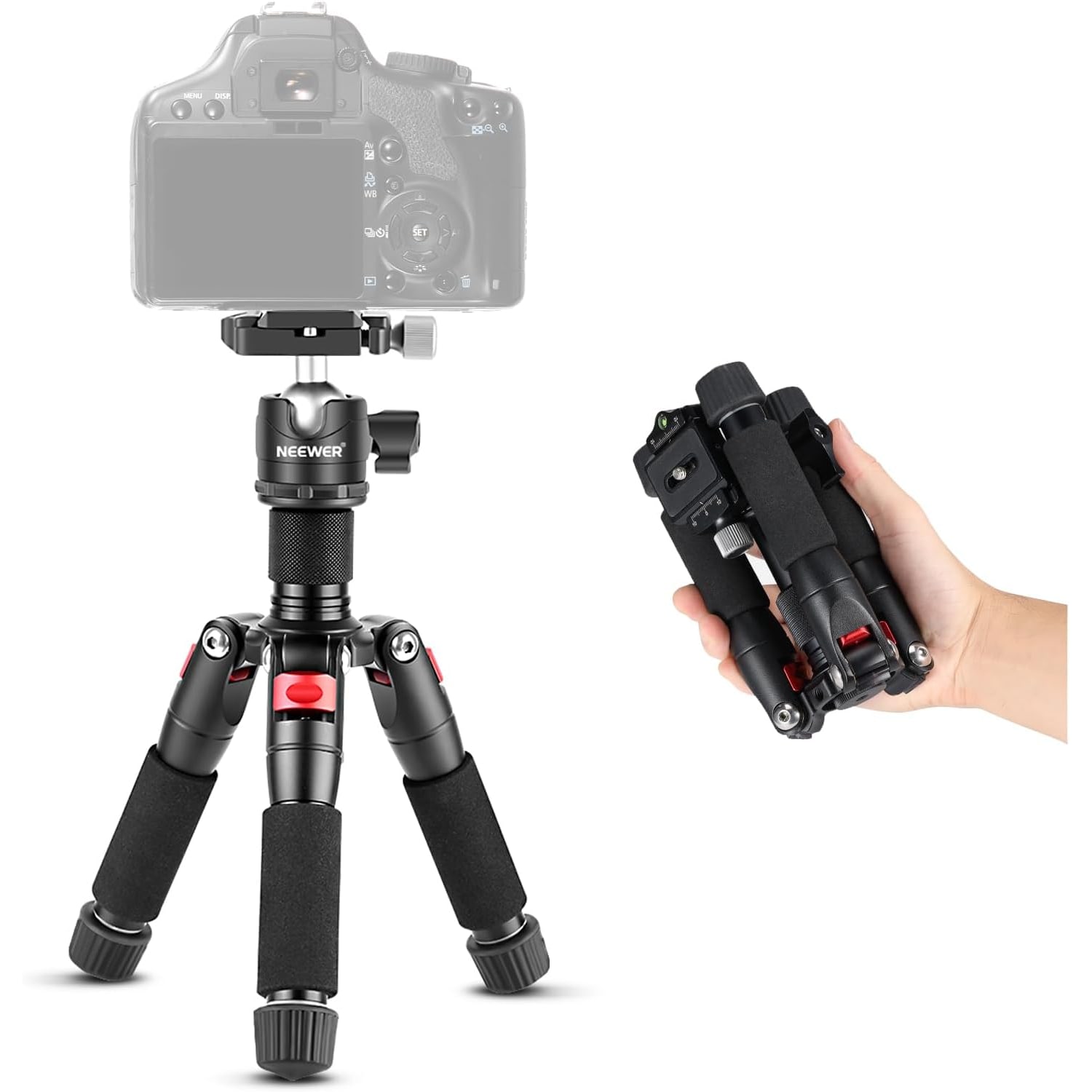
A mini tabletop tripod sidesteps that whole decision. At 1.7 pounds and 170mm folded, it goes in the bag by default. You never consciously pack it. It is just there, in the side pocket, next to the spare battery. And because it is there, you use it in all the small moments a big tripod never gets invited to: a long exposure off a stone wall, a group photo on a restaurant table, a self timer shot balanced on the hood of a car, a flat lay on a hotel desk at nine in the evening.
That is the real argument for a small tripod. Not that it is better than a big one. That it is present.
How this one works
The build is aluminum alloy, which is the standard material at this size and for good reason. It holds its shape under load without the cost of carbon fiber, and it does not creak and flex the way injection molded plastic legs do once you put a real camera on top.
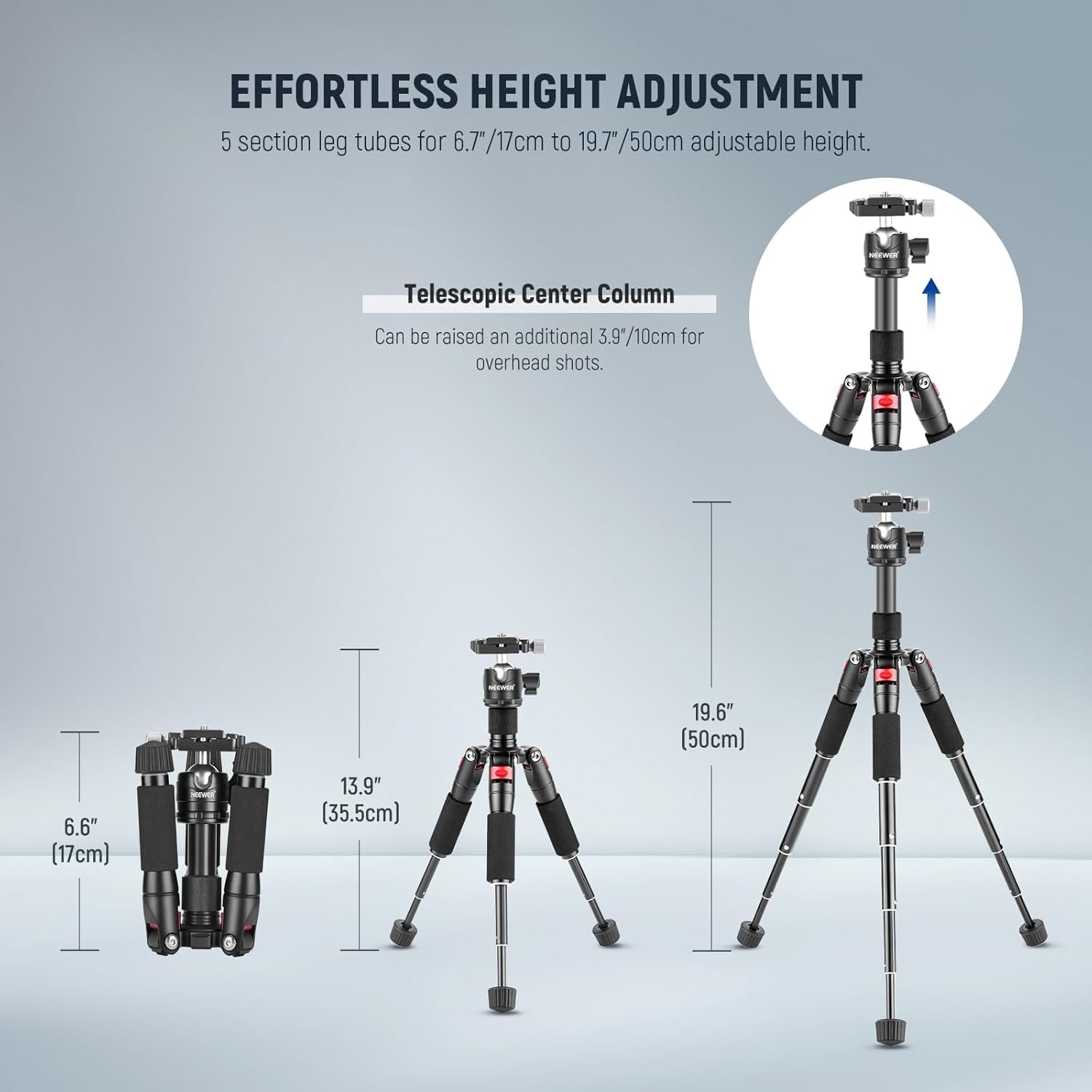
Each leg has five sections. That is a lot for something this small, and it is the trick that gets the folded length down to 170mm while still reaching 19.7 inches at full extension. Collapsed, it sits at 6.7 inches. So you have roughly a foot of adjustment to play with, which sounds modest until you realize how much difference a few inches makes when you are shooting something small on a table.
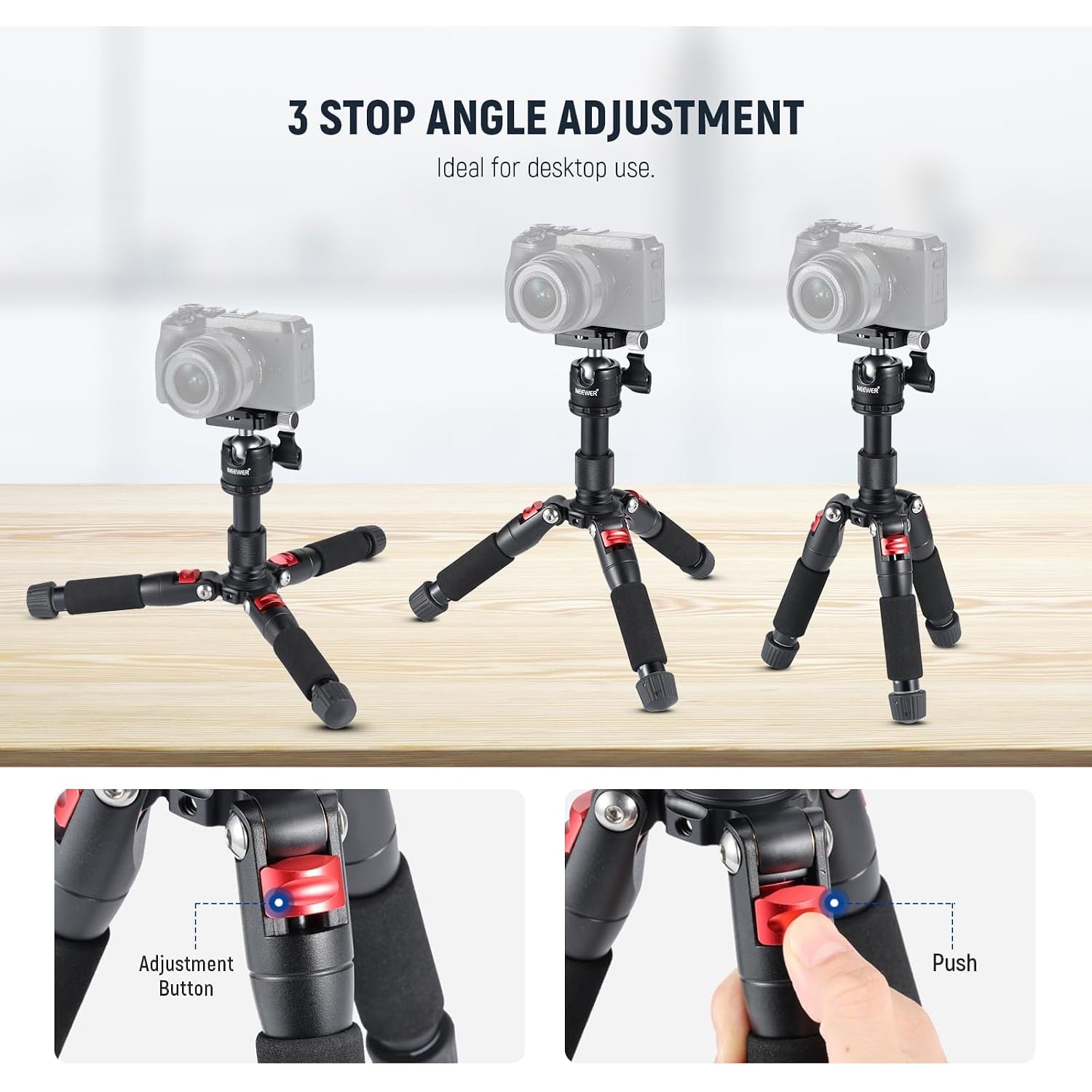
There are three leg angle positions. The narrowest gives you the most height. Open the legs wider and the tripod sinks lower but plants itself more firmly, which is what you want on a wobbly cafe table or a sloped rock. The feet are non slip, so it stays put on glass, laminate and polished wood.
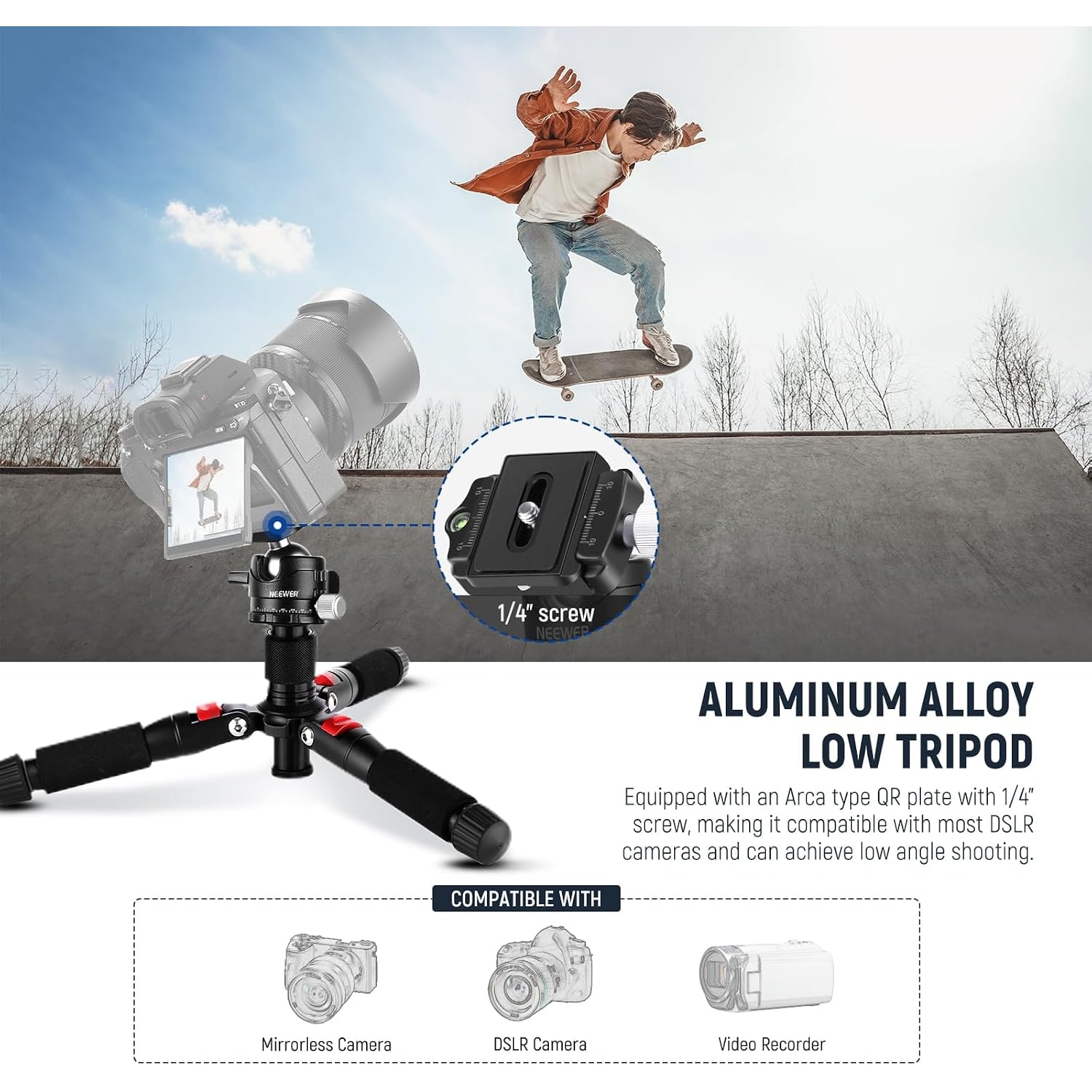
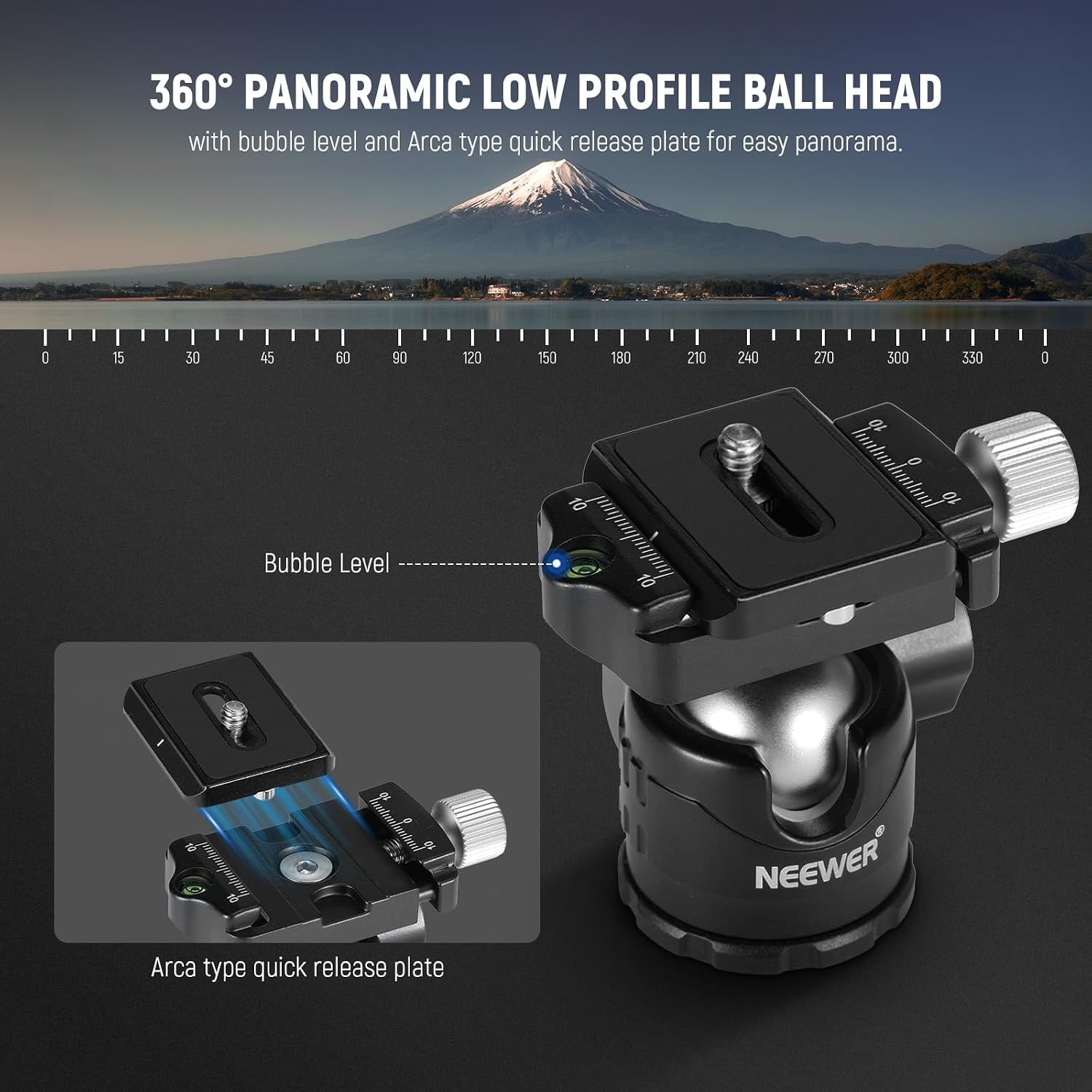
On top sits a 360 degree ball head. One knob controls everything. Loosen it, move the camera where you want, lock it down. A bubble level is built into the head, so you can set a straight horizon without guessing from the rear screen. The camera attaches via an Arca type quick release plate on a 1/4 inch screw. Screw the plate to your camera once, leave it there, and from then on the camera clips on and off in about two seconds.
Load rating is 11 pounds, or 5 kilograms. For context, a mid range DSLR with a 24-70mm zoom is usually somewhere around 3 to 4 pounds. So there is real headroom.
Who it suits
If you shoot small things, this is close to ideal. Jewelry, food, craft work, model kits, plants, anything that lives on a table. The low minimum height and the wide leg splay get you down to subject level without stacking books under the camera.
If you make videos at a desk, it works as a camera stand that puts a proper camera at roughly face height when you are seated. That is a meaningful step up from a webcam clipped to a monitor.
If you travel, it is the tripod that comes with you when the big one stays home. Long exposures at dusk, a shot of the whole group with nobody missing, a steady platform for a timelapse on a hotel windowsill.
If you shoot sports, wildlife, or anything that needs you standing up with a long lens, this is not your tripod. Nineteen inches is nineteen inches. It will not become a standing height support, and no amount of wishing changes that. Buy a full size tripod for that work and keep this one for everything else.
How to choose between small tripods
A few things actually matter, and a few things are noise.
Load rating versus your heaviest setup. Weigh your camera with the biggest lens you own. If you are anywhere near the stated limit, you will be fighting the head. Staying well under the rating is how you get sharp pictures, not just pictures where nothing falls over.
The head type. A ball head gives you fast, fluid positioning with one control. Pan and tilt heads with separate levers are slower but more precise for careful framing. For a small tripod that gets grabbed quickly, a ball head is almost always the right call.
Quick release or not. Models without a quick release plate make you screw the camera on and off by hand every time. It sounds like a minor thing. It is not. After the fifth time you will resent it.
Folded length. This single number decides whether the tripod gets carried. Anything much over 200mm starts to fight with your bag. At 170mm, this one disappears.
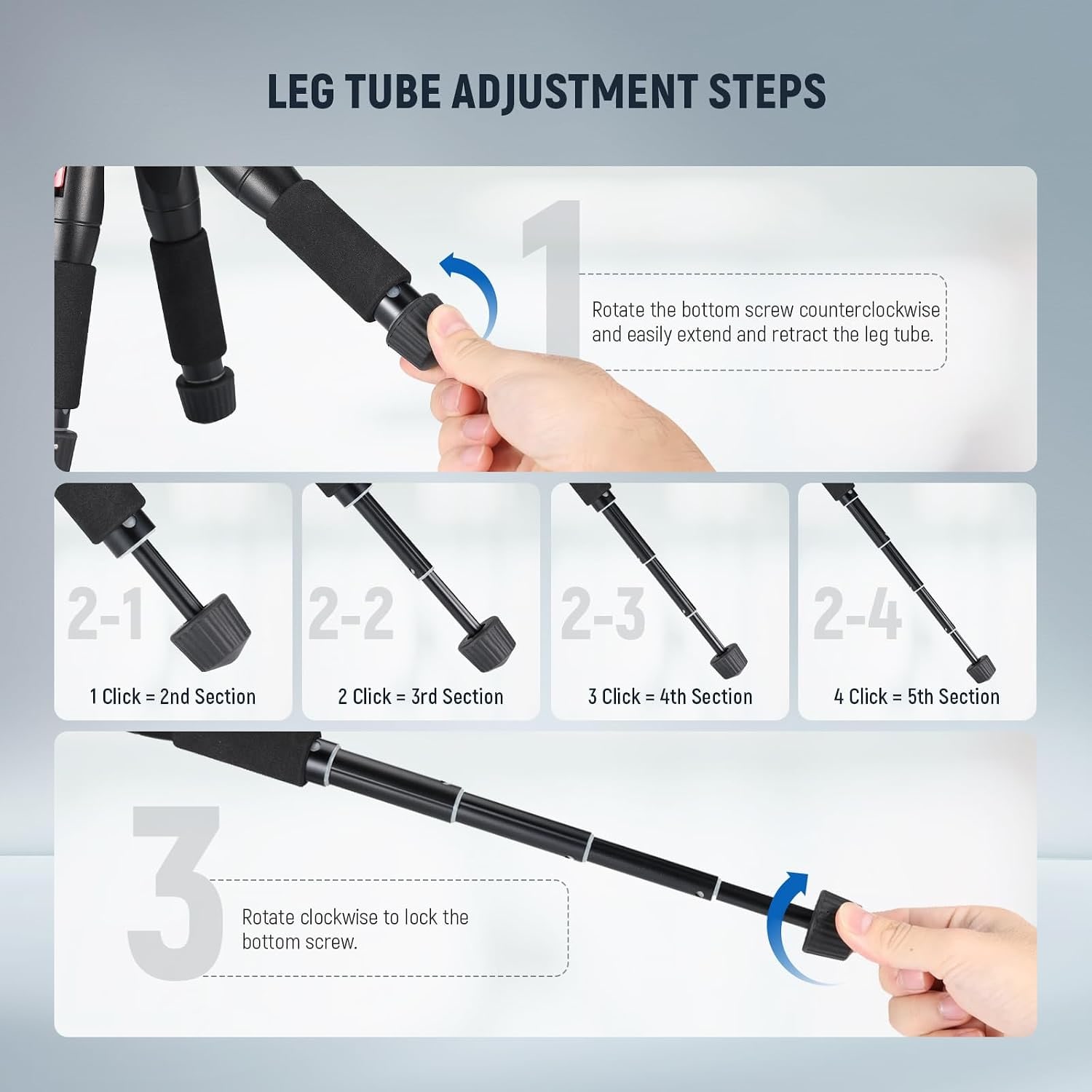
Section count. More sections means shorter folded length but thinner bottom legs. The practical answer is to extend the fat sections first and only drop the skinny ones when you genuinely need the last few inches.
Material. Aluminum is the sensible default at this price. Carbon fiber saves weight and damps vibration better, but at under two pounds there is not much weight left to save.
Things that matter less than the marketing suggests: the exact number of degrees quoted on the ball head, whether the bubble level is one circle or three, and how many accessories are bundled that you will never open.
Getting steady shots out of it
A tripod is only as stable as how you use it. A few habits make a real difference.
Extend the thickest leg sections before the thin ones. Keep the camera's center of gravity over the middle of the leg spread rather than hanging off one side, especially with a heavy lens pointed down. Tighten the ball head knob properly after framing, then check the frame again, because ball heads sag slightly as they lock.
Use the self timer or a remote. Pressing the shutter by hand on a tripod this light will shake it. A two second delay removes that entirely.
If the surface is hard and smooth, the non slip feet will hold. If it is sand or gravel, press the feet in until they stop moving before you mount the camera.
Looking after it
This is a low maintenance tool, but it is not a maintenance free one. Grit is the enemy of multi section legs. After a day at the beach or on a dusty trail, extend all the sections, wipe the tubes with a dry cloth, and let them dry before collapsing everything.
It is listed as not water resistant. Treat that as instruction, not suggestion. Rain and spray get into the leg locks and the head, and once they do you get stiffness and corrosion. Dry it off and store it indoors.
Check the quick release plate screw every so often. It can work loose on the camera body over weeks of use, and you want to find that out while the camera is in your hand rather than while it is on the tripod.
The short version
This is a 1.7 pound aluminum tripod that folds to 170mm, adjusts between 6.7 and 19.7 inches, and holds up to 11 pounds on a 360 degree ball head with an Arca type quick release plate and a bubble level. Five leg sections, three leg angles, non slip feet, black, 1/4 inch screw, not water resistant.
Buy it if you want a camera support that lives in your bag permanently and handles desks, tables, walls, car hoods and ground level macro work. Do not buy it expecting standing height. Within its size, it is a genuinely useful piece of gear, and the kind of thing most photographers wish they had bought a year earlier.